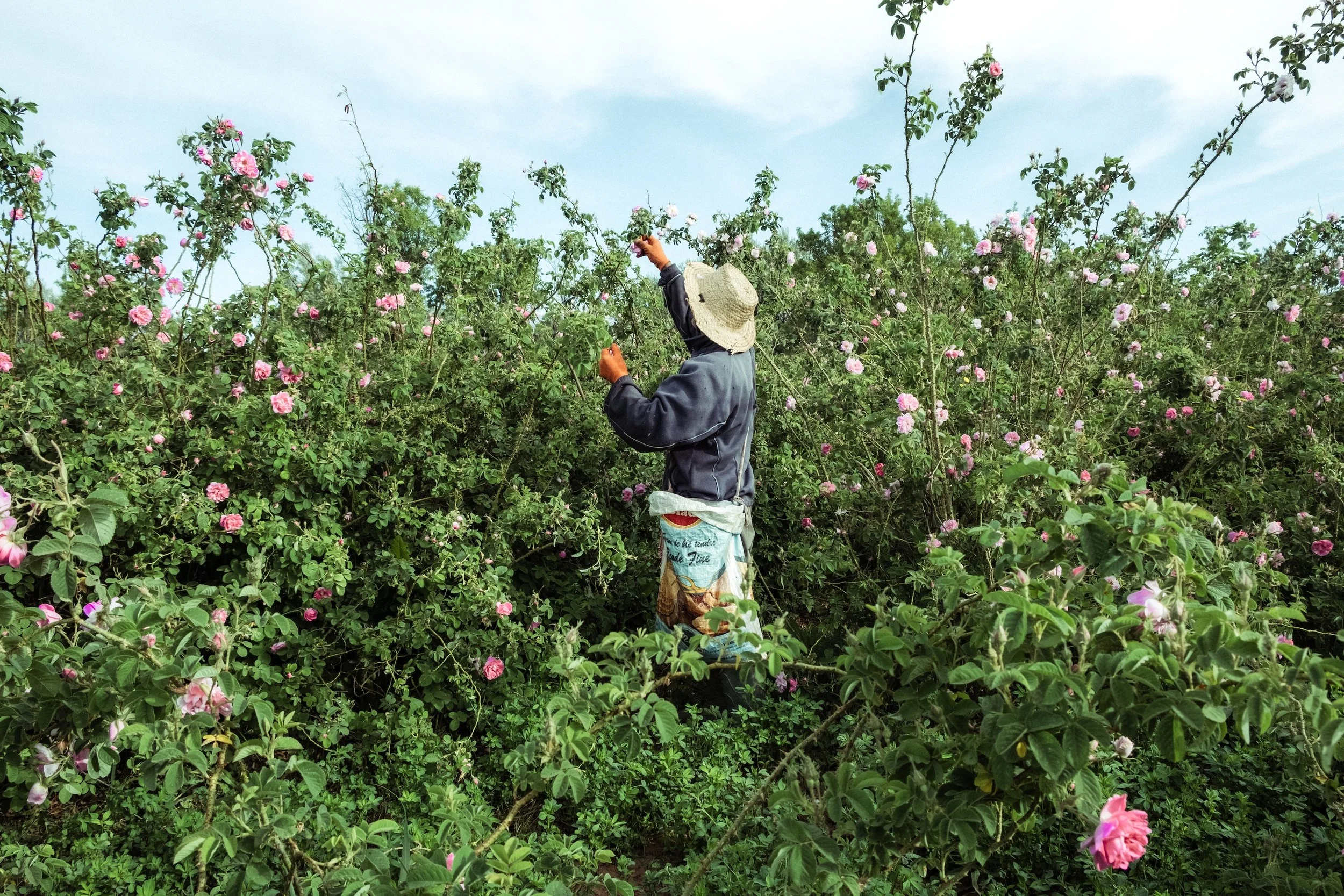
Rose cultivation has shaped the economy around Kalaat M’Gouna for generations. Every spring, thousands of seasonal workers harvest Rosa Damascena, a flower whose fragrance connects this isolated oasis region to the global cosmetics industry. A man harvests roses near Kalaat M’Gouna during the 2026 season, one of the valley’s largest harvests in recent years after historic rainfall followed nearly a decade of drought across southern Morocco.

The flowers are quickly moved into the next stage of the chain, where the rose harvest is stored and prepared for distillation. Morocco is considered one of the world’s largest producers of perfume roses, with rose water and essential oils exported internationally for cosmetics and pharmaceuticals.
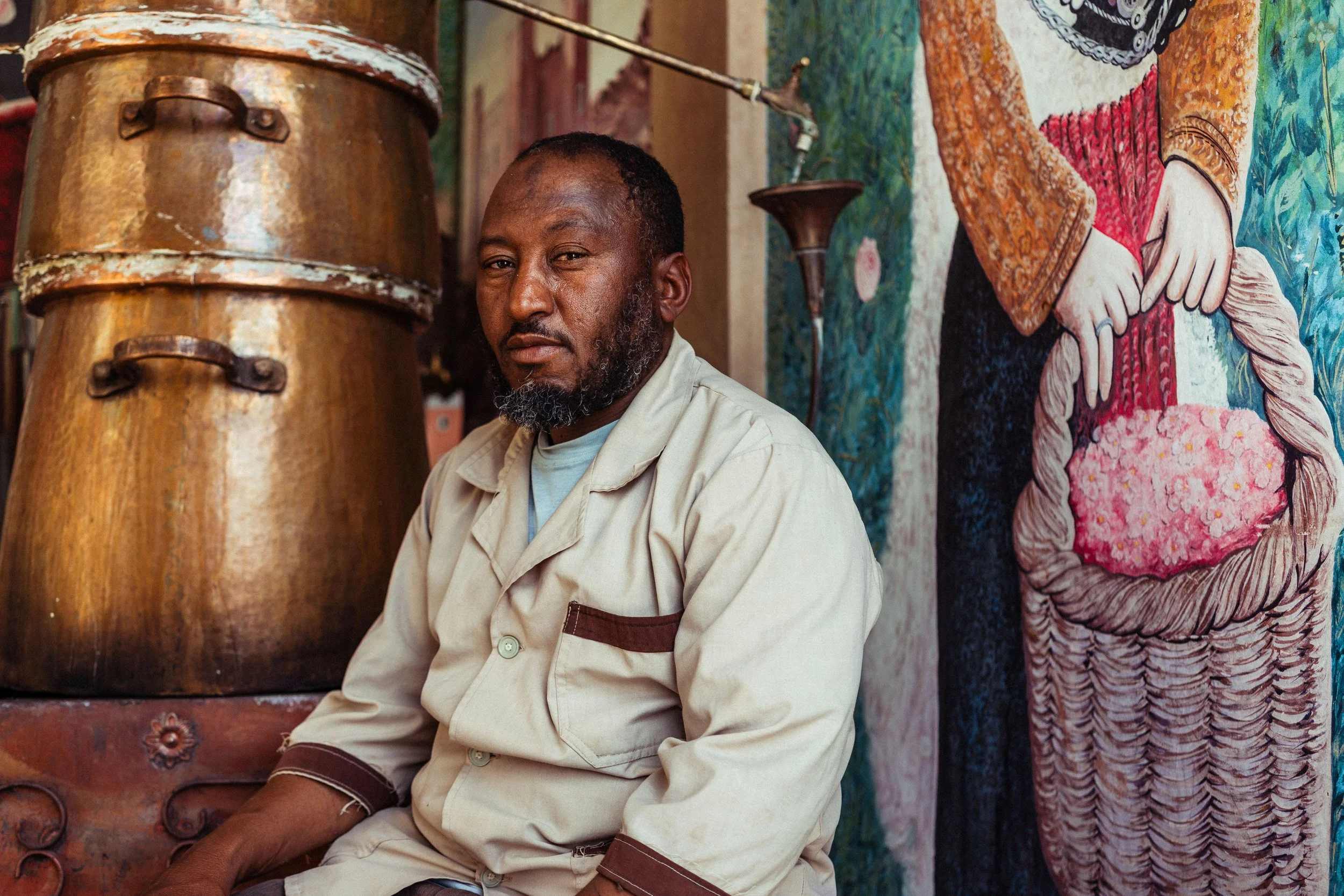
Ali works in one of the few traditional rose-water distilleries still operating in Kalaat M’Gouna. While industrial production continues to expand across the valley, many small distilleries now survive largely through roadside tourism and seasonal visitors.
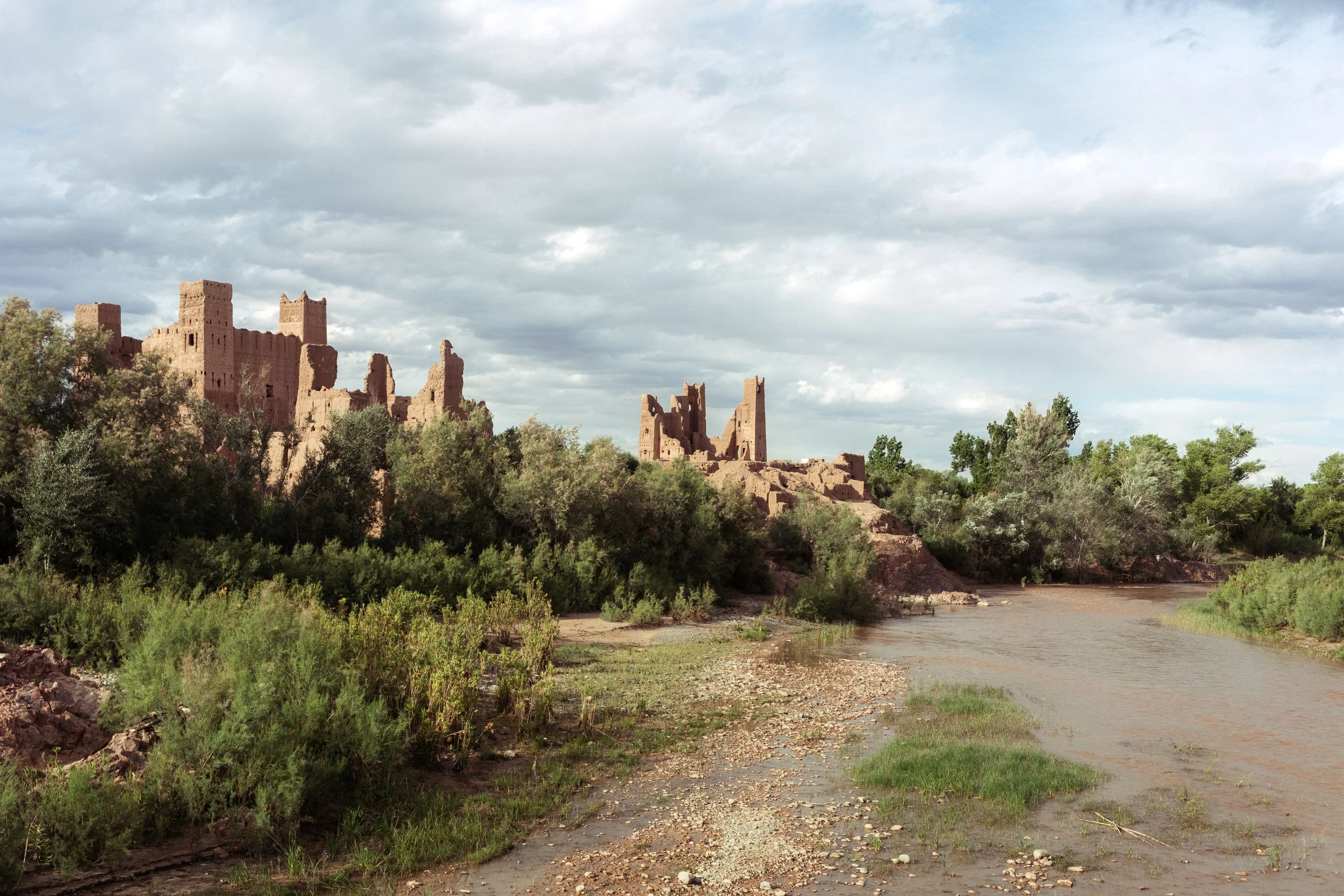
The M’Goun River flows past ancient kasbahs near Kalaat M’Gouna after heavy seasonal rainfall. In the arid Dades Valley, agriculture depends almost entirely on river-fed irrigation systems that sustain fields throughout the year.
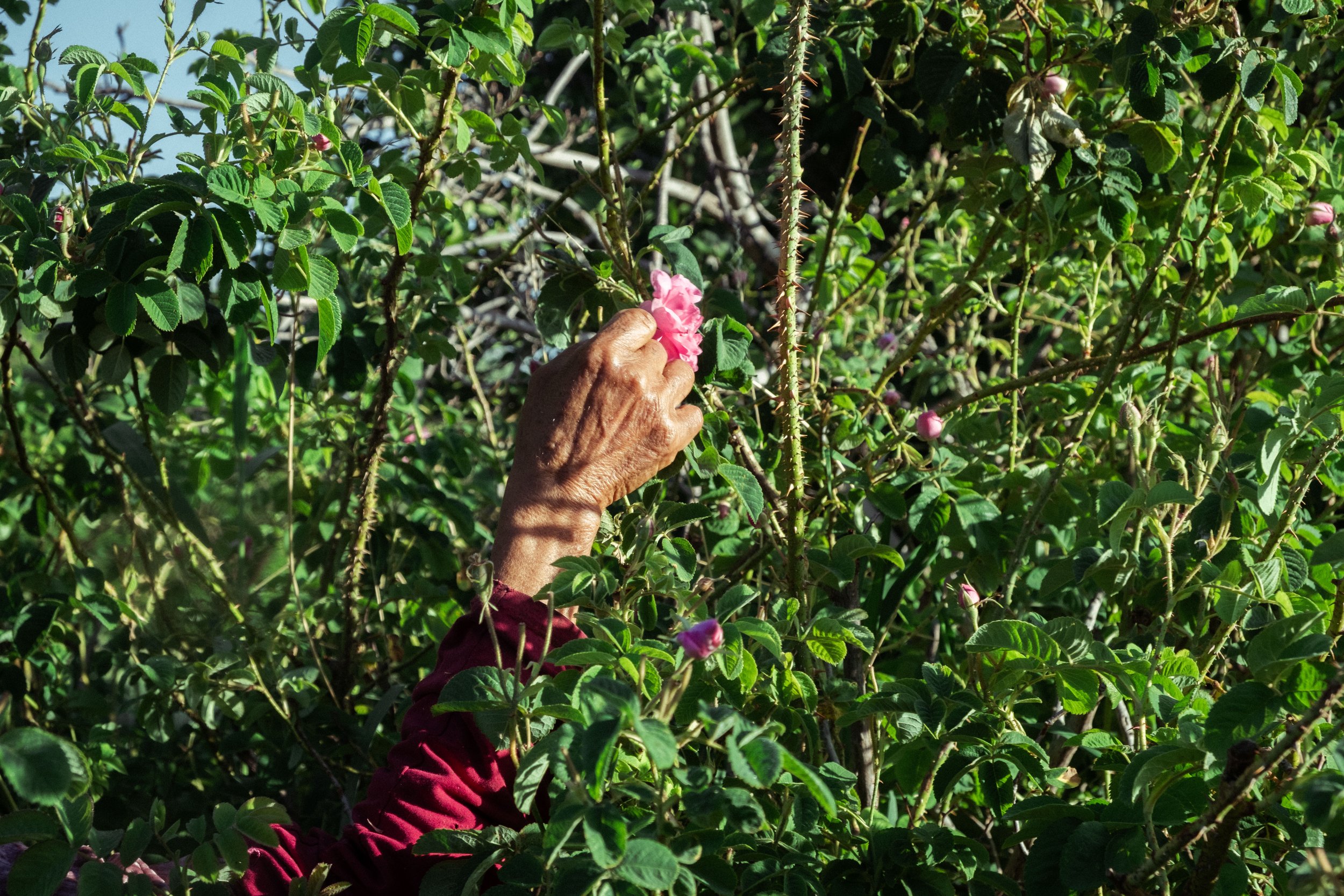
Khadija harvests roses in her family field during the annual harvest season. Most growers in the valley cultivate small plots where roses function less as a stable income than as a seasonal supplement tied to rainfall and fluctuating market prices.
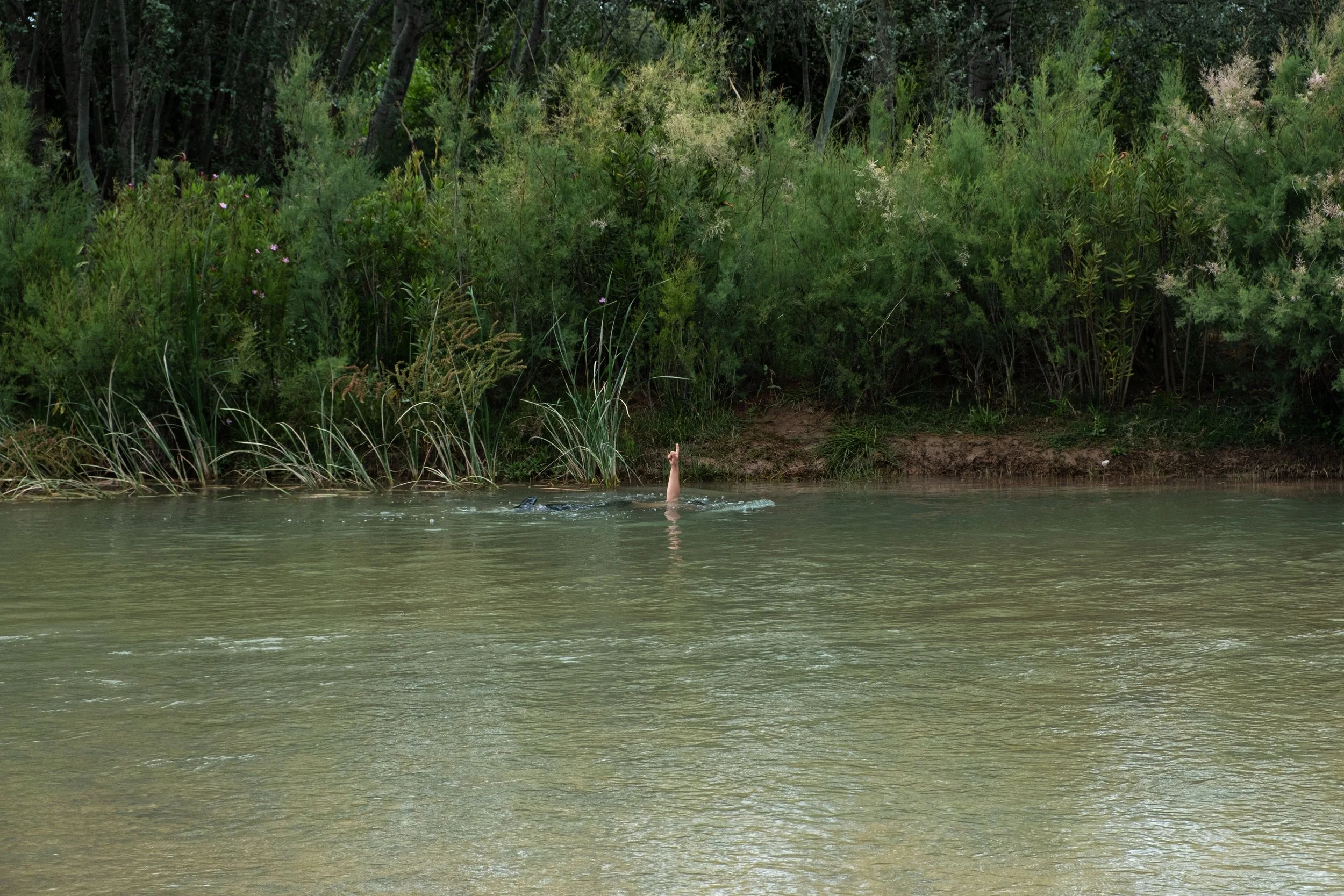
A child swims in the M’Goun River following heavy rains that revived waterways across the valley. After years of drought, the return of water reshaped both daily life and agricultural production during the 2026 harvest.
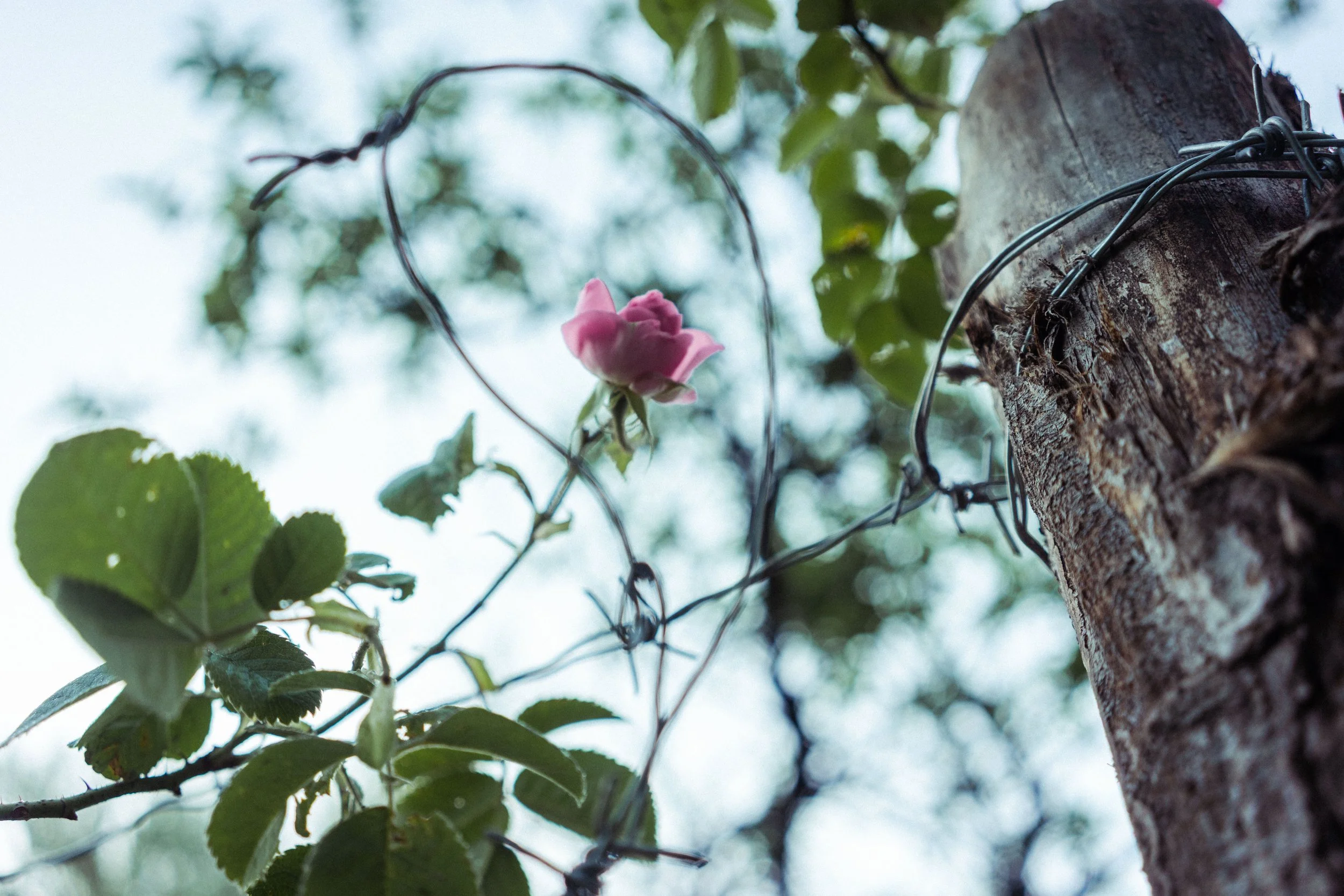
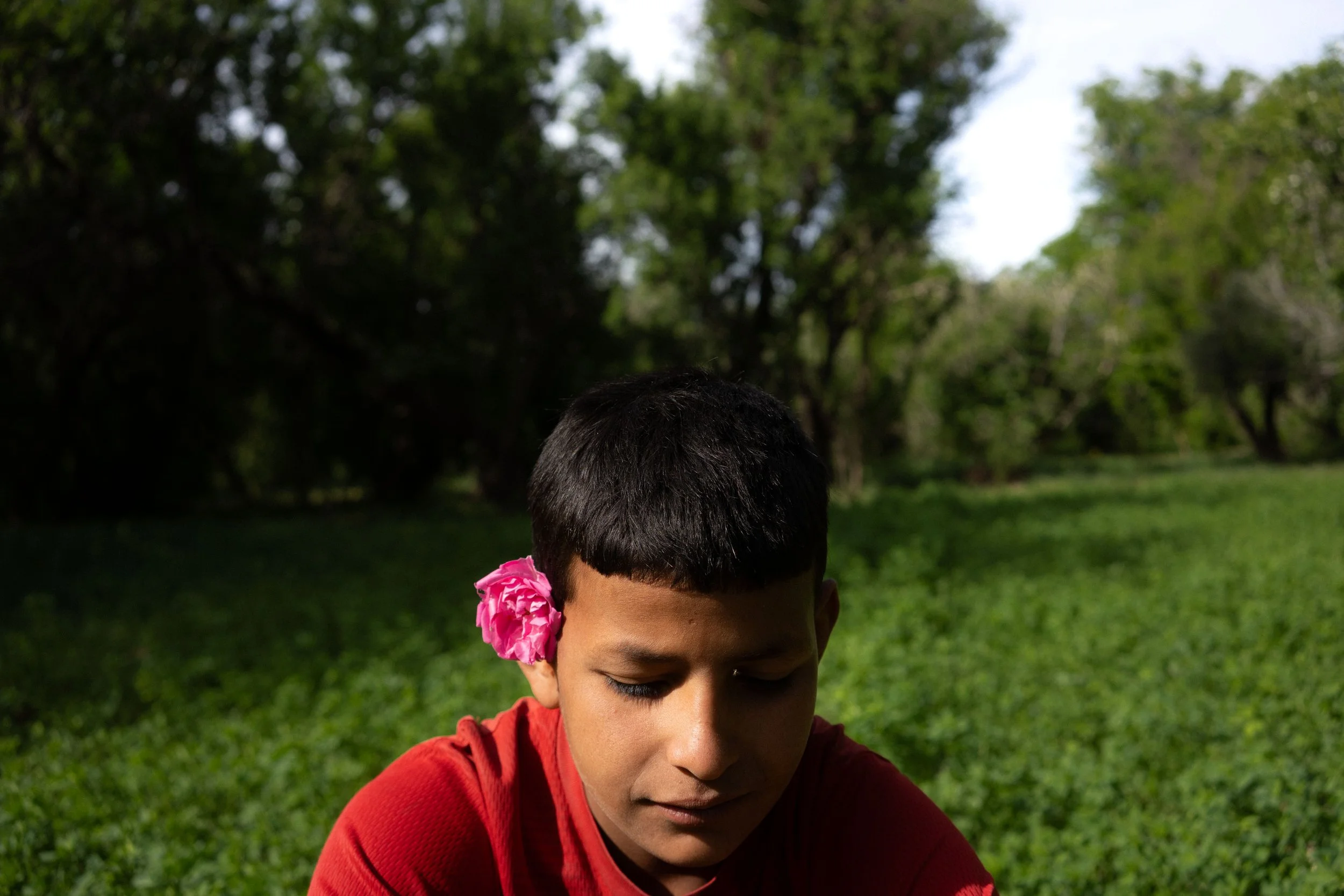
During the harvest season, the rose becomes more than an agricultural product. Around Kalaat M’Gouna, it remains a cultural marker tied to local identity, seasonal rituals, and family labor passed across generations.

Irrigation canals fed by the M’Goun River carry water across agricultural land near Kalaat M’Gouna. Despite the desert climate, the valley’s farming system survives through a dense network of canals that has sustained oasis agriculture for generations.

Even when nature grants an abundant harvest, falling market prices and industrial shifts strain the smallholders who have sustained the Dades Valley’s rose culture for generations.
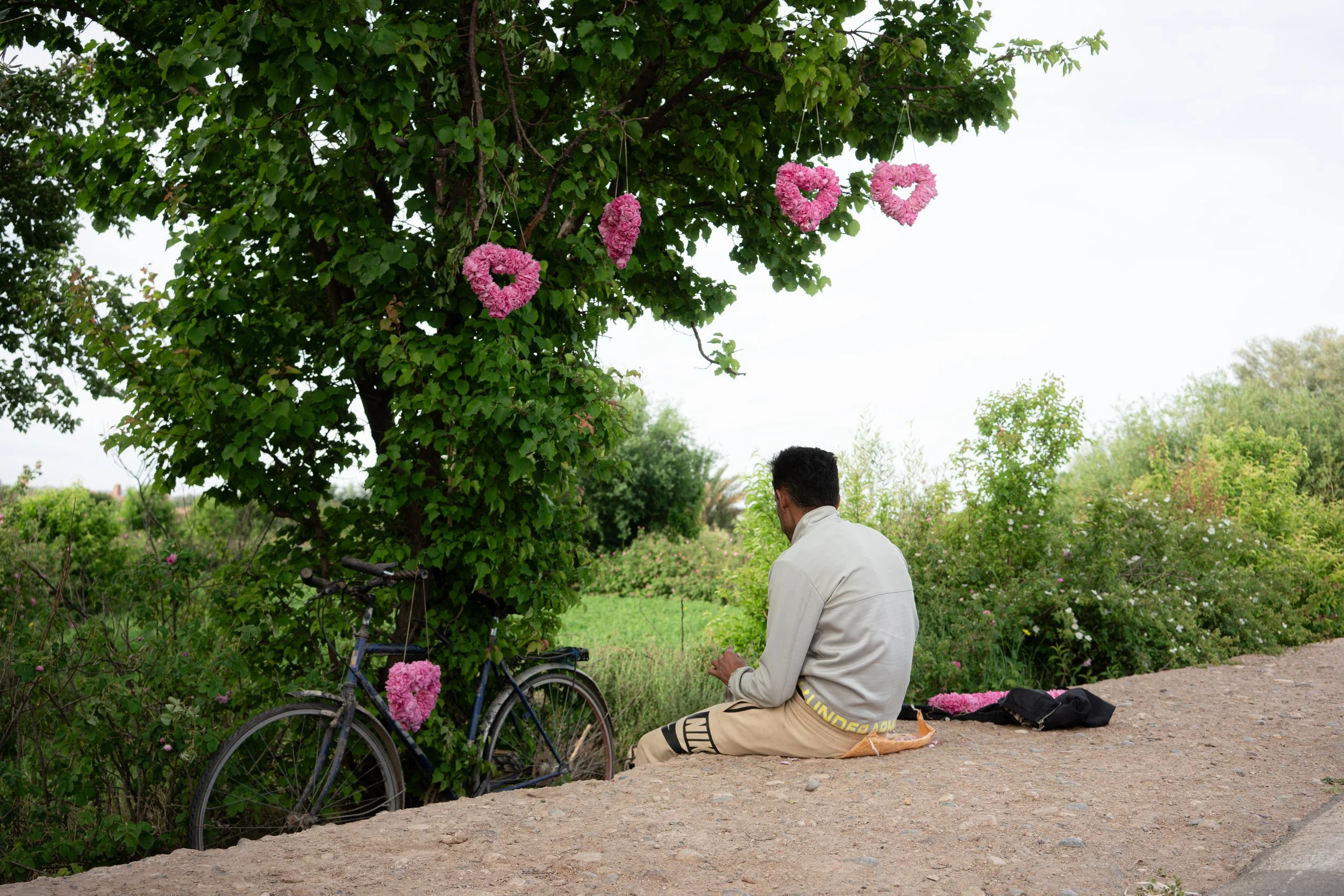
A man sells hearts woven from harvested roses beside the road near Kalaat M’Gouna. The annual harvest continues to attract visitors to the valley, where tourism has become an important source of survival for many local vendors and traditional producers.
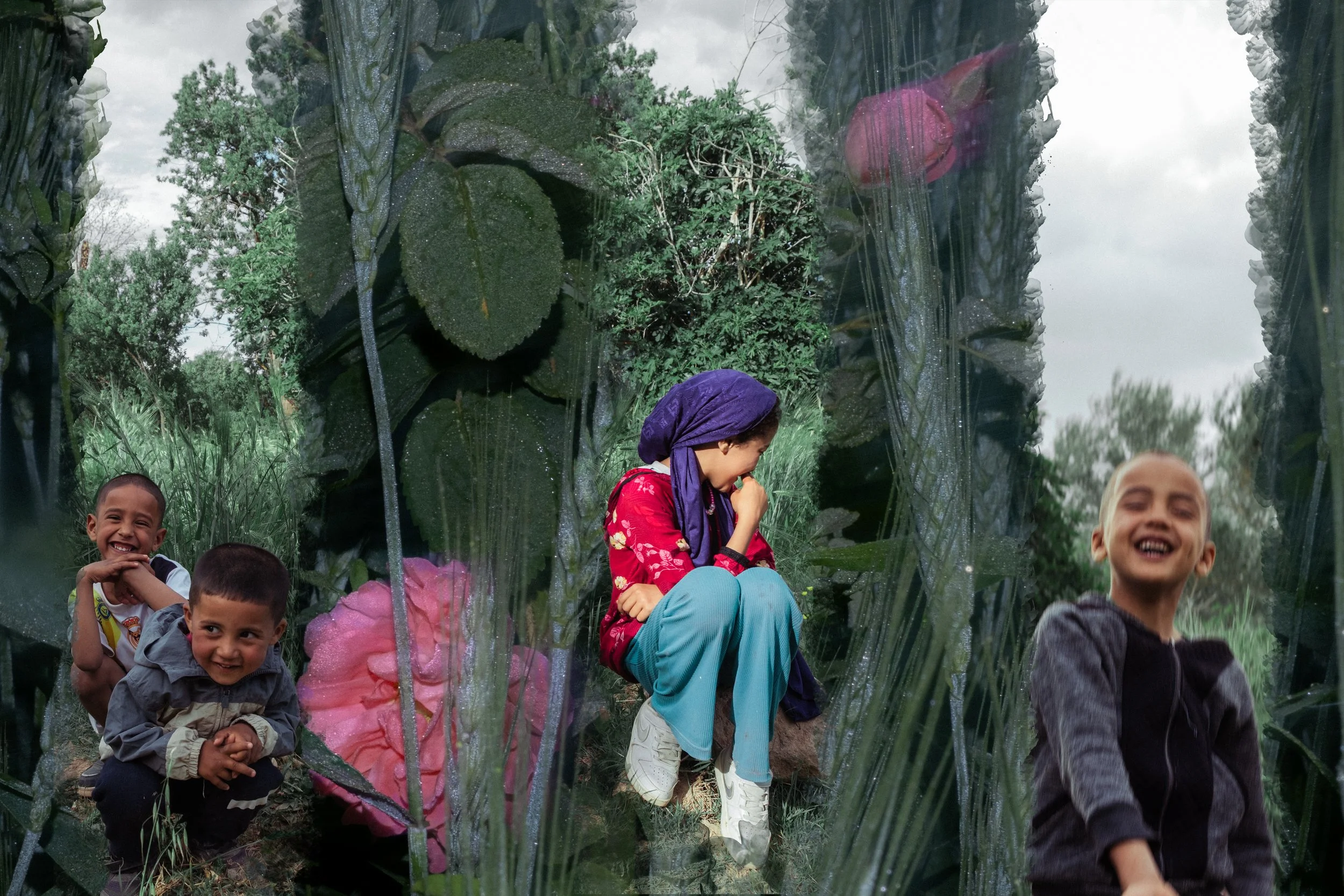
The harvest remains woven into memory, play, and daily life, even as the future of the valley’s traditional rose economy becomes increasingly fragile.
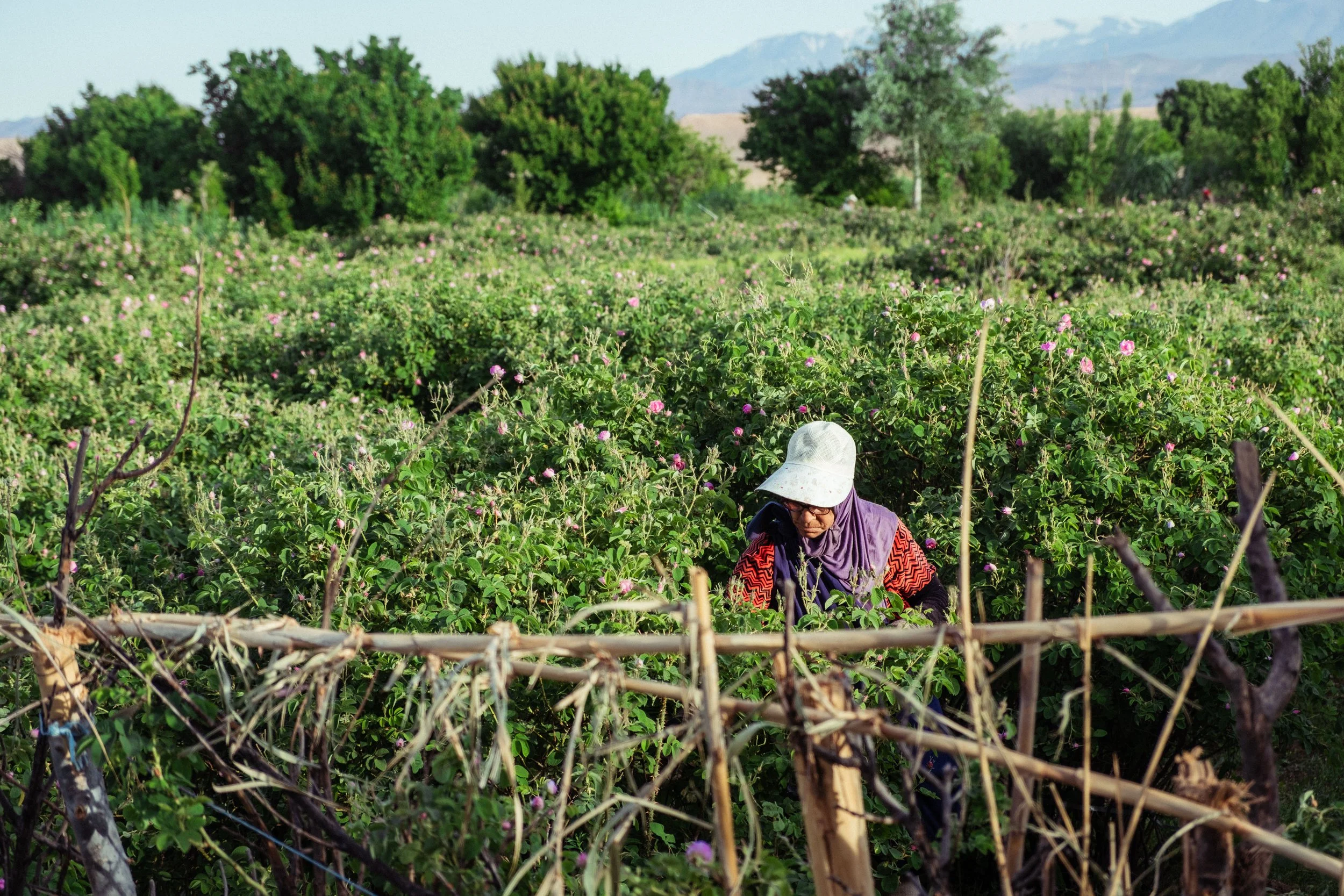
The industry still relies heavily on manual labor. Flowers are gathered by hand at dawn before the rising heat alters their fragrance.
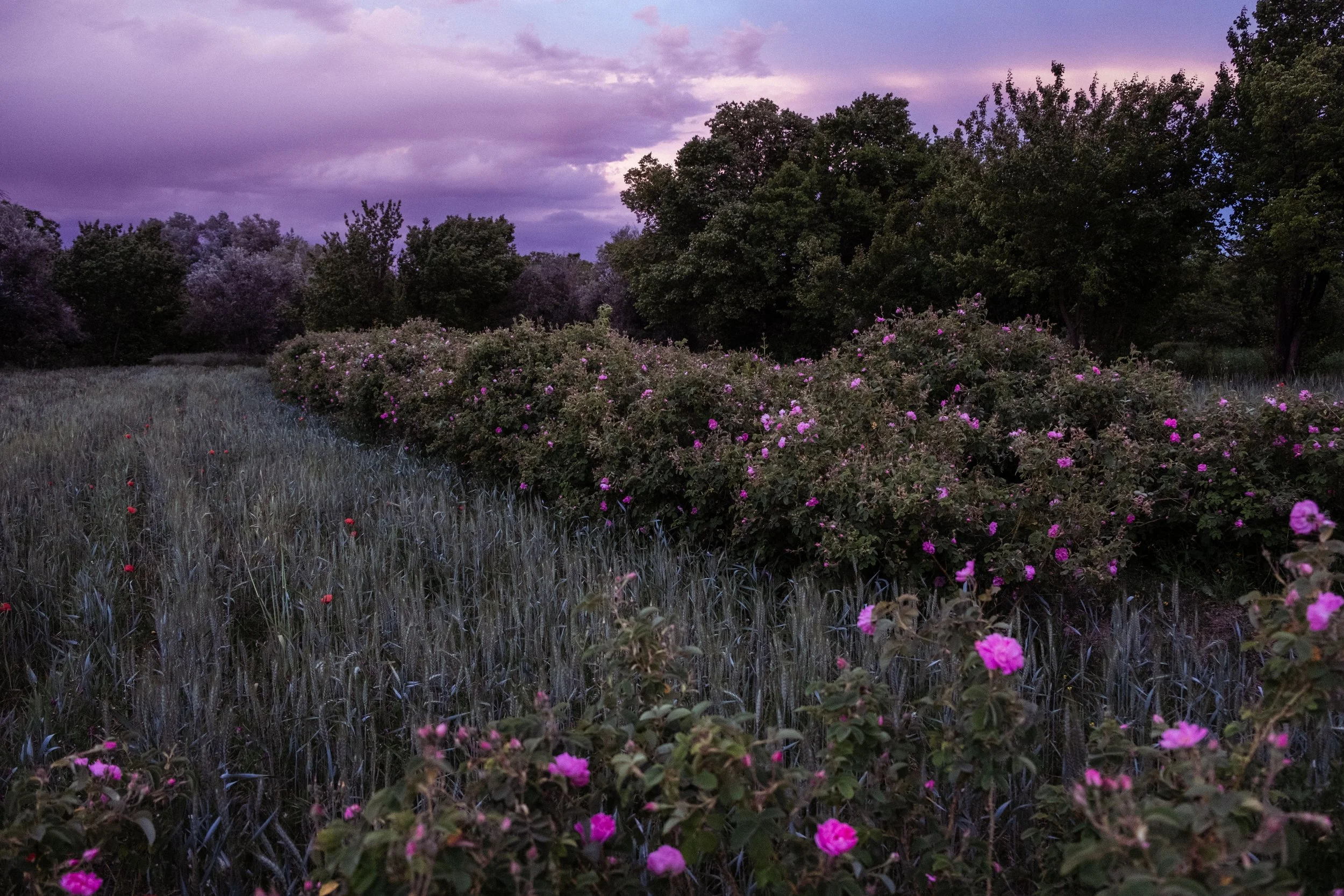
Wheat fields bordered by Rosa Damascena grow near Kalaat M’Gouna. Because the rose harvest lasts only a few weeks each year, many small landowners combine subsistence crops with seasonal flower cultivation to reduce economic uncertainty.

The future of traditional rose cultivation in the Dades Valley remains uncertain as falling prices, industrial expansion, and large agricultural investors increasingly reshape a market once dominated by small family growers.
A Heart Made Of Roses
In the Dades Valley, rose cultivation is part of a long oasis economy shaped by scarce water, seasonal labor, and trade routes that once linked mountain villages to wider markets. Around Kalaat M’Gouna, Rosa Damascena has become both a crop and a cultural marker: picked by hand at dawn, distilled in copper stills, and turned into rose water, cosmetics, and the woven rose hearts sold to travelers passing through the valley. For many small landowners and workers, the rose harvest has never been a stable source of security so much as a seasonal livelihood tied to weather, access to water, and the price set by buyers farther away. In May 2026, historic rainfall transformed the season. The river ran stronger, the fields bloomed more heavily than usual, and the harvest was exceptional in both quality and volume. But abundance did not bring relief. As supply increased, prices fell, exposing the pressure created by larger producers, industrial hybrids, and the growing influence of global beauty companies. What remains is a landscape caught between continuity and consolidation: family fields, roadside distilleries, and inherited techniques still persist, but they do so inside a market where control is moving upward, away from the people who have tended the roses for generations
In the Dades Valley of southern Morocco, rose cultivation has shaped the economy around Kalaat M’Gouna for generations. Every spring, thousands of seasonal workers harvest Rosa Damascena, a flower whose fragrance connects this isolated oasis region to the global cosmetics industry. A man harvests roses near Kalaat M’Gouna during the 2026 season, one of the valley’s largest harvests in recent years after historic rainfall followed nearly a decade of drought across southern Morocco.
The flowers are quickly moved into the next stage of the chain, where the rose harvest is stored and prepared for distillation. Morocco is considered one of the world’s largest producers of perfume roses, with rose water and essential oils exported internationally for cosmetics and pharmaceuticals.
The M’Goun River flows past ancient kasbahs near Kalaat M’Gouna after heavy seasonal rainfall. In the arid Dades Valley, agriculture depends almost entirely on river-fed irrigation systems that sustain fields throughout the year.
Ali works in one of the few traditional rose-water distilleries still operating in Kalaat M’Gouna. While industrial production continues to expand across the valley, many small distilleries now survive largely through roadside tourism and seasonal visitors.
Khadija harvests roses in her family field during the annual harvest season. Most growers in the valley cultivate small plots where roses function less as a stable income than as a seasonal supplement tied to rainfall and fluctuating market prices.
A child swims in the M’Goun River following heavy rains that revived waterways across the valley. After years of drought, the return of water reshaped both daily life and agricultural production during the 2026 harvest.
Rosa Damascena blooms near Kalaat M’Gouna as growers face falling prices during an unusually abundant harvest. In recent years, traditional rose cultivation has increasingly competed with high-yield hybrid varieties cultivated for industrial production.
During the harvest season, the rose becomes more than an agricultural product. Around Kalaat M’Gouna, it remains a cultural marker tied to local identity, seasonal rituals, and family labor passed across generations.
Irrigation canals fed by the M’Goun River carry water across agricultural land near Kalaat M’Gouna. Despite the desert climate, the valley’s farming system survives through a dense network of canals that has sustained oasis agriculture for generations.
Even when nature grants an abundant harvest, falling market prices and industrial shifts strain the smallholders who have sustained the Dades Valley’s rose culture for generations.
A man sells hearts woven from harvested roses beside the road near Kalaat M’Gouna. The annual harvest continues to attract visitors to the valley, where tourism has become an important source of survival for many local vendors and traditional producers.
The harvest remains woven into memory, play, and daily life, even as the future of the valley’s traditional rose economy becomes increasingly fragile.
The industry still relies heavily on manual labor. Flowers are gathered by hand at dawn before the rising heat alters their fragrance.
Wheat fields bordered by Rosa Damascena grow near Kalaat M’Gouna. Because the rose harvest lasts only a few weeks each year, many small landowners combine subsistence crops with seasonal flower cultivation to reduce economic uncertainty.
The future of traditional rose cultivation in the Dades Valley remains uncertain as falling prices, industrial expansion, and large agricultural investors increasingly reshape a market once dominated by small family growers.