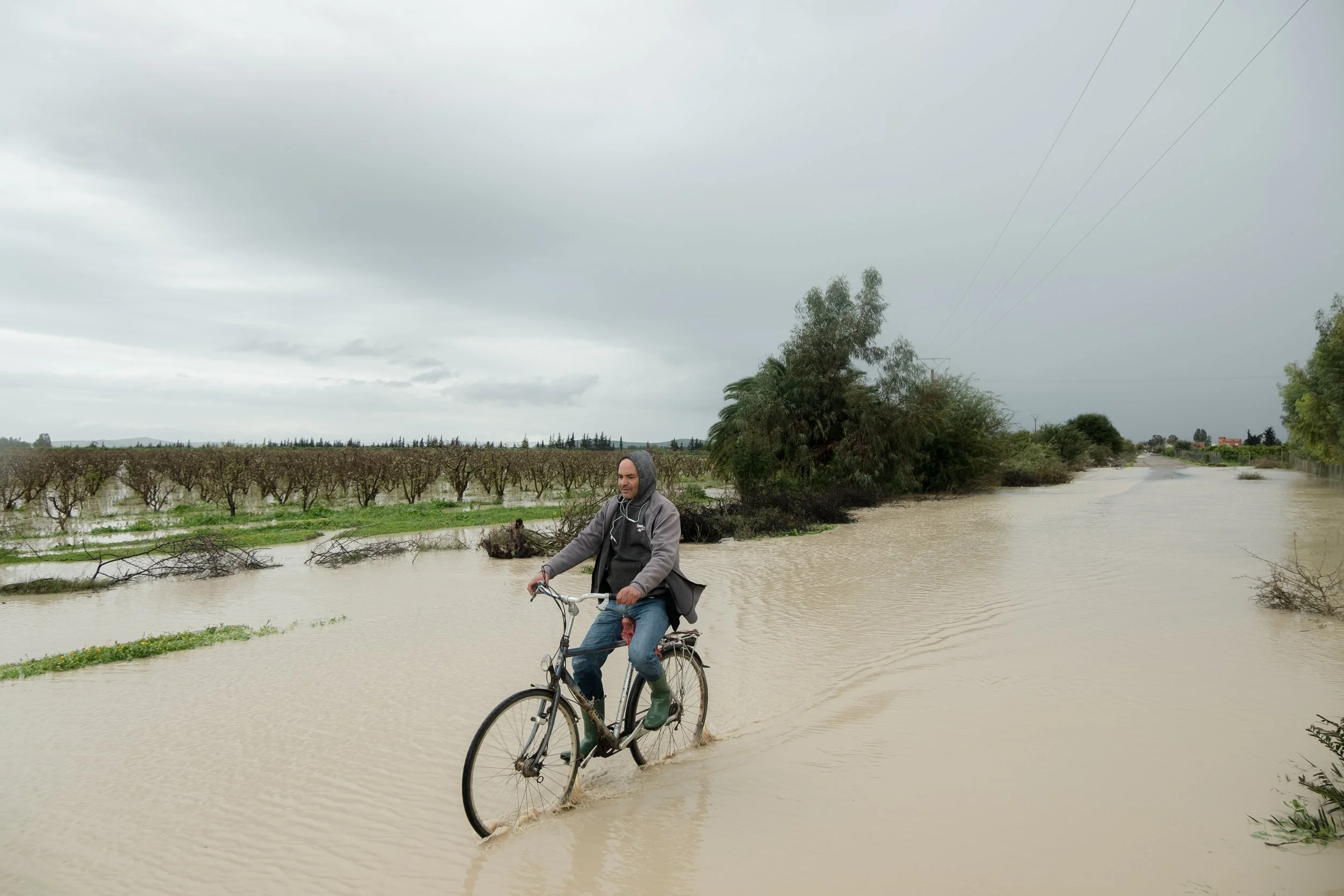
A resident crosses a flooded road near his village outside Sidi Kacem, Morocco. Rising water levels have made travel difficult for many families living in the floodplain between the Sebou and Ouergha rivers, where homes, crops, and livestock have been affected by weeks of flooding. January 2026.
A local farmer uses his tractor to transport residents across flooded roads near Sidi Kacem, Morocco. As rising waters isolate villages throughout the Gharb plain, tractor owners have become an essential lifeline, helping people move between their homes, schools, markets, and neighboring communities. January 2026.
Floodwaters breach the interior of a vehicle, pooling on the floorboards as roads become impassable.
Paralyzing movement across the floodplain, the overflowed waters of the Sebou and Ouergha rivers submerge key transit routes.
Looking inside a home brought down to its simplest form. The chairs and small tea table remain gathered together, holding space for daily life to resume once the water recedes.
A villager and his dog take refuge on the roof of their home as floodwaters engulf the surrounding land.
Adaptations forged by necessity. Equipped with an inflated inner tube and essential furniture, a villager moves down the quiet alley, turning everyday materials into vital tools to navigate the water.
The interior of a traditional earth-built house structurally failing under the pressure of the floods. For many families in the Gharb's local dowars, the rising waters are physically dissolving lifetimes of labor.
Inside a home in the Gharb region, deep cracks spread across a traditional earth wall weakened by rising groundwater. Hanging above the waterlines are empty plastic jugs, normally used by local families to store and preserve olive oil from their annual harvests.
An olive grove inundated by river overflow. Prolonged flooding of the trees' root systems risks long-term damage to the farmland.
Barefoot through the tide. A resident wades through murky floodwaters near Sidi Kacem, where the convergence of the Sebou and Ouergha rivers has turned rural roads into treacherous currents, forcing locals to navigate the inundated landscape on foot.
Beyond human livelihoods and submerged homes, local animals also wander displaced, searching for dry ground as floodwaters swallow the surrounding countryside.
Blankets and clothing in a classroom converted into emergency accommodation for families displaced by flooding near Sidi Kacem, Morocco. Schools across the region have become temporary shelters for residents forced to leave their homes as water levels continue to rise.
Through the windshield of a stopped vehicle, local spotters test the safety of an inundated transit route. The river overflow has erased visible road boundaries, forcing men to wade ahead on foot to guide traffic through the flooded plain.
Months of hard labor rotting beneath the muddy tide, a quiet disaster in Morocco's agricultural heartland. Local farmers stand knee-deep in floodwaters on what was once a dry access road near Sidi Kacem.
Stranded above murky floodwaters on a makeshift fence, a hen finds temporary refuge a subtle detail of how the disaster upends every layer of farm life in Sidi Kacem.
The Other Side of the Blessing:
Sidi Kacem
Winter in Morocco has always been a tale of two realities. To the observer, the rain is a blessing, a long-awaited mercy that fills our dams. But in the heart of the Gharb, specifically where the Oued Sebou and Oued Ouergha converge near Sidi Kacem, this mercy has transformed into immense floods. This “blessing” is now a relentless nightmare. While the world looks at the rising water as a victory over drought, the families of the local douars are living through a tragedy that numbers cannot capture. In this landscape, the “beauty” of the vast water reflects only despair. Houses that took a lifetime to build are surrounded by floods, standing like lonely islands and crumbling under the weight of saturated roofs. Families are huddled in local schools or remain trapped on upper floors, living in constant terror as they watch the floodwaters creep up the walls, wondering if they will survive another day. The tragedy goes beyond the walls of the home. In this agricultural heartland, it isn’t just the “18% of agriculture” we read about in statistics; it’s the sight of lifetimes of hard work disappearing beneath a brown, flooded tide. The harvests are rotting in the mud, and the livestock, the life’s savings of these families, have been swept away.
These floods have created a humanitarian crisis in the heart of our most fertile land. The most painful part isn’t just the water; it’s the silence. There is a profound sense of being left behind, a fear that once the floods recede, the world will forget the families who must rebuild years of labor from nothing. They feel isolated, as the high water levels make circulation nearly impossible without specialized vehicles, leaving them waiting for a sign that they are not alone. As the water continues to rise this week, the question remains: Who will hear the cry of Sidi Kacem? Beyond the agricultural statistics and the aesthetic of the rain, there is a human duty to witness and to help. Winter is indeed a season of beauty, but for the families of the Gharb, it is currently a battle for survival.
A resident crosses a flooded road near his village outside Sidi Kacem, Morocco. Rising water levels have made travel difficult for many families living in the floodplain between the Sebou and Ouergha rivers, where homes, crops, and livestock have been affected by weeks of flooding. January 2026.
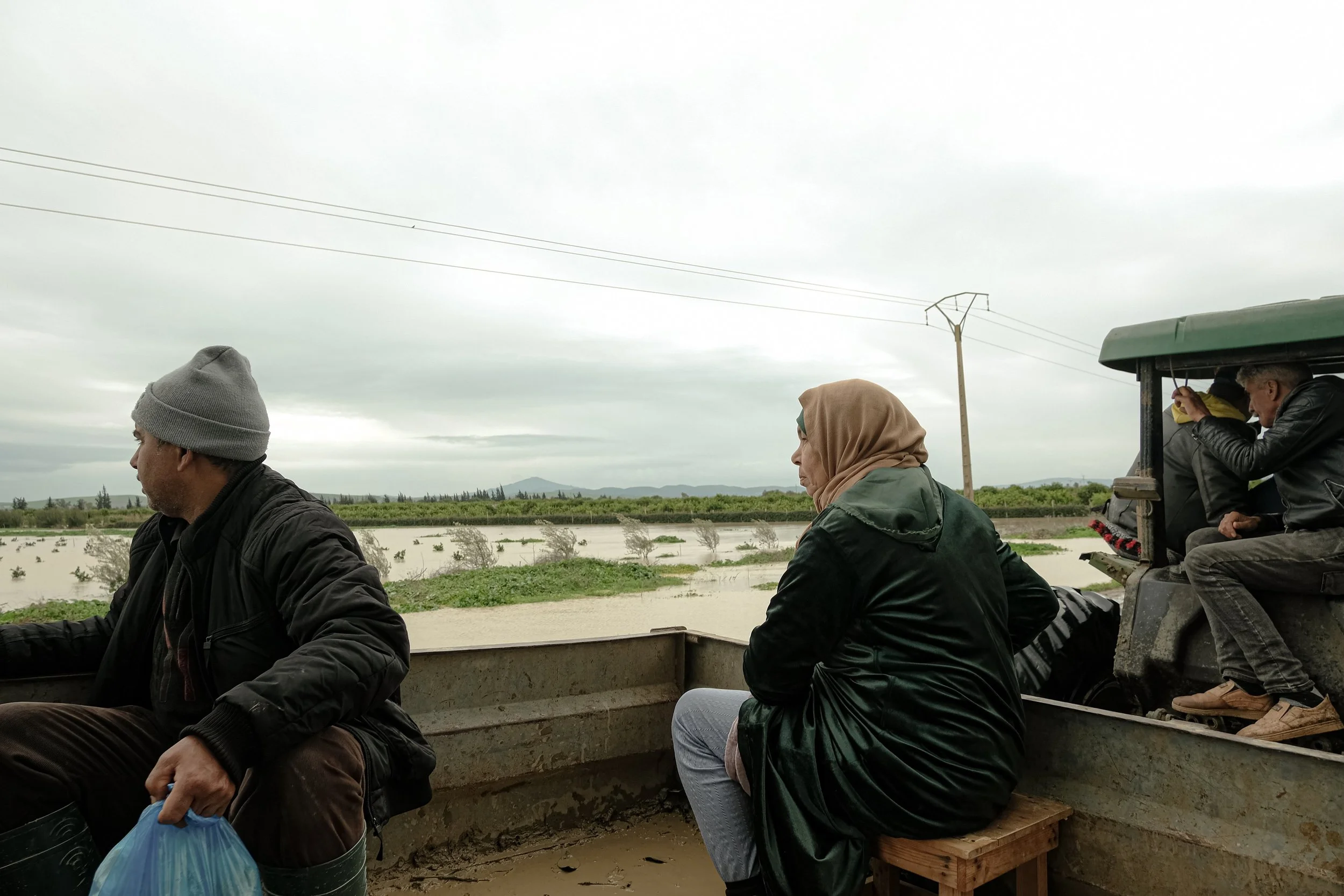
A local farmer uses his tractor to transport residents across flooded roads near Sidi Kacem, Morocco. As rising waters isolate villages throughout the Gharb plain, tractor owners have become an essential lifeline, helping people move between their homes, schools, markets, and neighboring communities. January 2026.
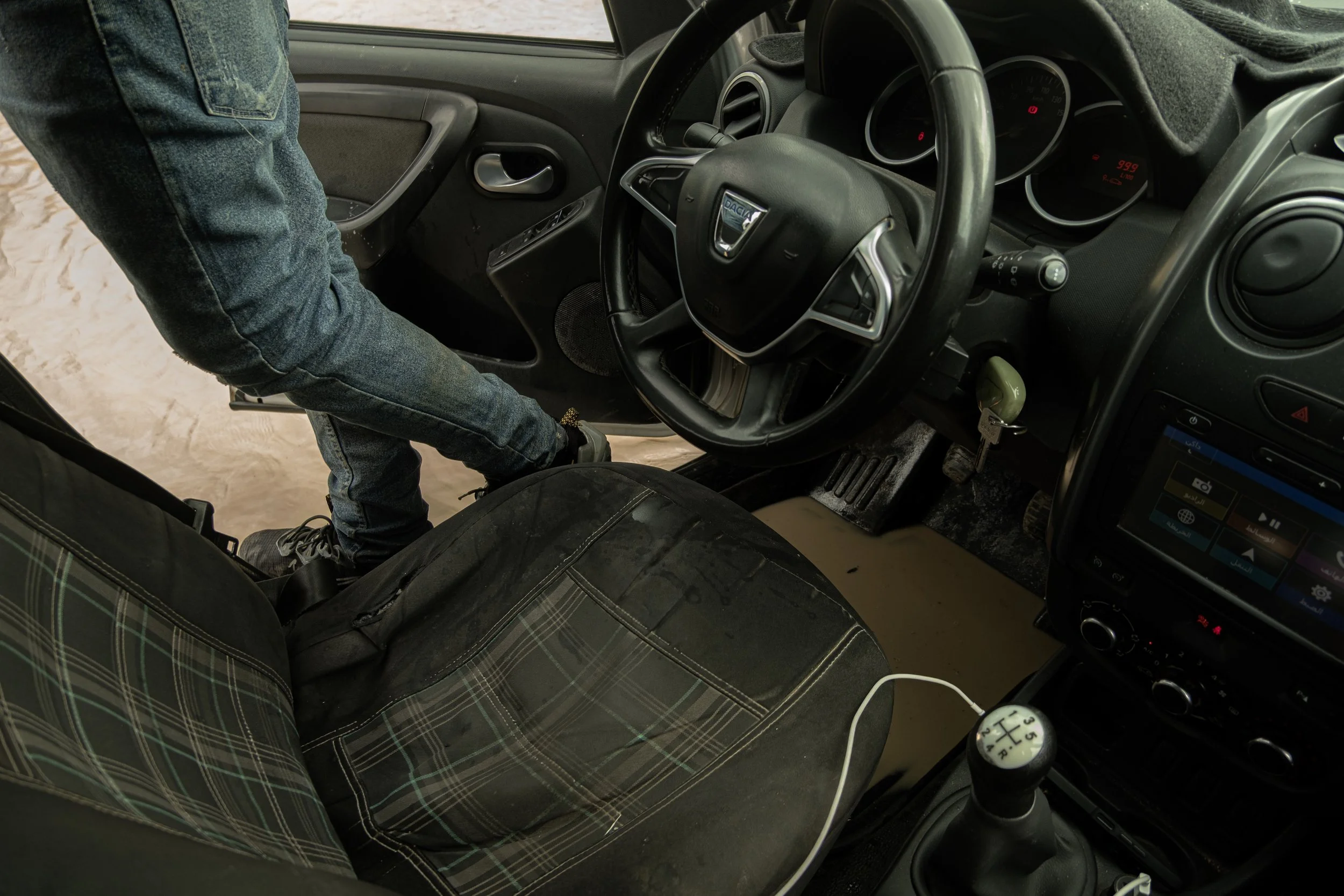
Floodwaters breach the interior of a vehicle, pooling on the floorboards as roads become impassable.
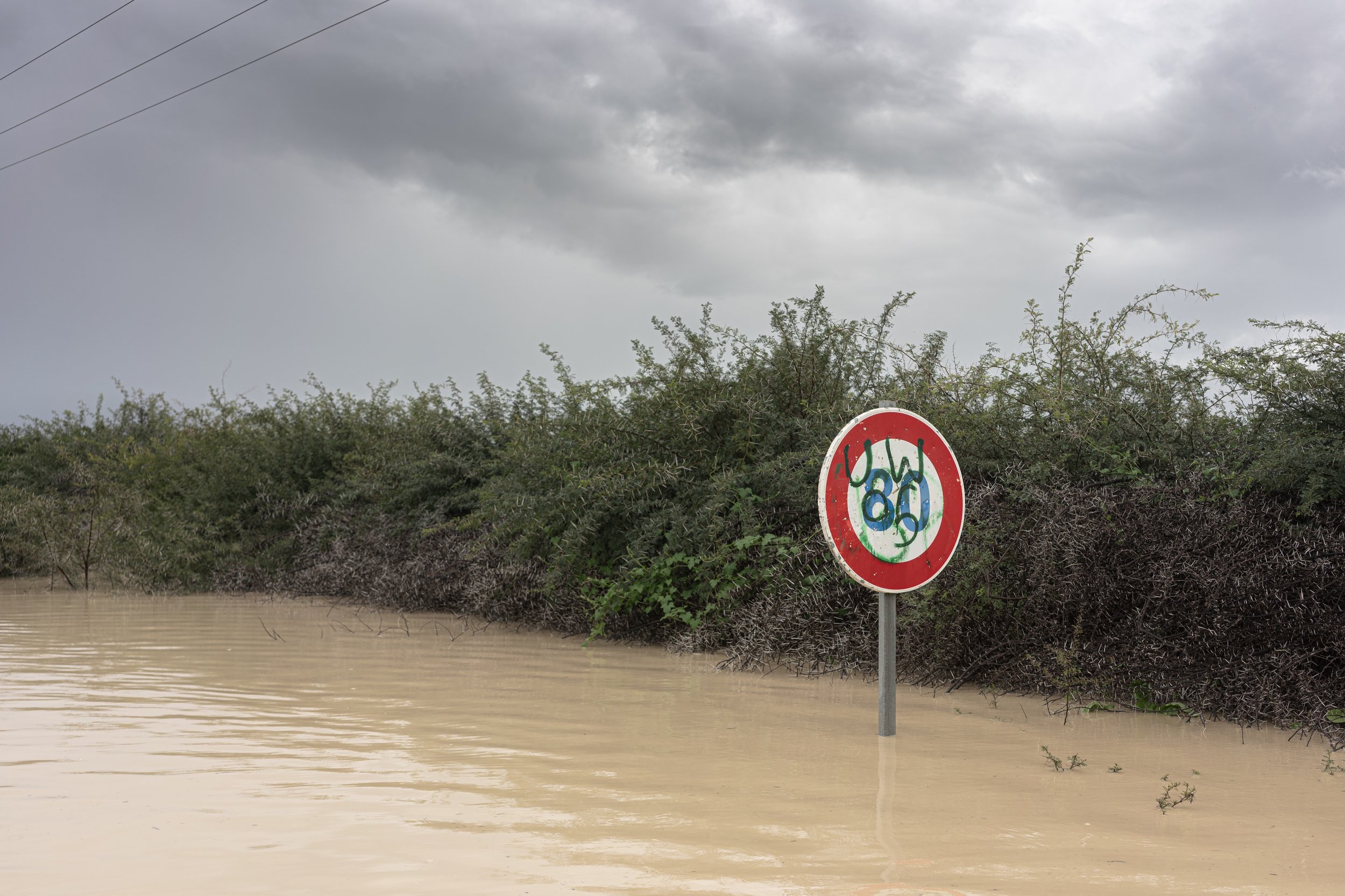
Paralyzing movement across the floodplain, the overflowed waters of the Sebou and Ouergha rivers submerge key transit routes.
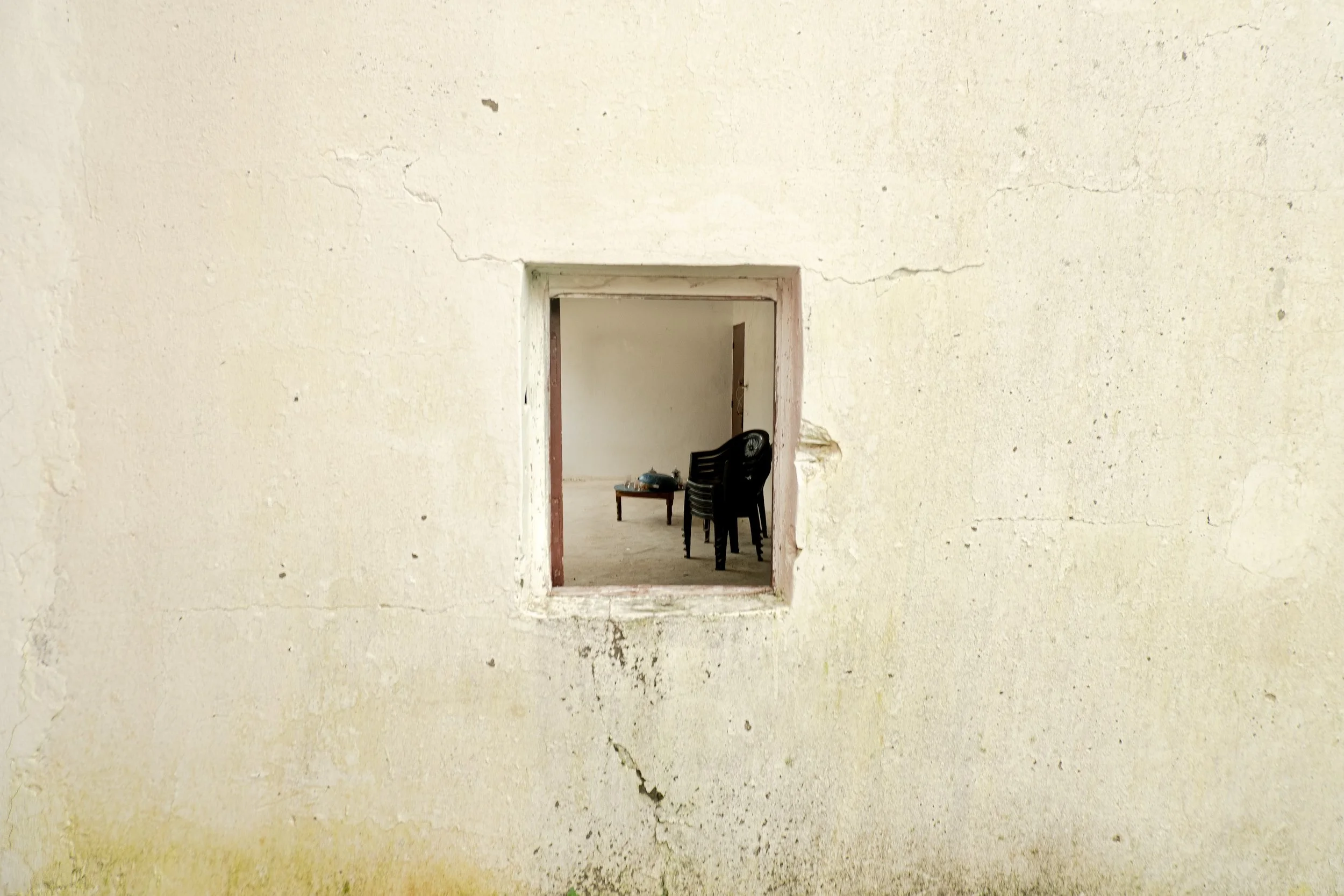
Looking inside a home brought down to its simplest form. The chairs and small tea table remain gathered together, holding space for daily life to resume once the water recedes.
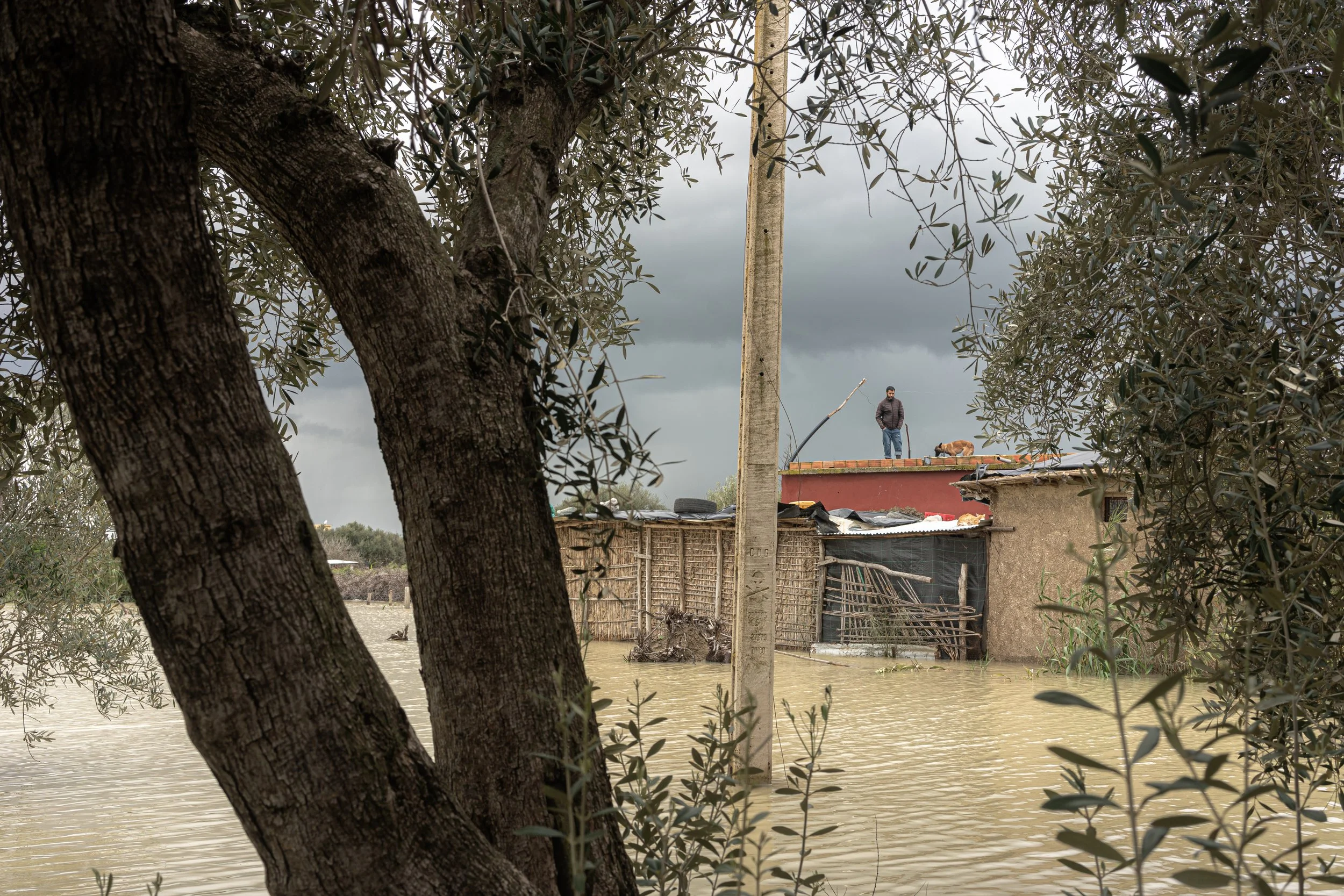
A villager and his dog take refuge on the roof of their home as floodwaters engulf the surrounding land.
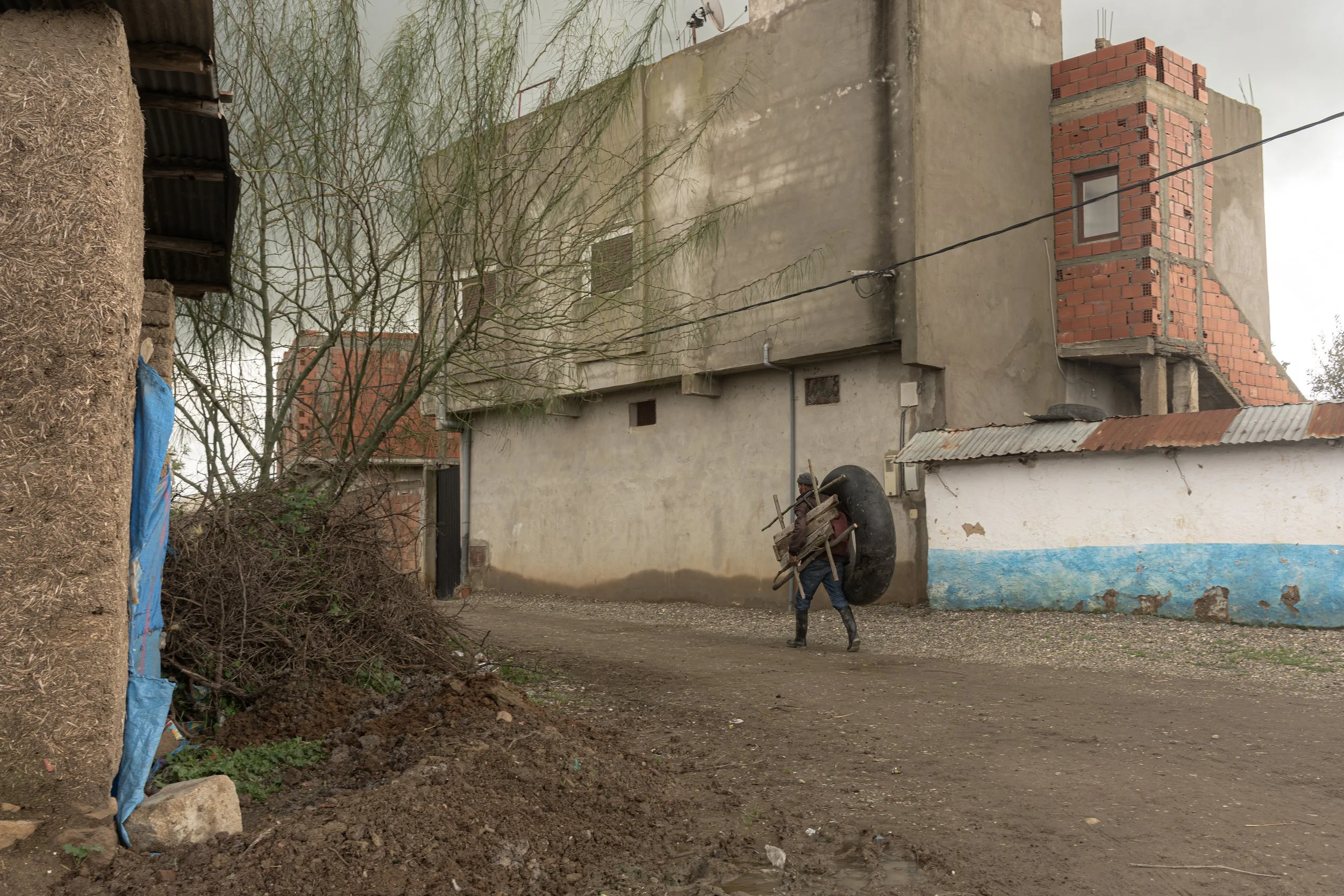
Adaptations forged by necessity. Equipped with an inflated inner tube and essential furniture, a villager moves down the quiet alley, turning everyday materials into vital tools to navigate the water.
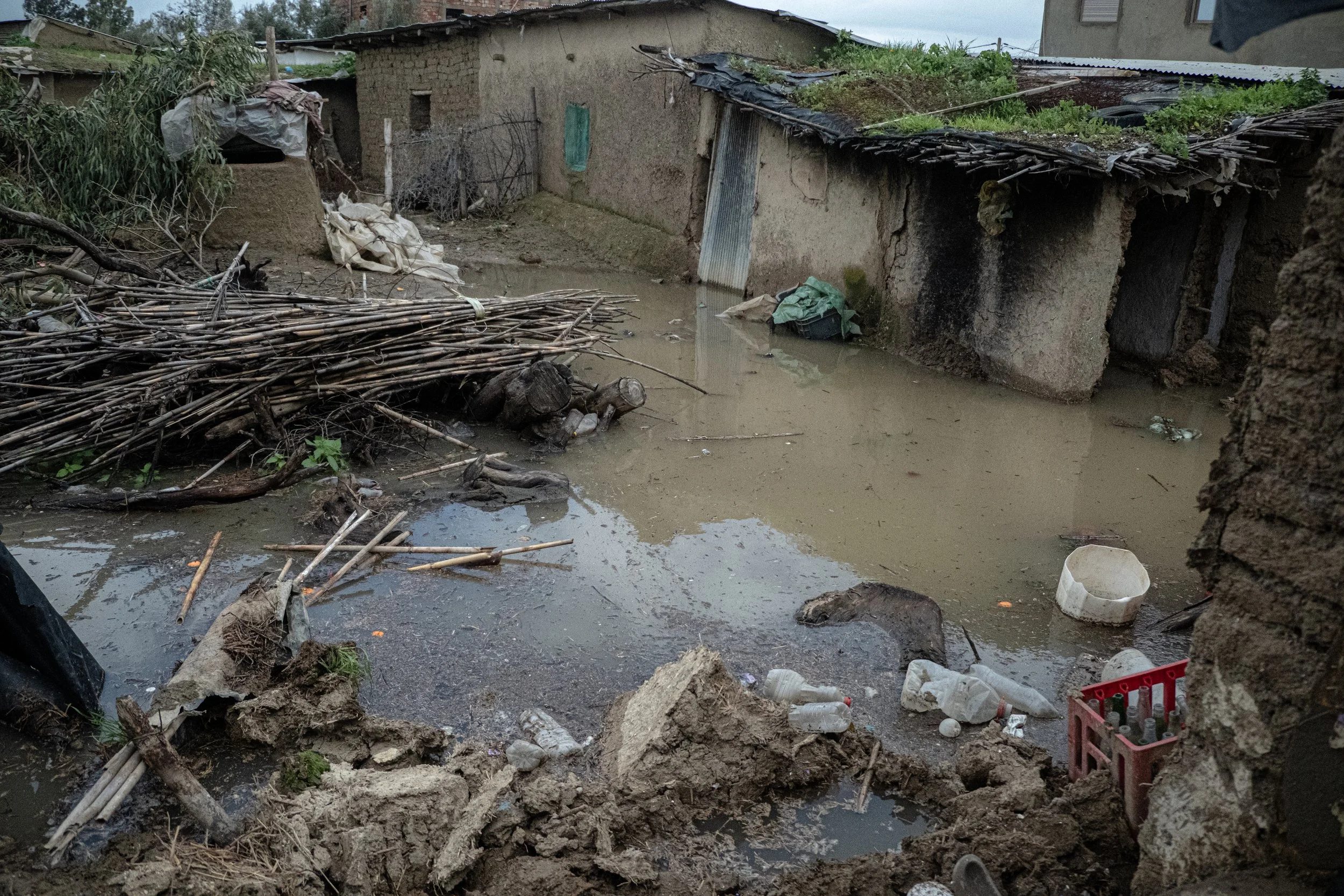
The interior of a traditional earth-built house structurally failing under the pressure of the floods. For many families in the Gharb's local dowars, the rising waters are physically dissolving lifetimes of labor.
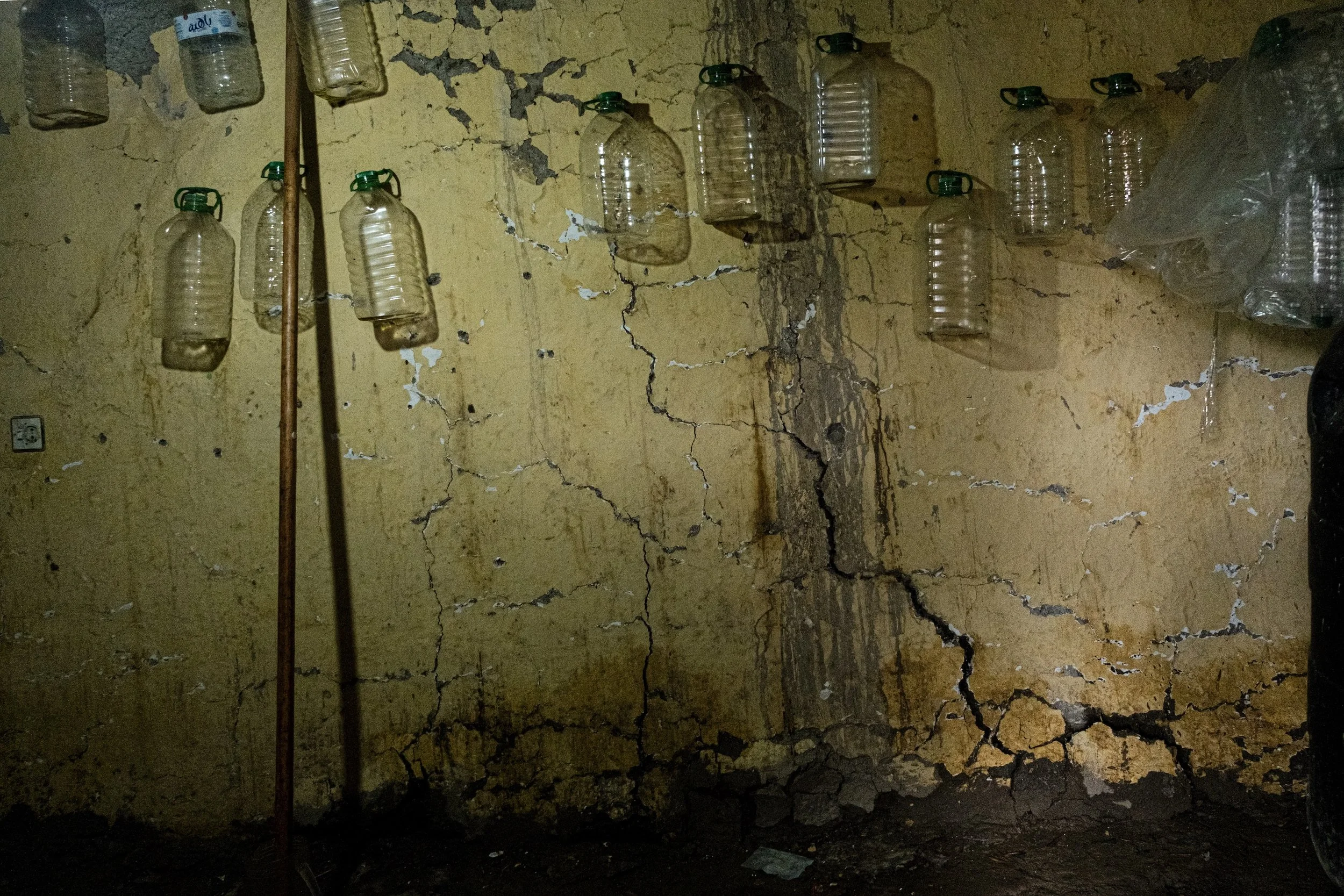
Inside a home in the Gharb region, deep cracks spread across a traditional earth wall weakened by rising groundwater. Hanging above the waterlines are empty plastic jugs, normally used by local families to store and preserve olive oil from their annual harvests.
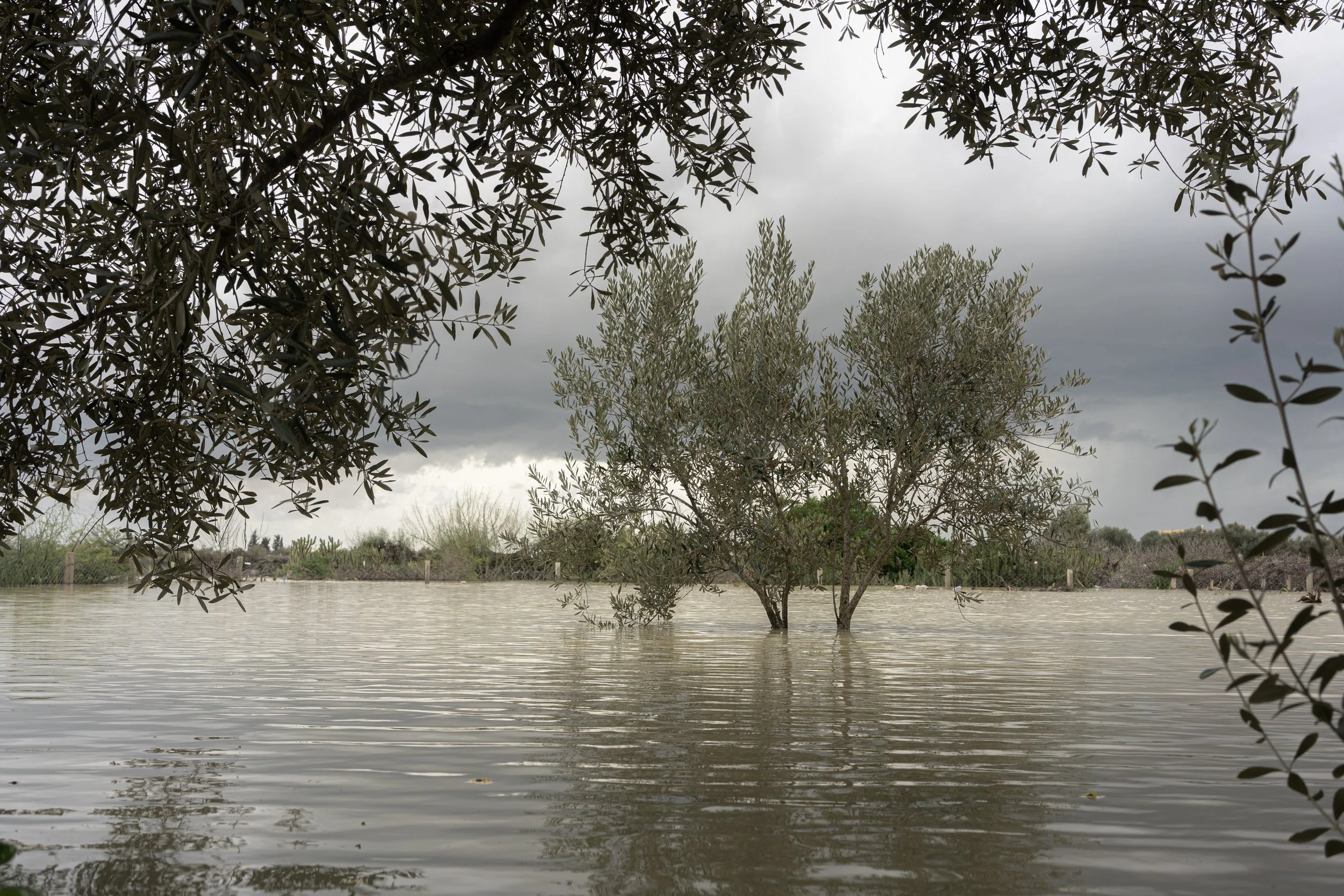
An olive grove inundated by river overflow. Prolonged flooding of the trees' root systems risks long-term damage to the farmland.
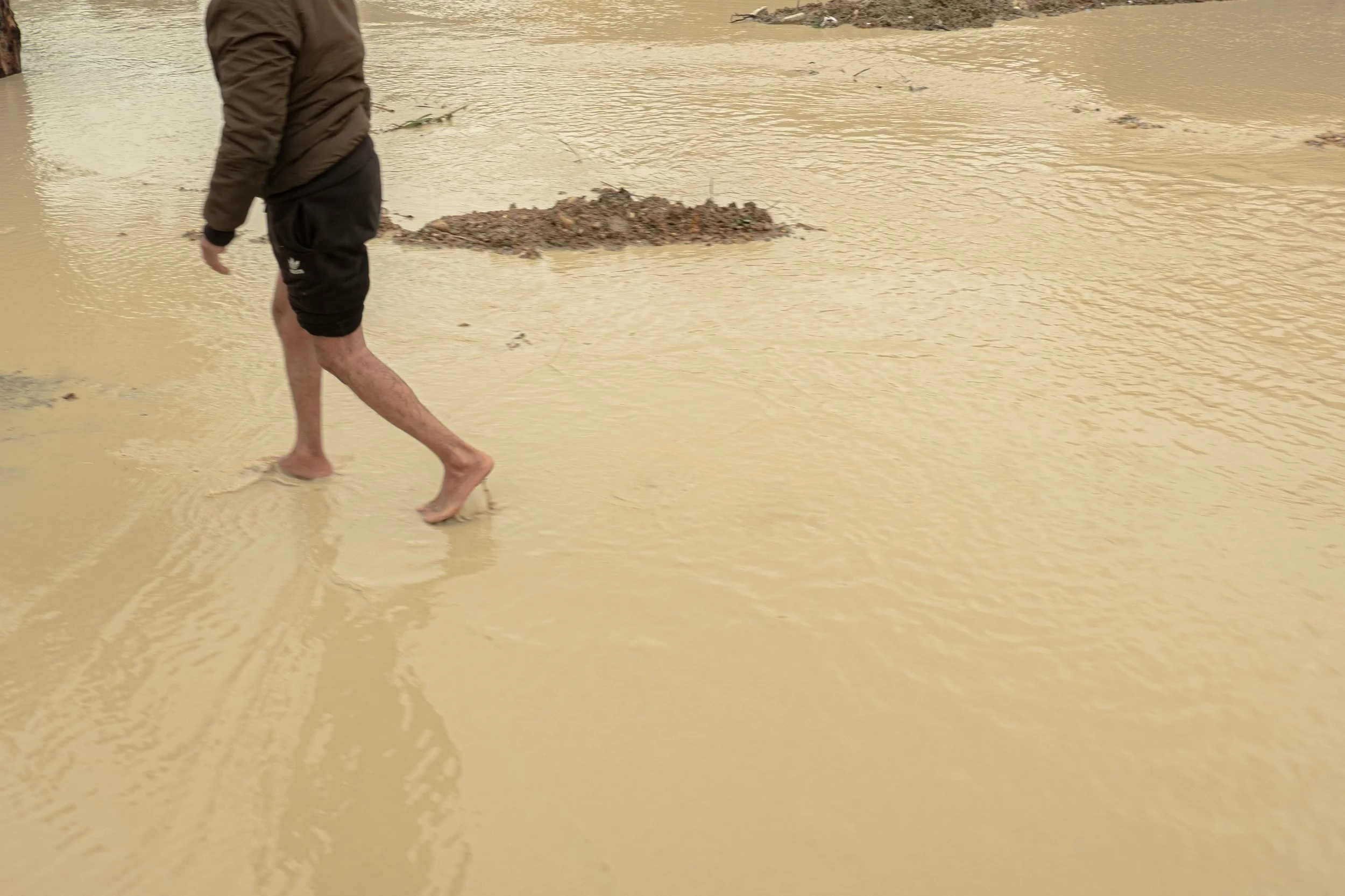
Barefoot through the tide. A resident wades through murky floodwaters near Sidi Kacem, where the convergence of the Sebou and Ouergha rivers has turned rural roads into treacherous currents, forcing locals to navigate the inundated landscape on foot.
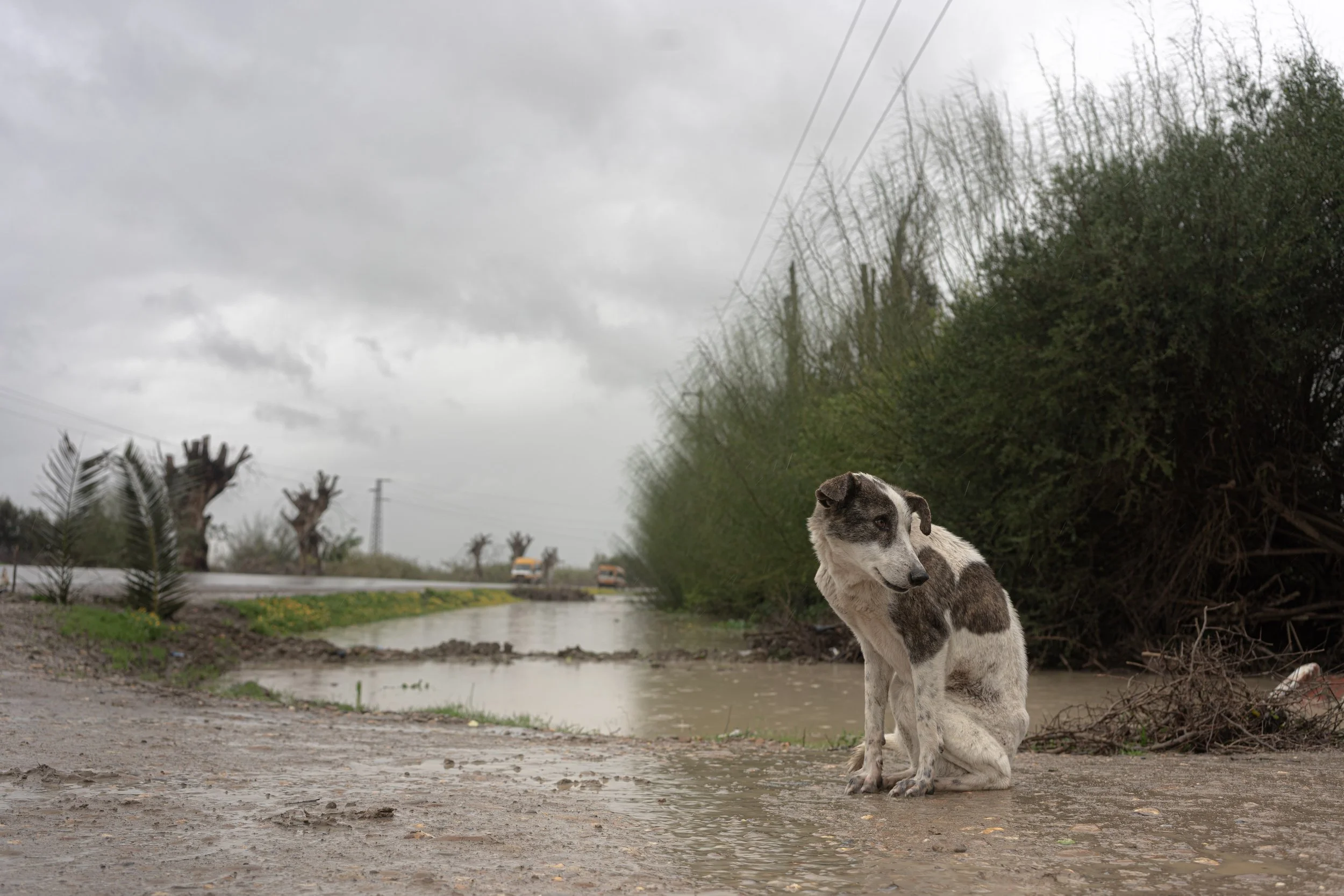
Beyond human livelihoods and submerged homes, local animals also wander displaced, searching for dry ground as floodwaters swallow the surrounding countryside.
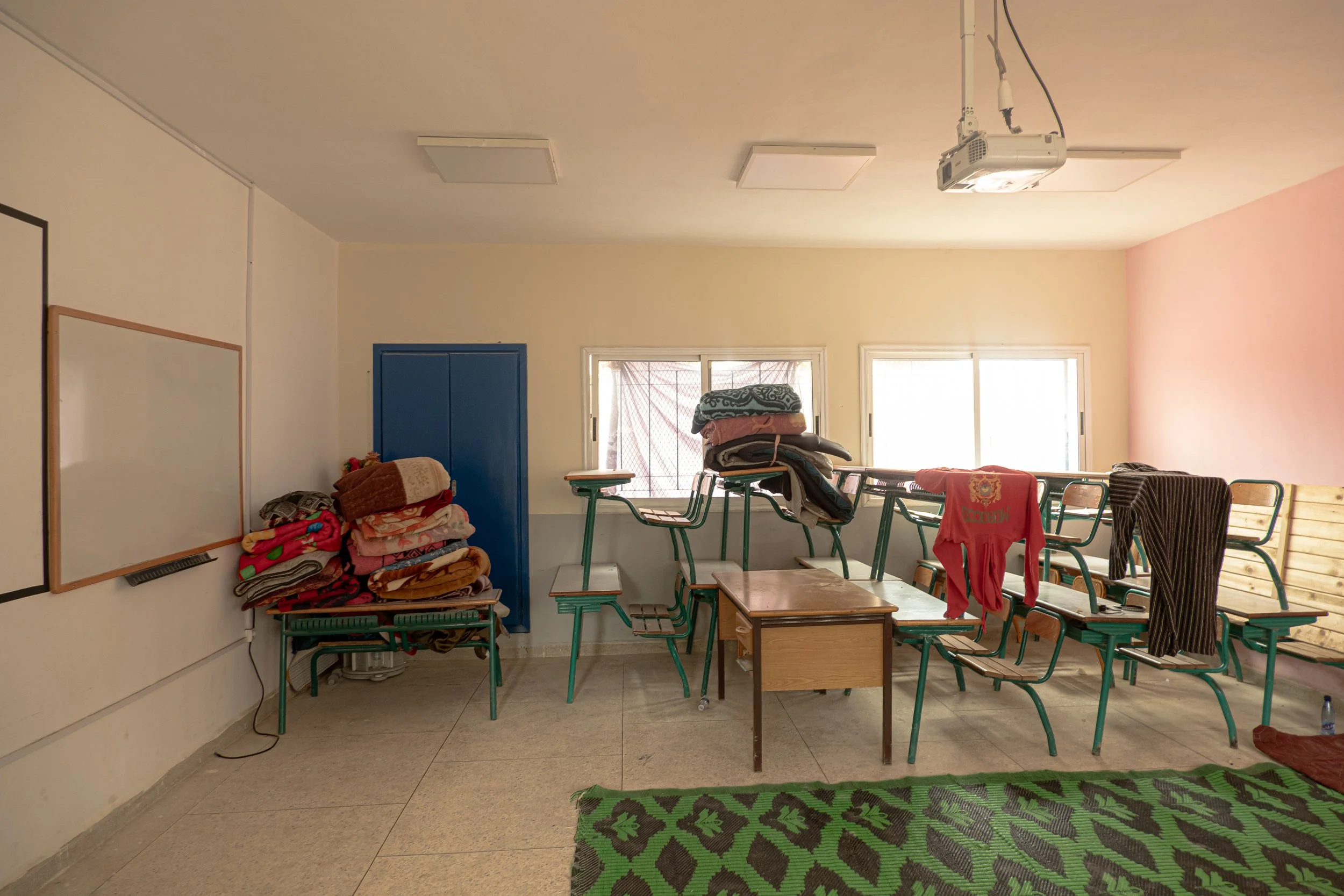
Blankets and clothing in a classroom converted into emergency accommodation for families displaced by flooding near Sidi Kacem, Morocco. Schools across the region have become temporary shelters for residents forced to leave their homes as water levels continue to rise.
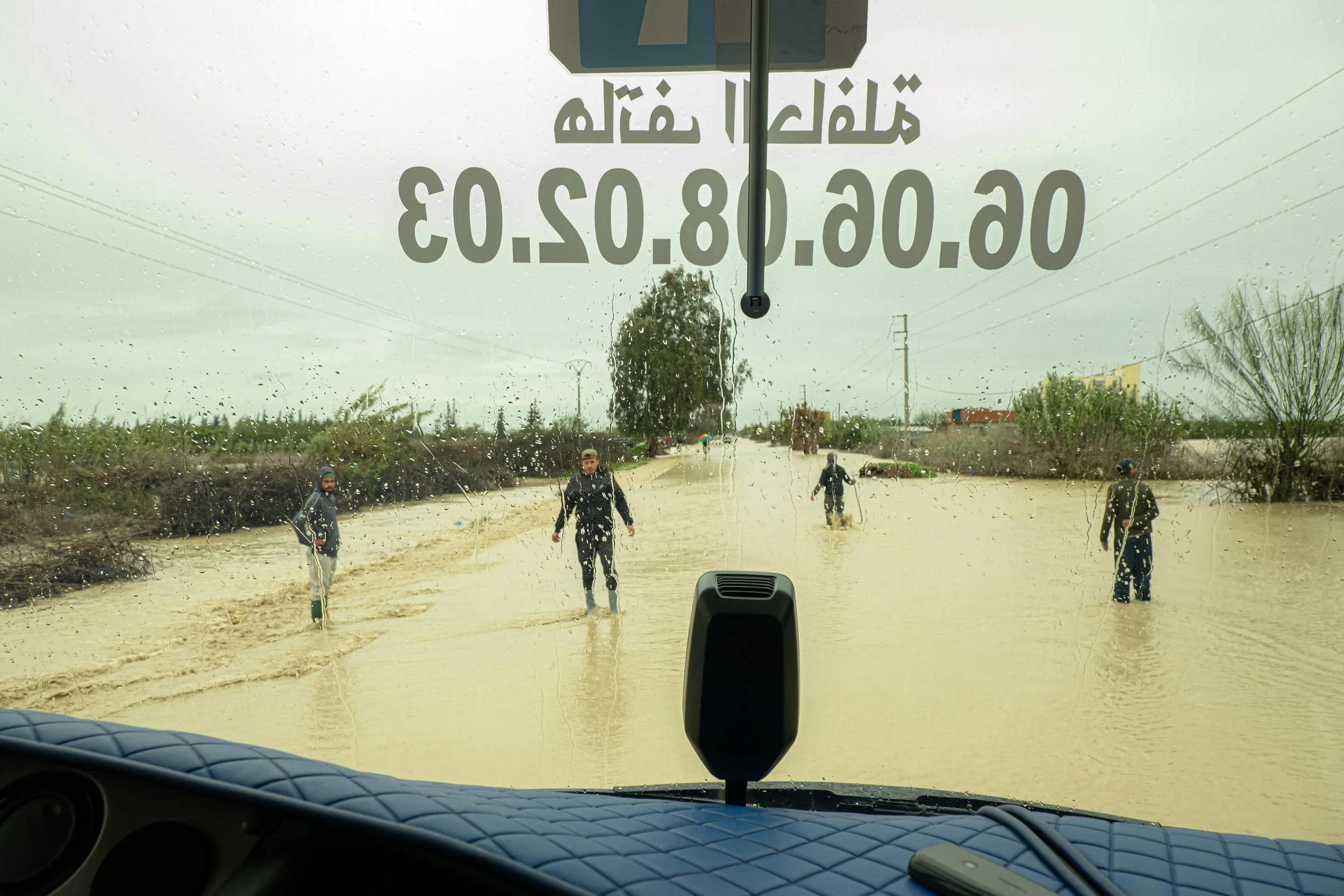
Through the windshield of a stopped vehicle, local spotters test the safety of an inundated transit route. The river overflow has erased visible road boundaries, forcing men to wade ahead on foot to guide traffic through the flooded plain.
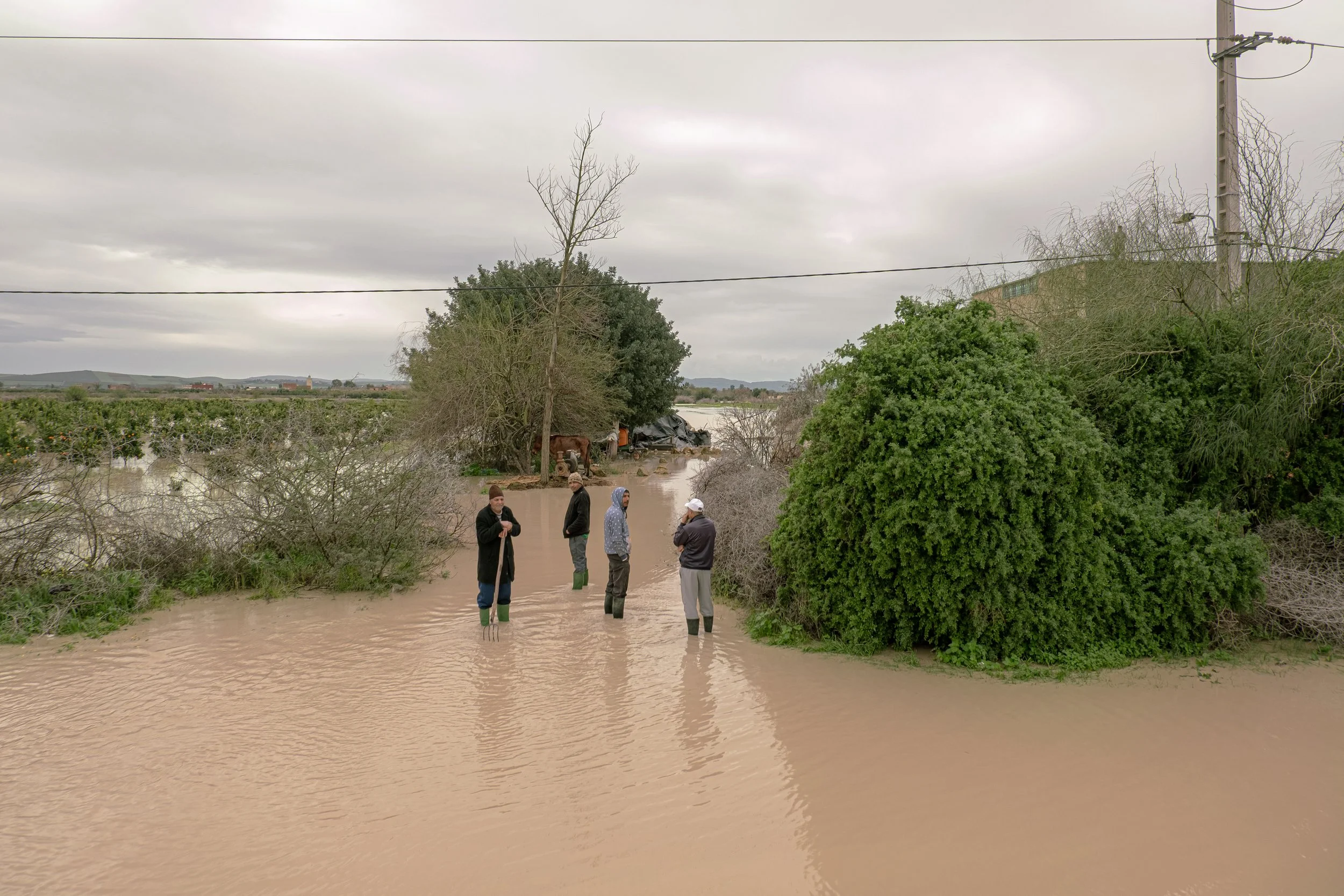
Months of hard labor rotting beneath the muddy tide, a quiet disaster in Morocco's agricultural heartland. Local farmers stand knee-deep in floodwaters on what was once a dry access road near Sidi Kacem.
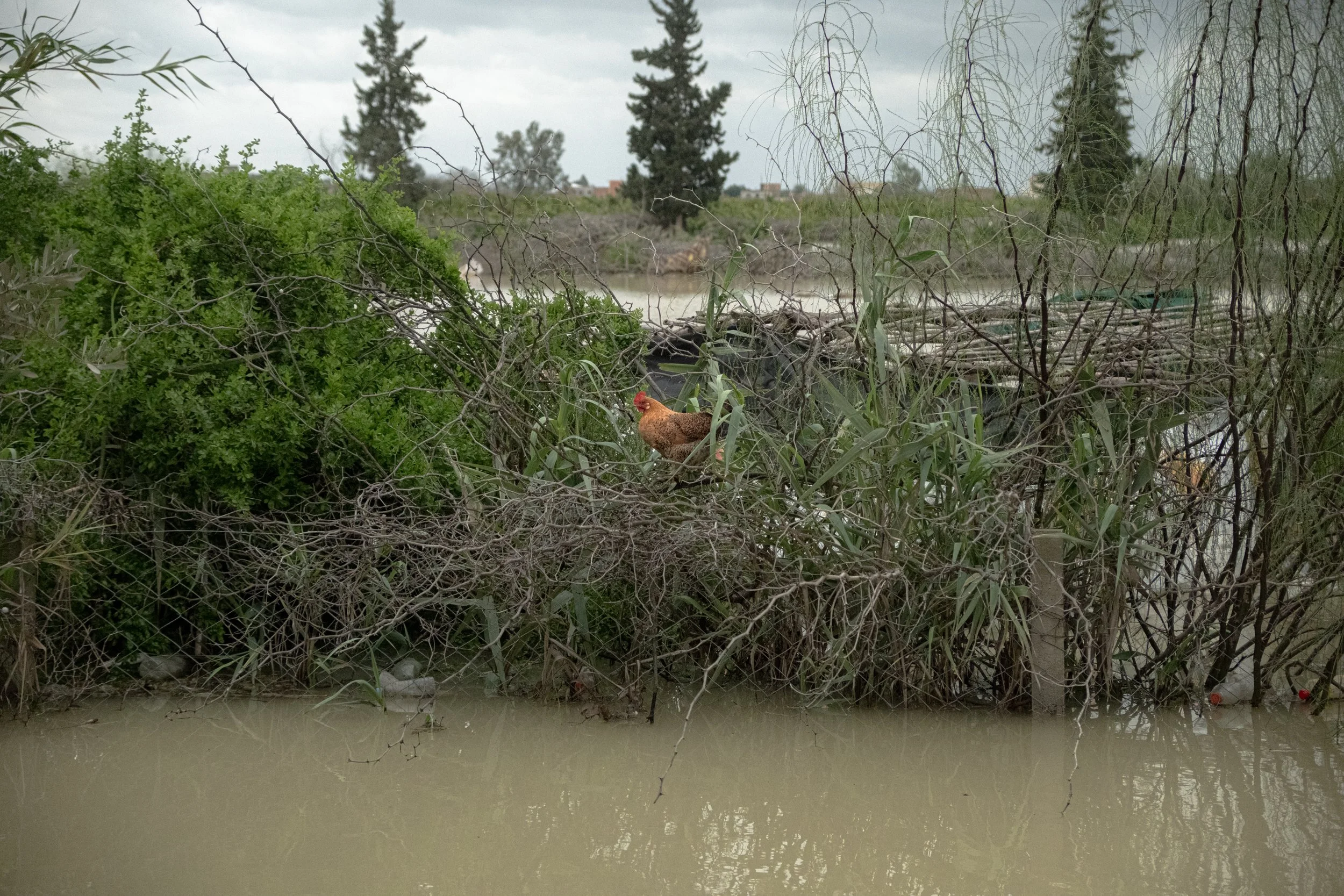
Stranded above murky floodwaters on a makeshift fence, a hen finds temporary refuge a subtle detail of how the disaster upends every layer of farm life in Sidi Kacem.