There Is No Away: Tracking Waste Across
Morocco
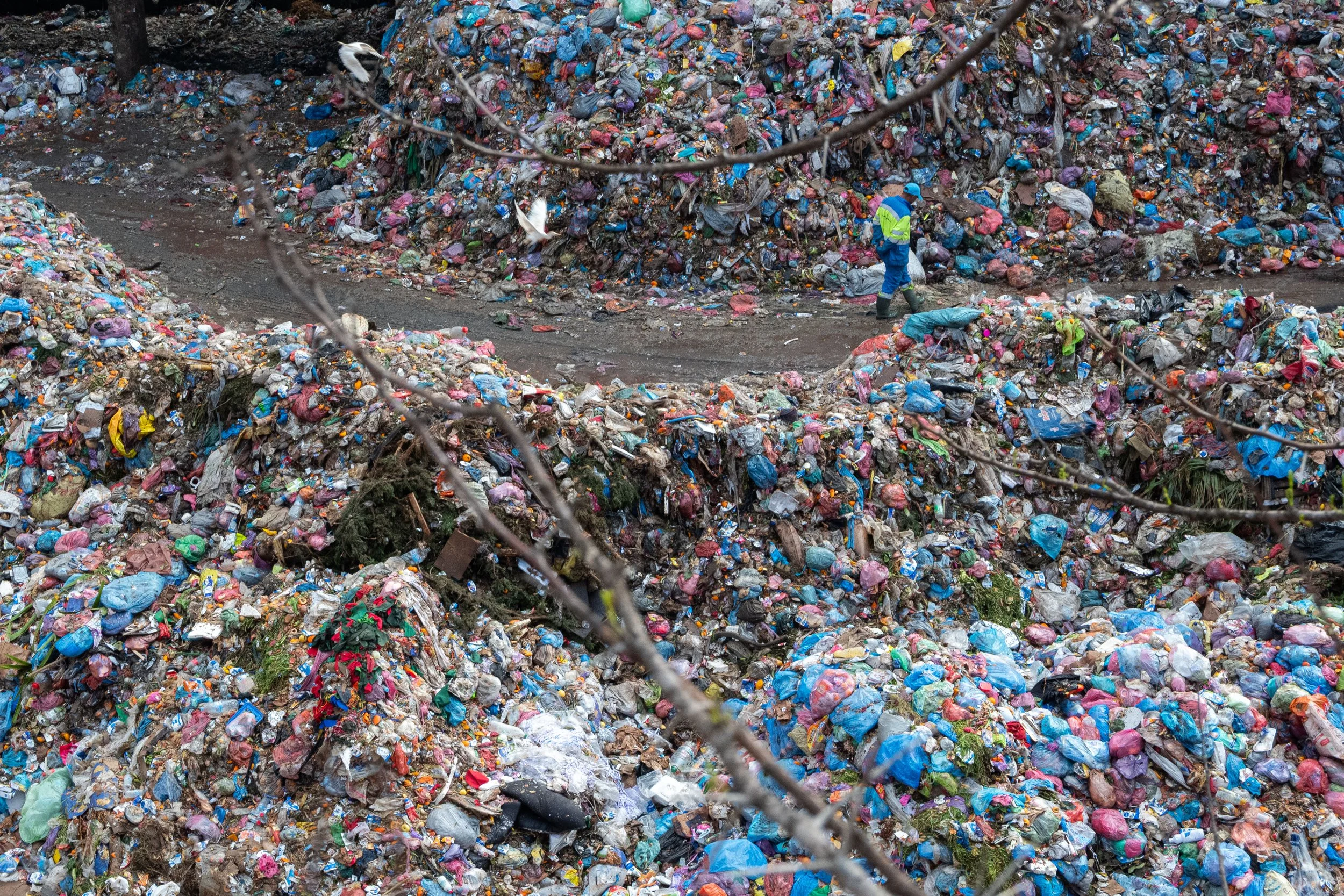
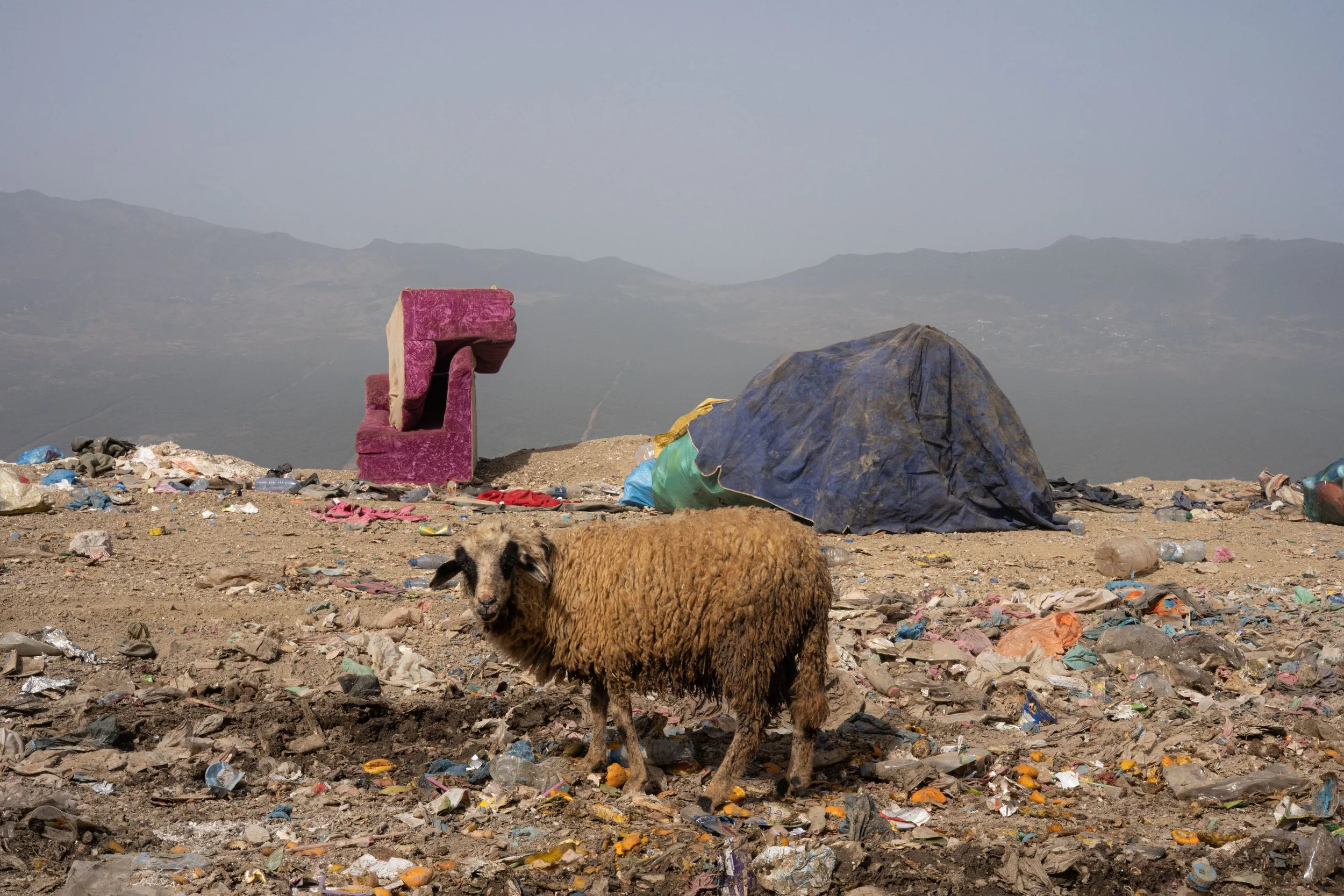
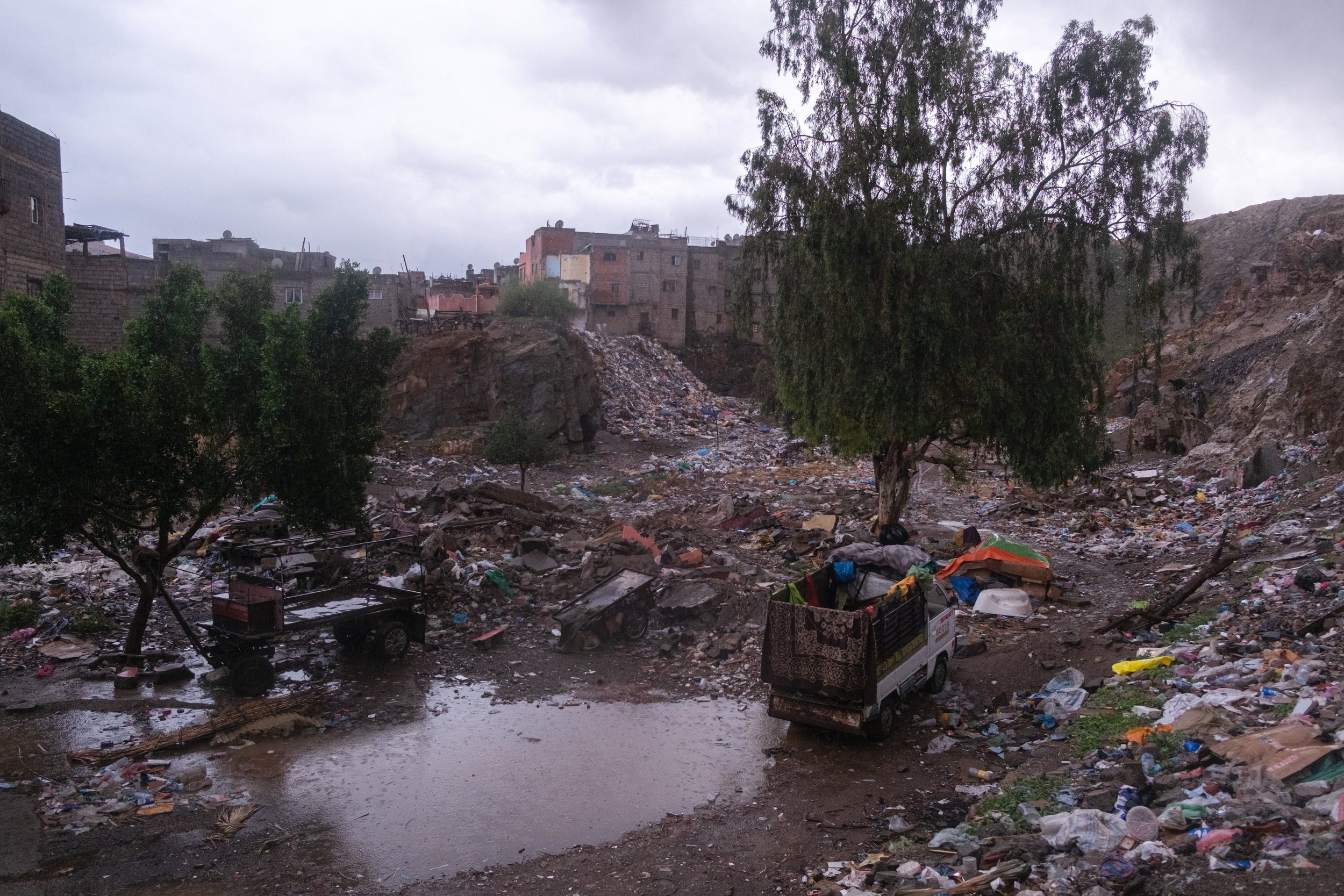
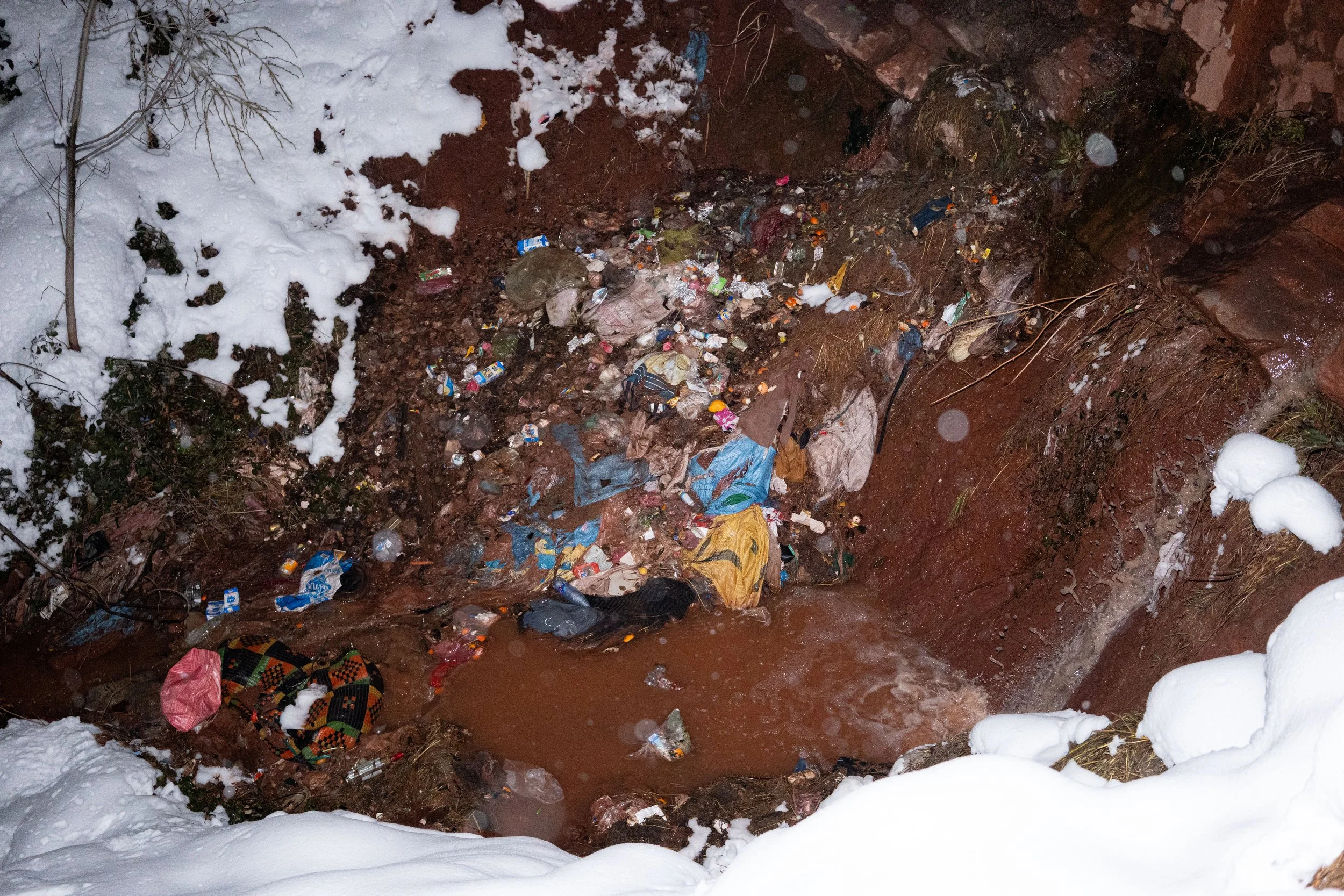
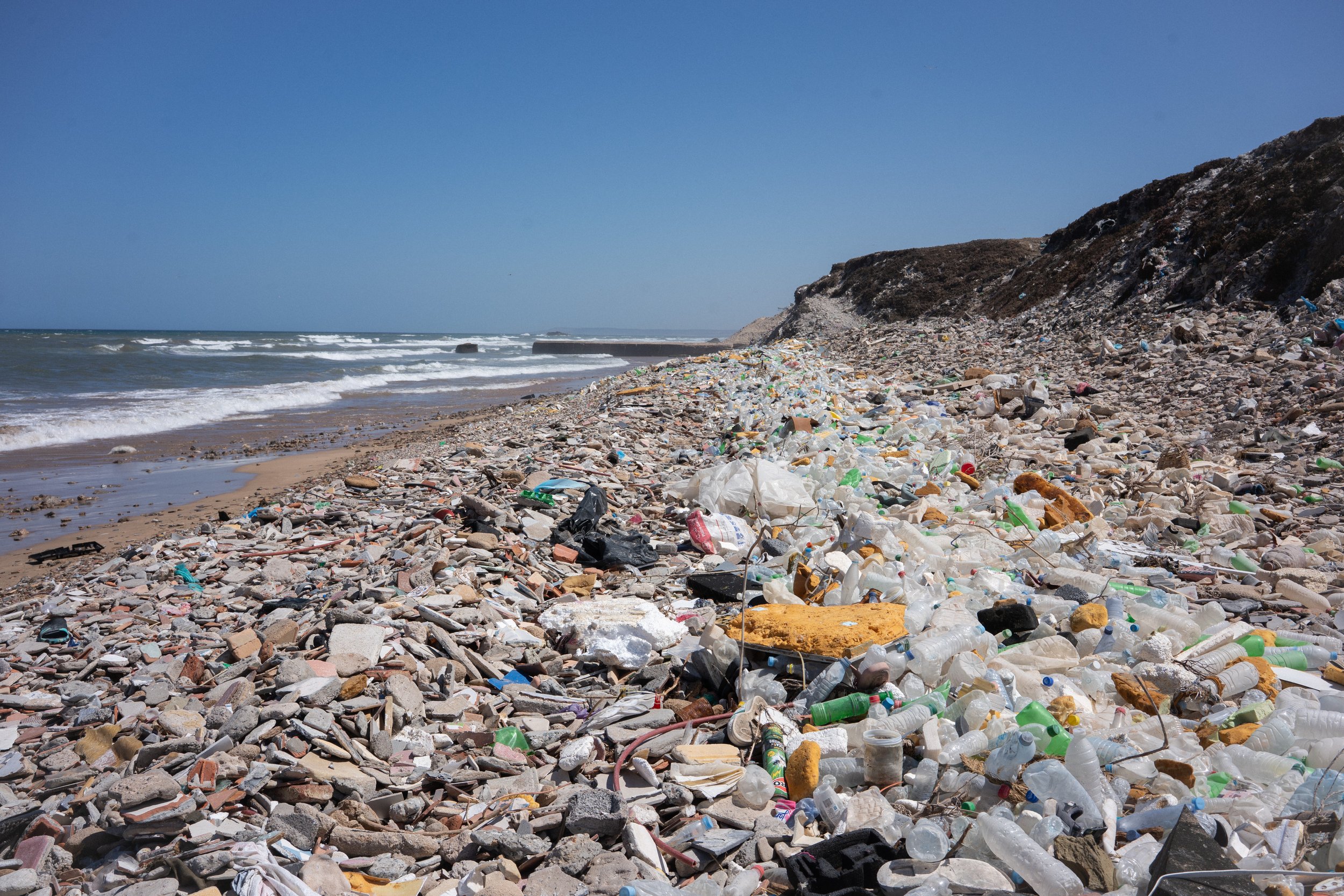
We tend to think of waste as something that disappears the moment it leaves our hands, a final act, a clean separation. But as Joshua Reno writes in Waste Away, "There is no ‘away’ to throw things to." What we call “away” is not an absence but a place, one that is inhabited, managed, and lived in. Waste does not vanish. It is moved, sorted, buried, burned, and carried across landscapes that remain largely invisible to those who produce it. It becomes part of other people’s daily realities, shaping environments, bodies, and routines. What we forget is not the material itself, but its continuity, its persistence beyond the moment of disposal. This research attempts to follow that continuity across Morocco, examining what happens after the act of throwing away and returning attention to the spaces, systems, and lives that exist within what we choose not to see.
Away is a place
We throw something away, and it disappears, at least for us. The anthropologist Joshua Reno, who worked for months inside a North American landfill, describes modern disposal as an arrangement that lets people forget what they discard; the forgetting is not a personal failing but something the system is built to produce. Our lives are organized by constant removal, and we mostly see the clean side of that equation.
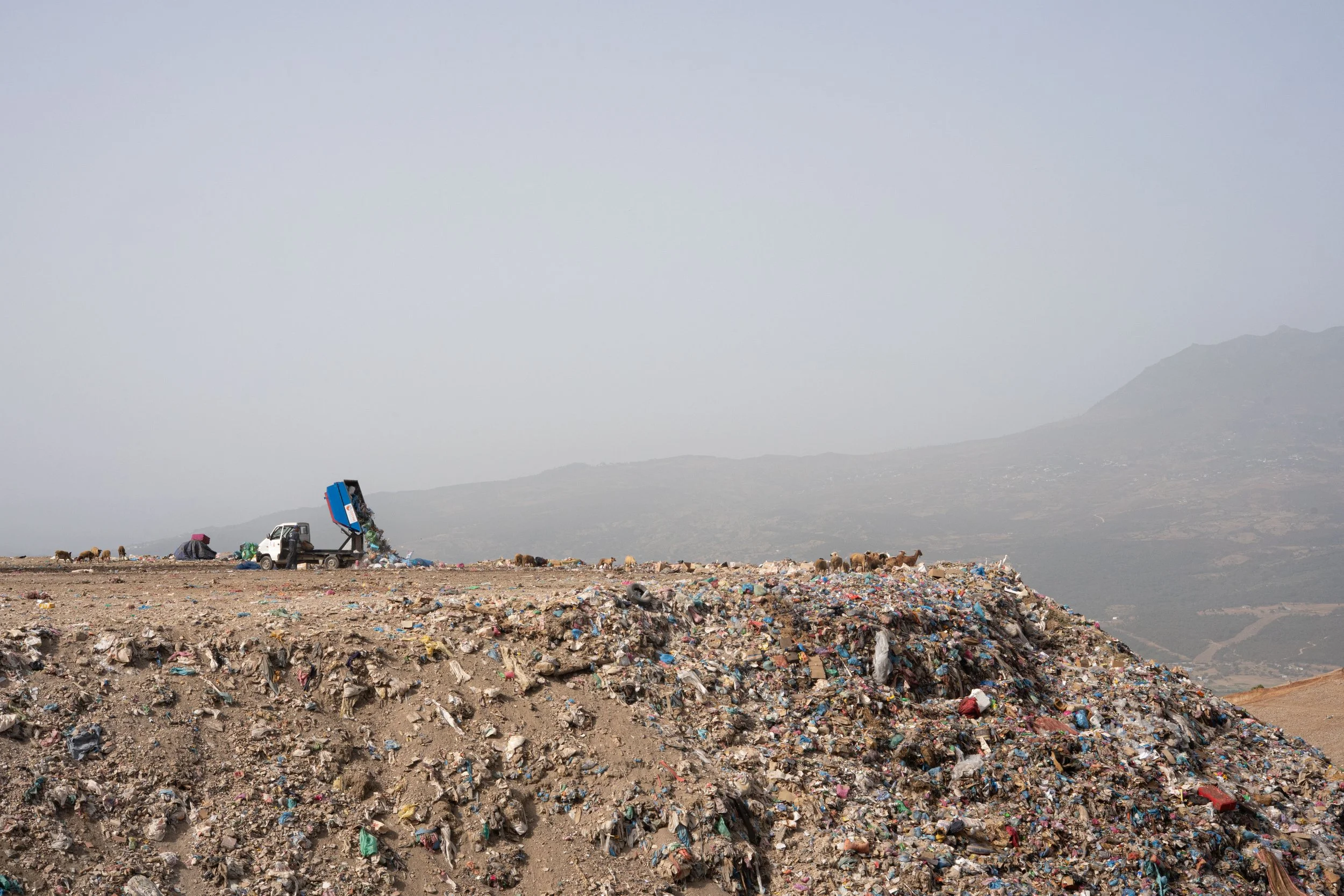
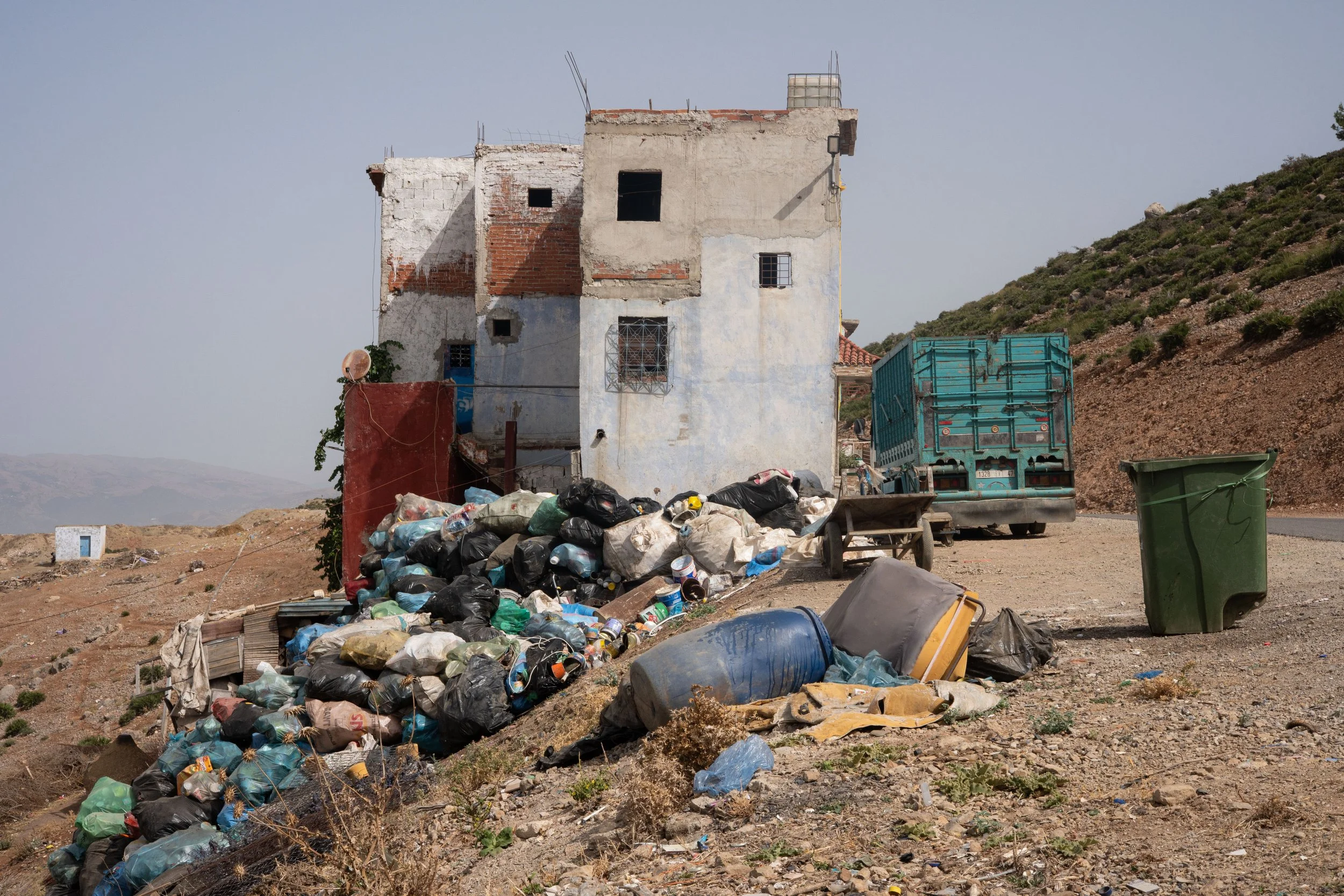
In Morocco, the names of the away are Akreuch, Oum Azza, Médiouna, Mghogha, Sguedla, and El Mnabha. It has neighbors and workers, sheep and storks, wells and rivers, weighbridges and contracts. This project starts from a simple reversal. Instead of following waste to the moment it vanishes from view, we stay with it after it has been forgotten.
The ground: Morocco's waste regime,
2006 to 2034
Legal and institutional architecture The foundation is Law 28-00 on waste management and disposal, adopted in 2006, followed in 2008 by the National Household Waste Programme (PNDM), announced with a budget of around 40 billion dirhams and support from the World Bank. 2,3 Most services are run under delegated management: private operators hold multi-year contracts with communes or with intercommunal bodies such as Rabat's ECI Al Assima or Tangier's Al Boughaz grouping. The 2011 Constitution recognises access to a healthy environment, Law 49-17 governs environmental assessment and public inquiries, and Law 31-13 on the right of access to information gives citizens a formal route to request public documents. These texts are not background; they are the instruments against which the project measures practice.
What the State reports By the end of the PNDM, official figures listed 23 controlled landfills serving 154 local authorities, 13 sorting and recovery centres, and 67 wild dumps closed or rehabilitated. 1 Other official briefings have given slightly different counts, such as 27 controlled landfills. 3 We treat such divergences not as errors to smooth over but as data about how the sector counts itself.
The successor programme (PNVDM, 2023 to 2034) targets full collection coverage, the closure of all wild dumps and a 25 percent recovery rate, up from roughly 7 percent. 1,6 The World Bank is 6 supporting it with a 250 million dollar operation. In December 2024, a further framework agreement worth 27.6 billion dirhams was signed to finance 51 landfill projects and to rehabilitate or close some 270 wild dumps by 2034. 1
Figure 1. Breakdown of the 21.14 billion dirham PNVDM envelope as reported in June 2026. Bar length is the share of the total. The line for rehabilitating old dumps is highlighted because it frames one of our questions: how much of the past is budgeted for, and which sites are expected simply to be left behind.What the numbers leave out
An assessment for the Climate and Clean Air Coalition estimates that Morocco's urban landfills receive more than 7.5 million tonnes of waste a year, around 5 million of it organic and mostly water. That moisture becomes leachate and gas. Only 5 to 10 percent of landfill gas is captured, under 1 percent is used in engines, and the escaping methane amounts to 3 to 5 million tonnes of CO₂ 7 equivalent. The World Bank projects national waste generation of 17.6 million tonnes by 2050. 8
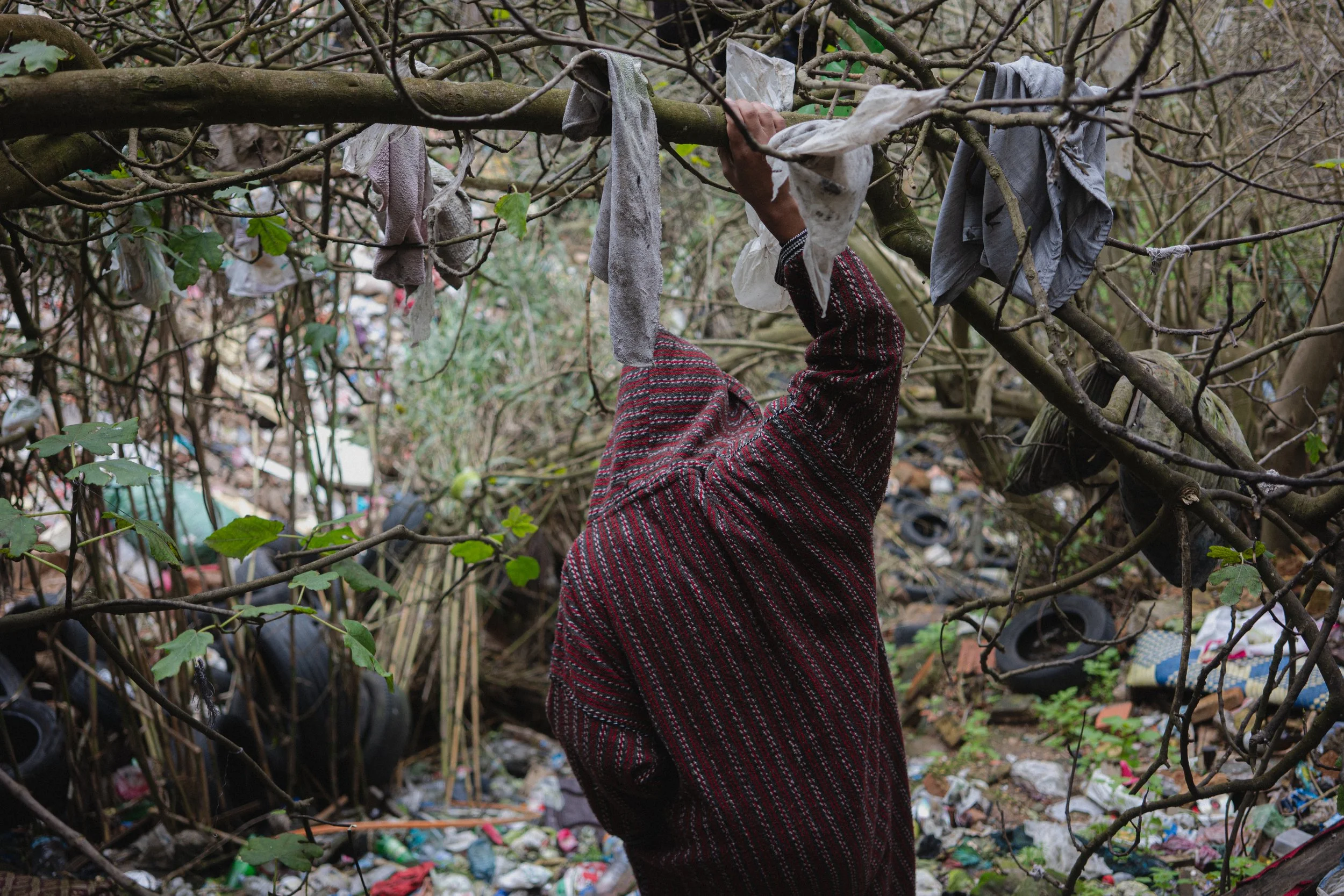
The human side of recovery is counted even less precisely. A 2011 study by the World Bank, UNDP and the environment department counted 7,123 waste pickers, 5,308 in city streets and 1,815 on dumps; between 40 and 60 percent of those working on dumps were under twenty, and 14 percent were women. 9 Other estimates of the informal workforce reach about 34,000. 10 A fivefold gap between counts is itself a finding about visibility.