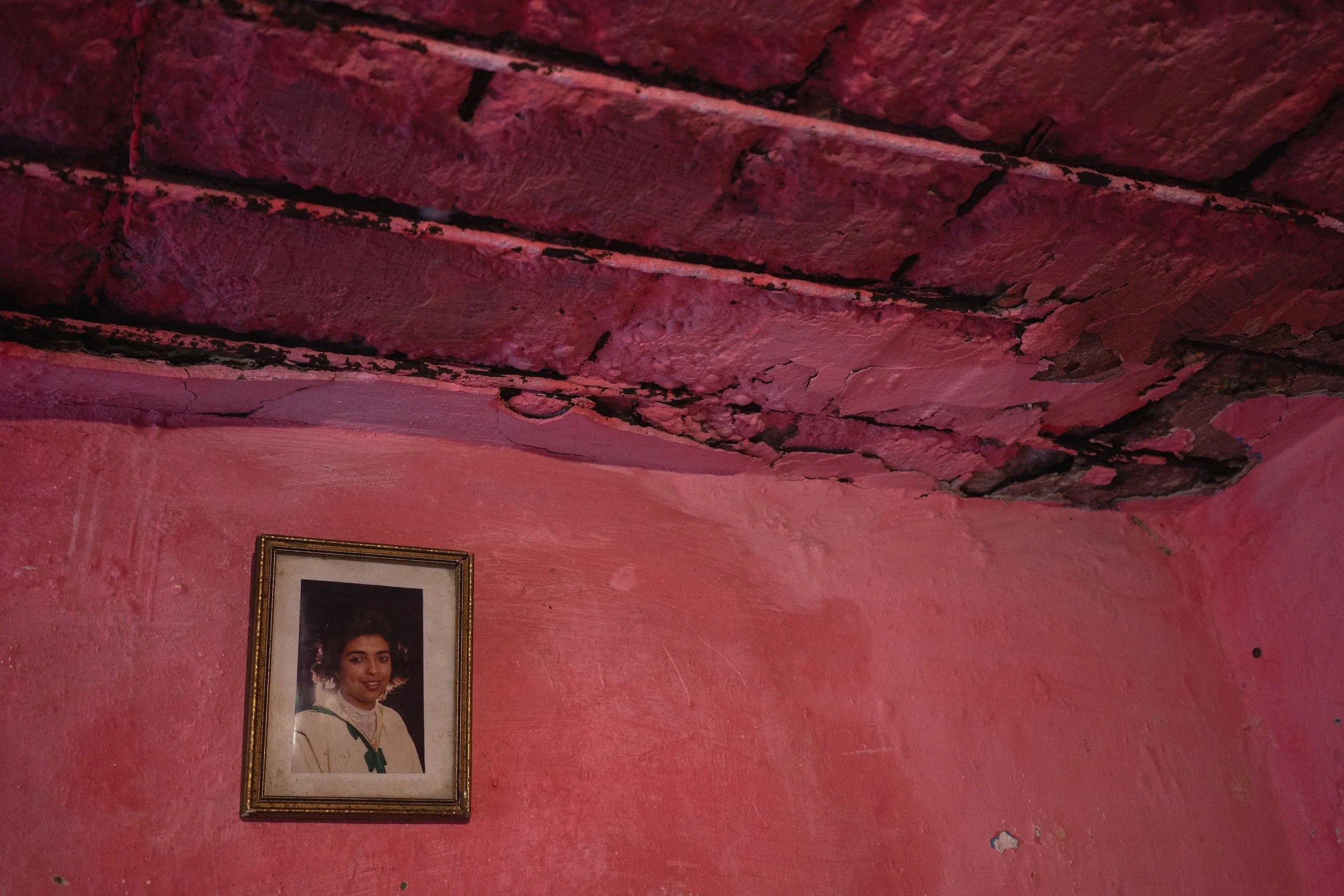
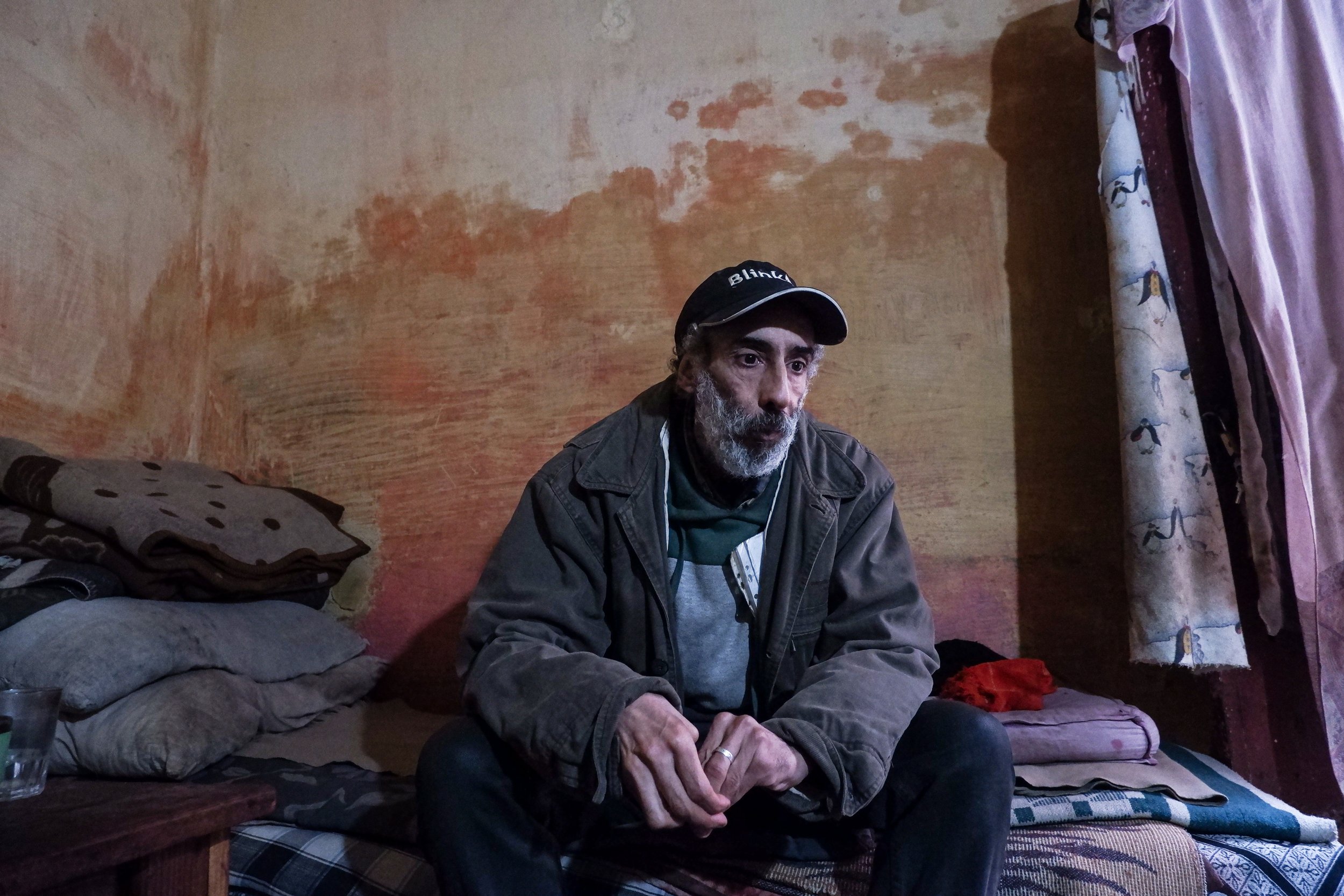
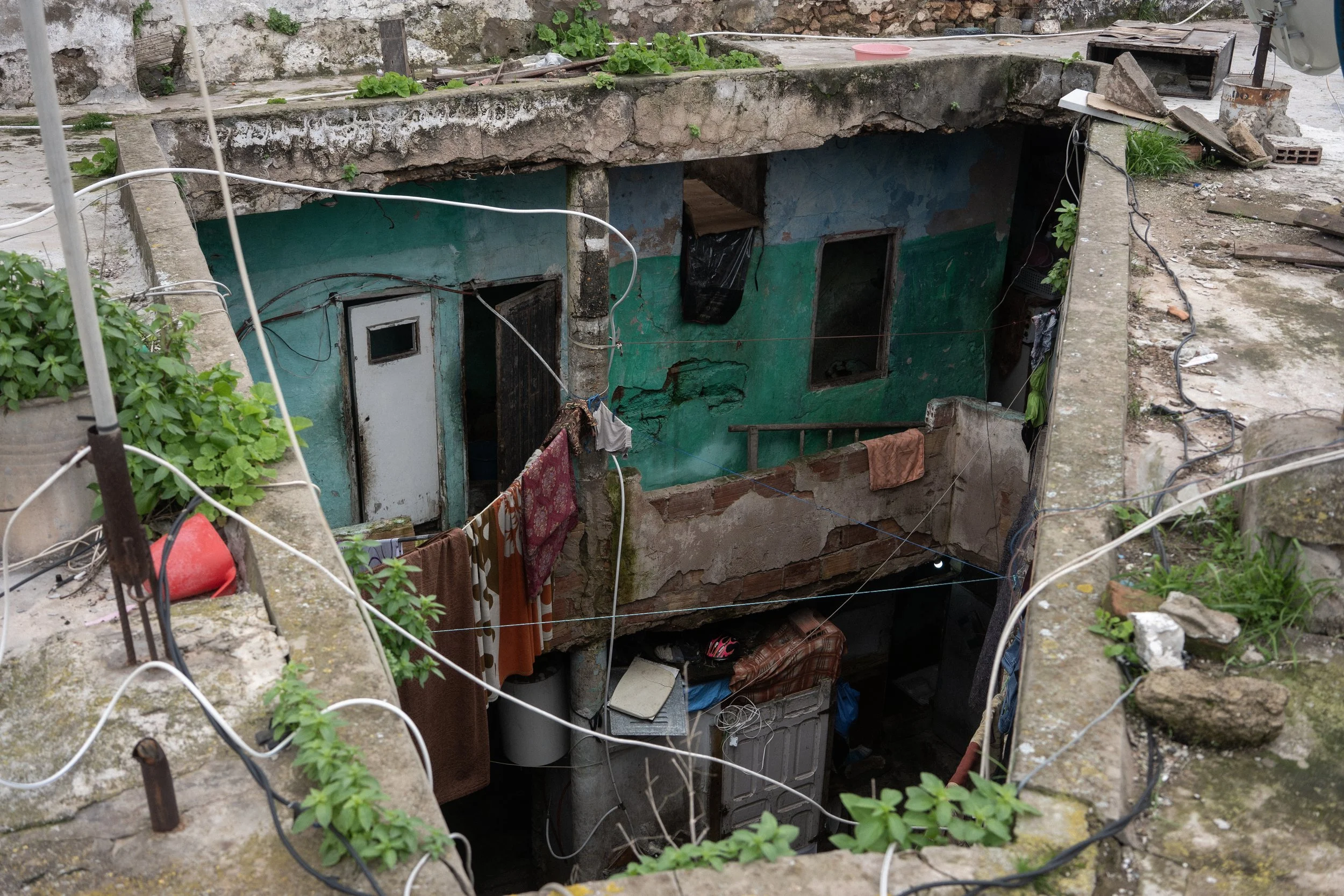
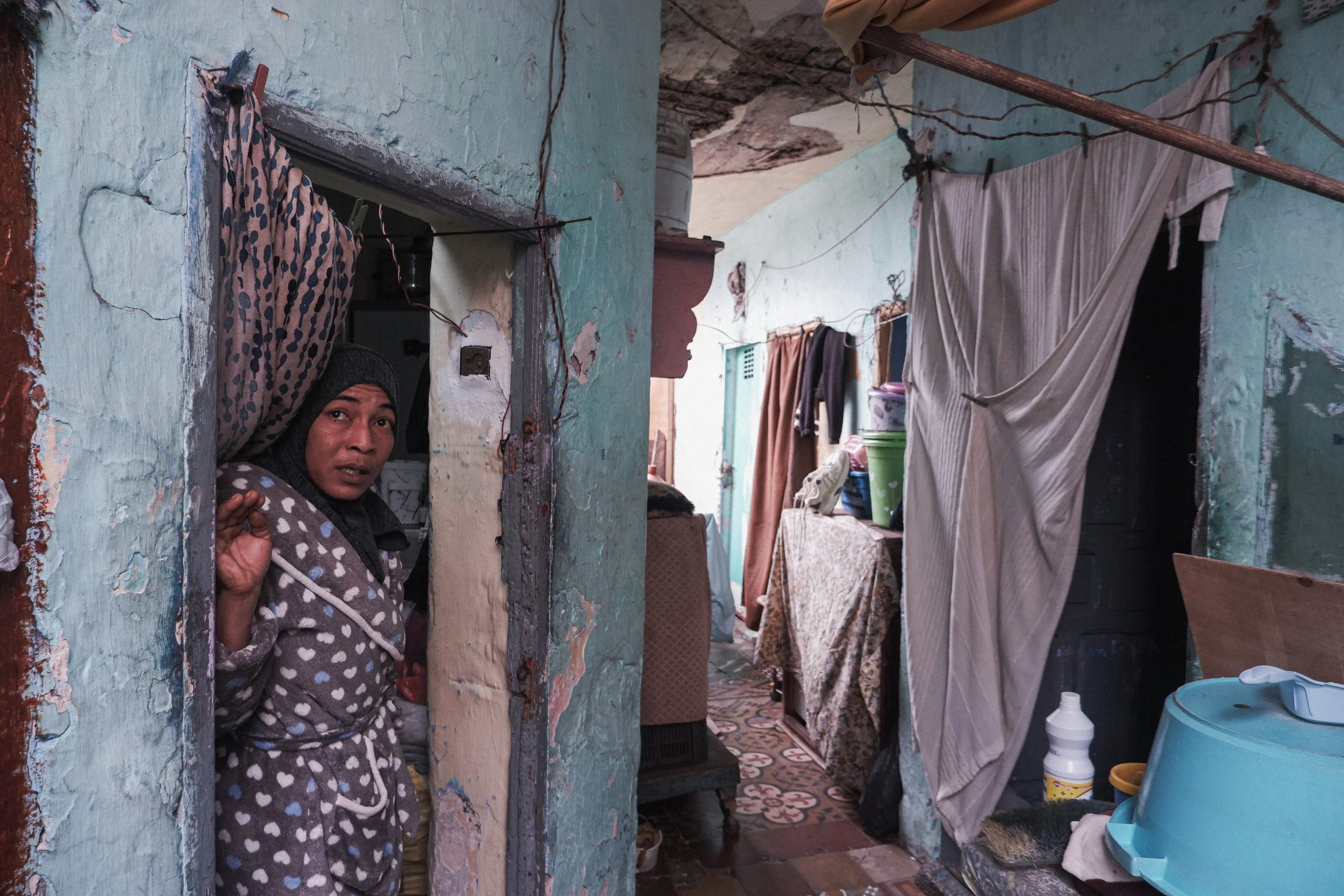
Salé, Funduq Hajji. For years, the families living here have been given promises of reconstruction that never materialize. Instead, life stays completely on hold inside rooms where the walls absorb the winter rain and the future feels entirely suspended.
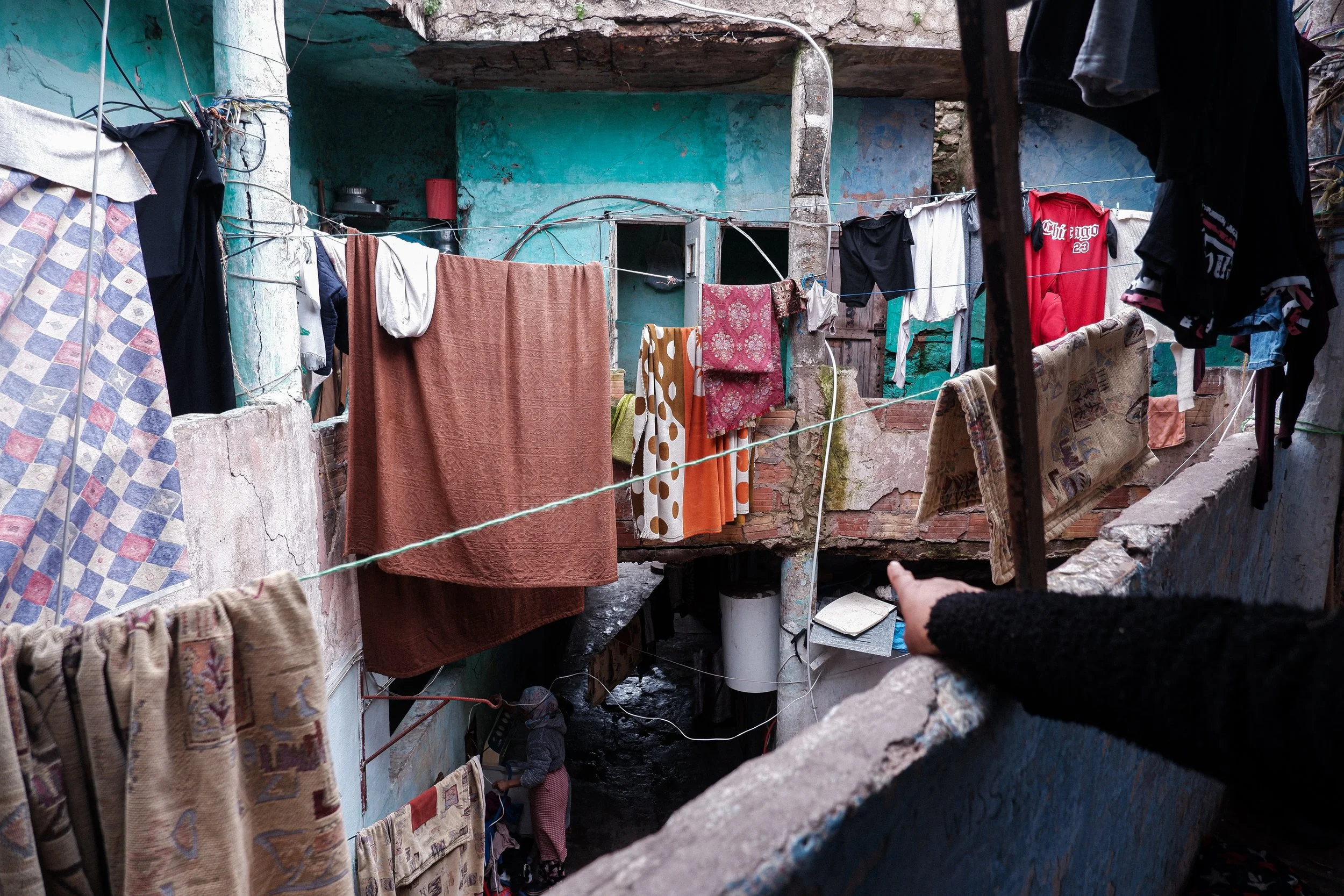
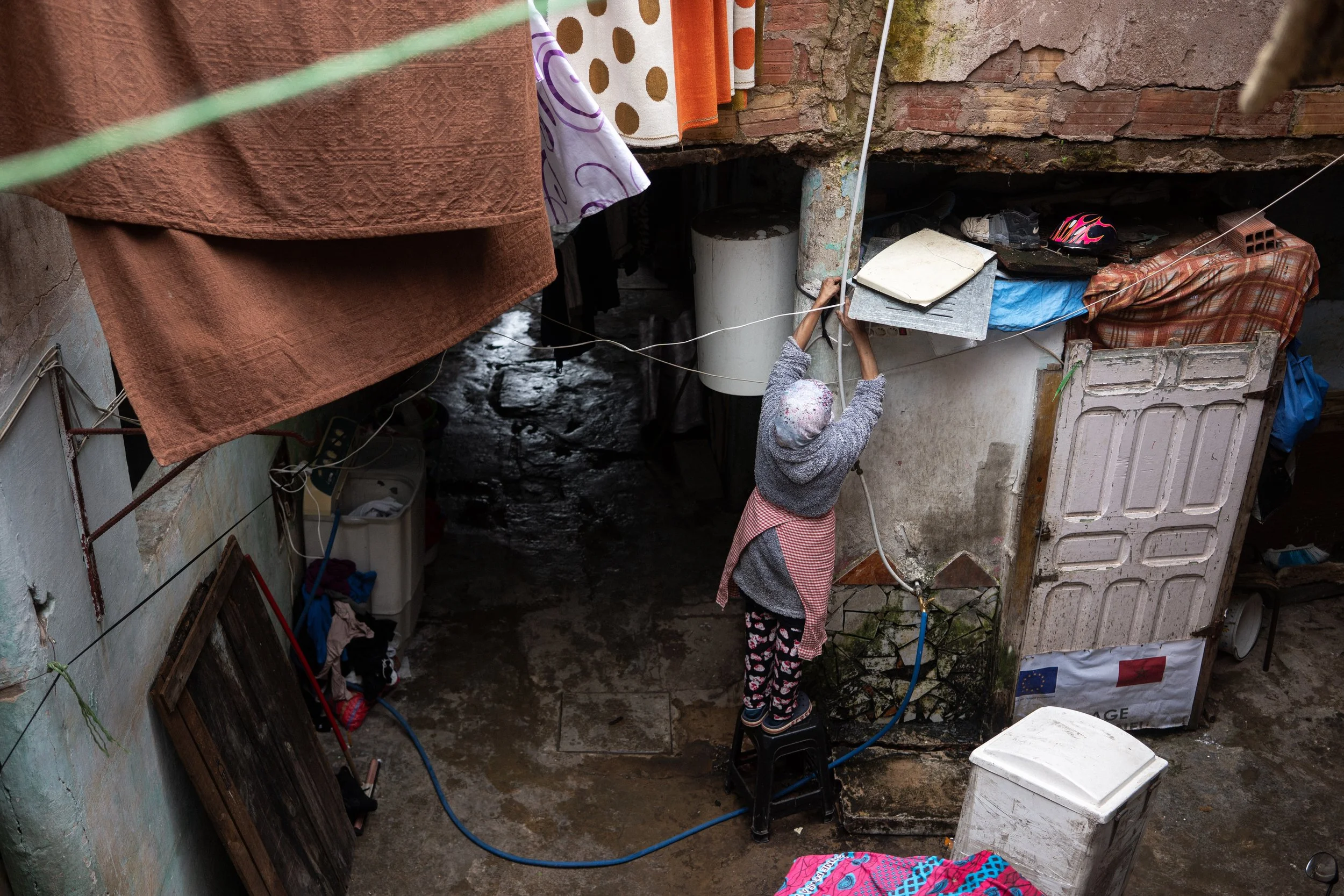
Inside the courtyard of Funduq Hajji, daily life carries on directly alongside the physical collapse of the building. Bright blankets and damp clothes dry on lines tied to crumbling support pillars, even as residents point out sections of the ceiling and floors that have completely rotted through. Relocation promises from local authorities have stalled for years, leaving dozens of families stuck in a holding pattern.
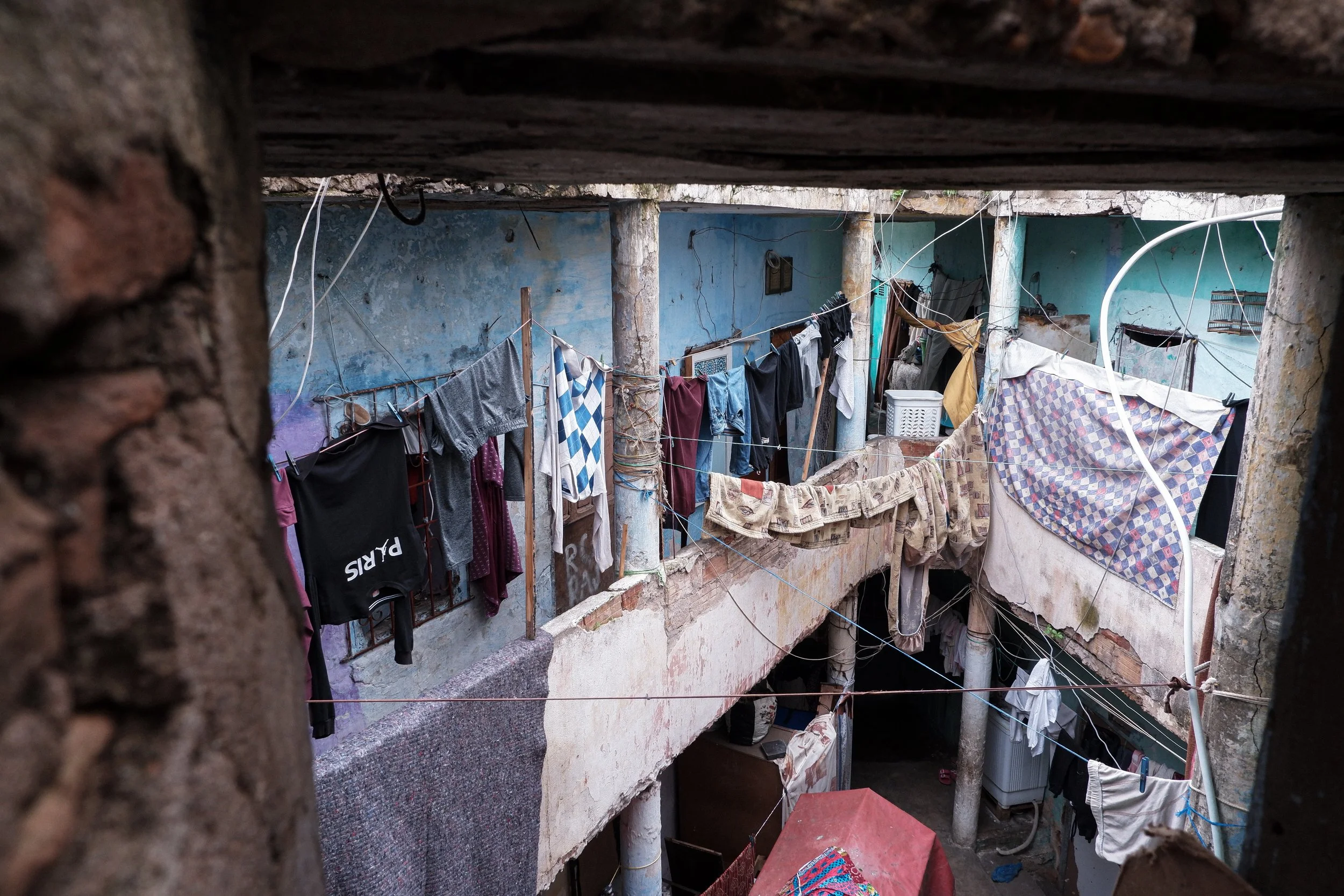
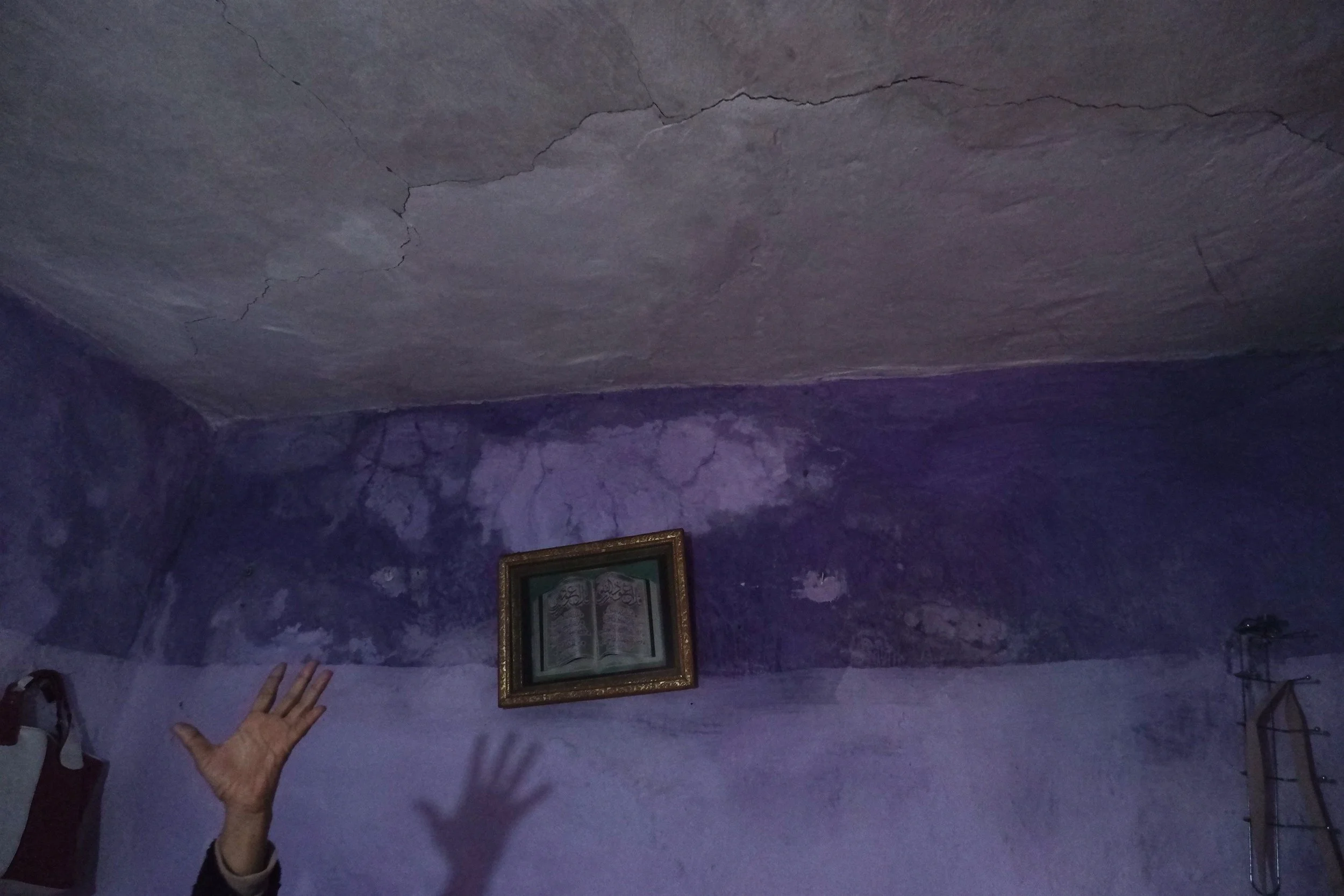
Salé, Morocco. A hand is raised against a damp purple wall, marking the steady progress of a crack splitting the ceiling plaster. In the historic funduqs of Hajji and Korchi, personal fixtures like framed religious art sit alongside severe structural hazards, the result of decades of systemic neglect that has turned temporary shelter into a permanent crisis.
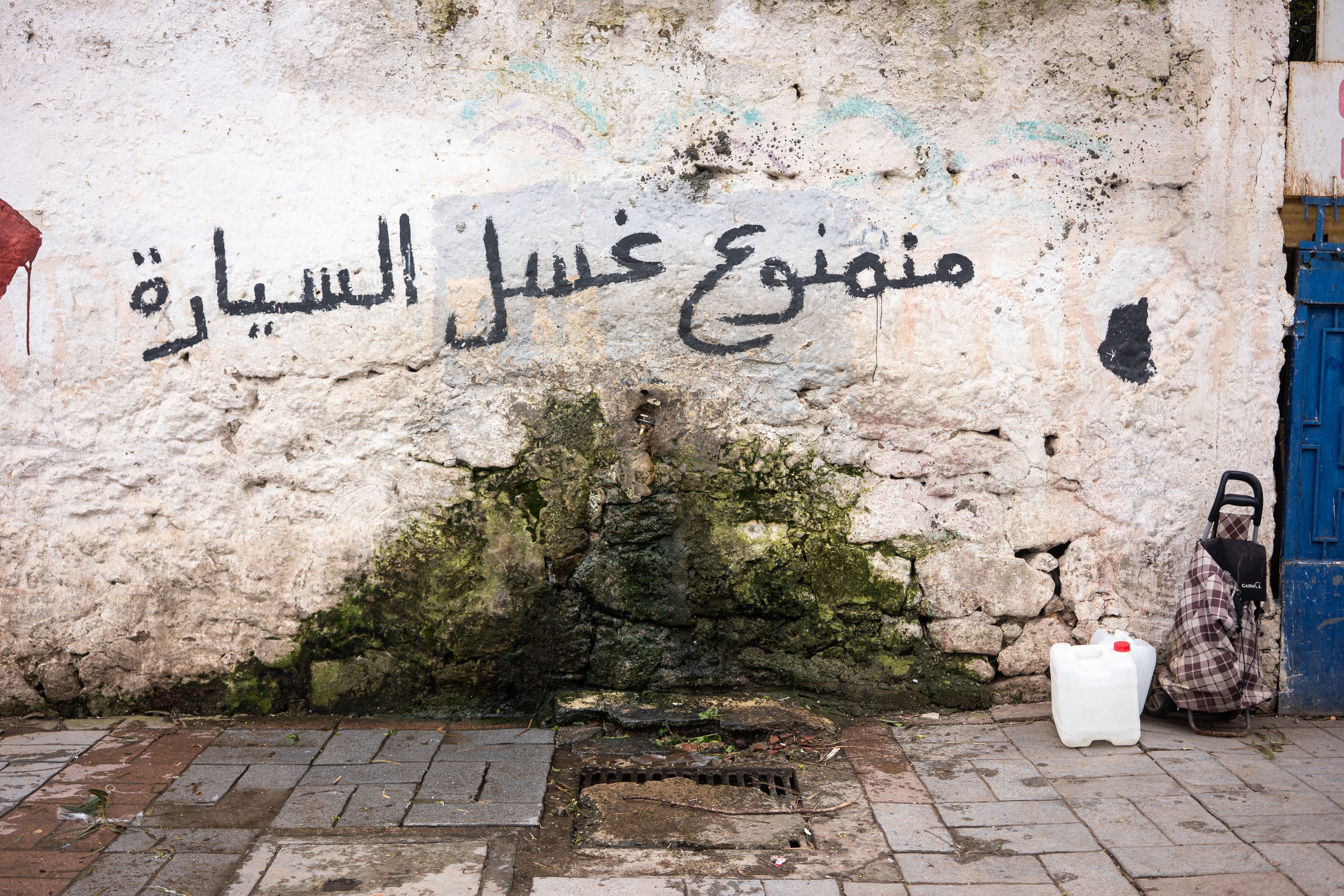
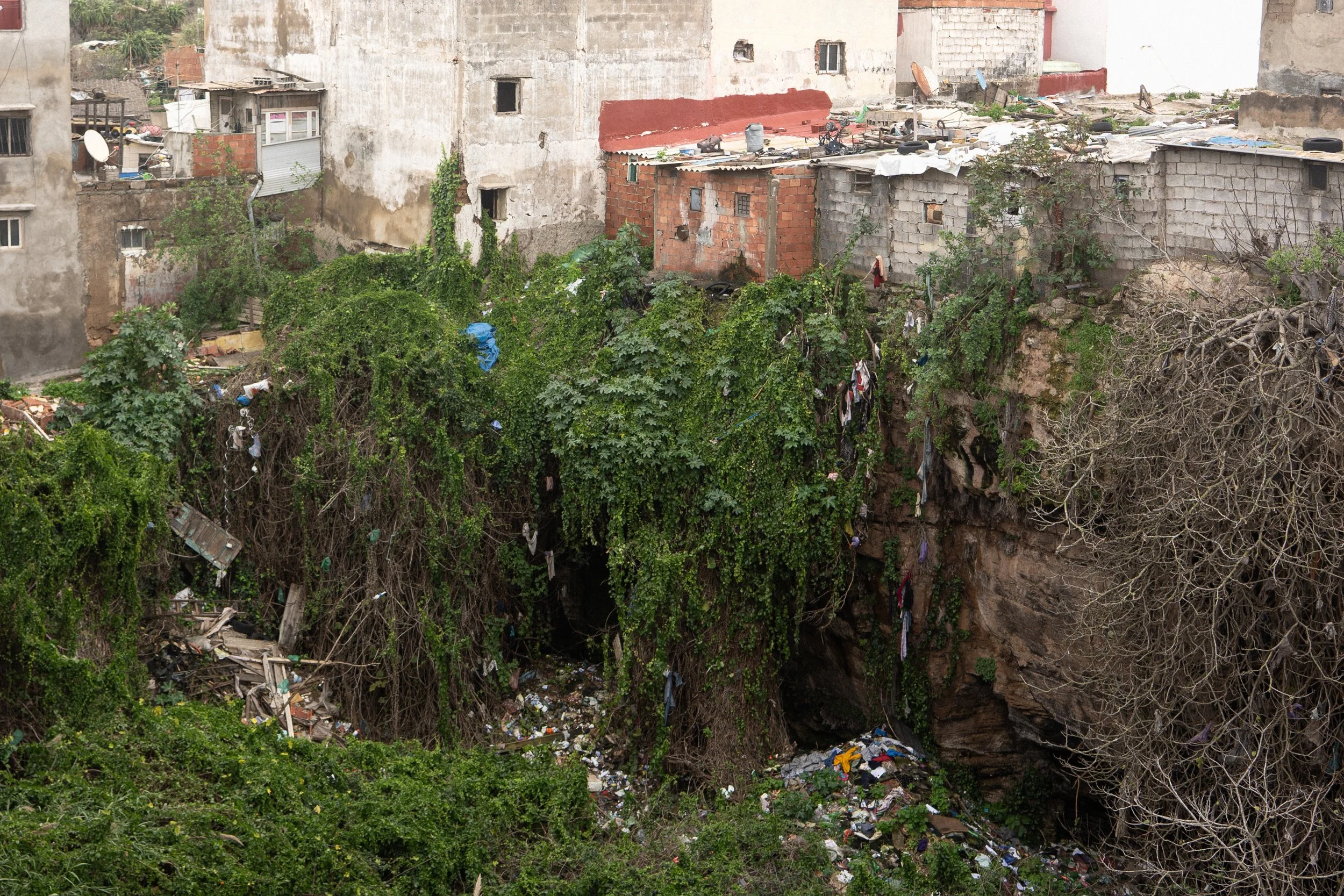
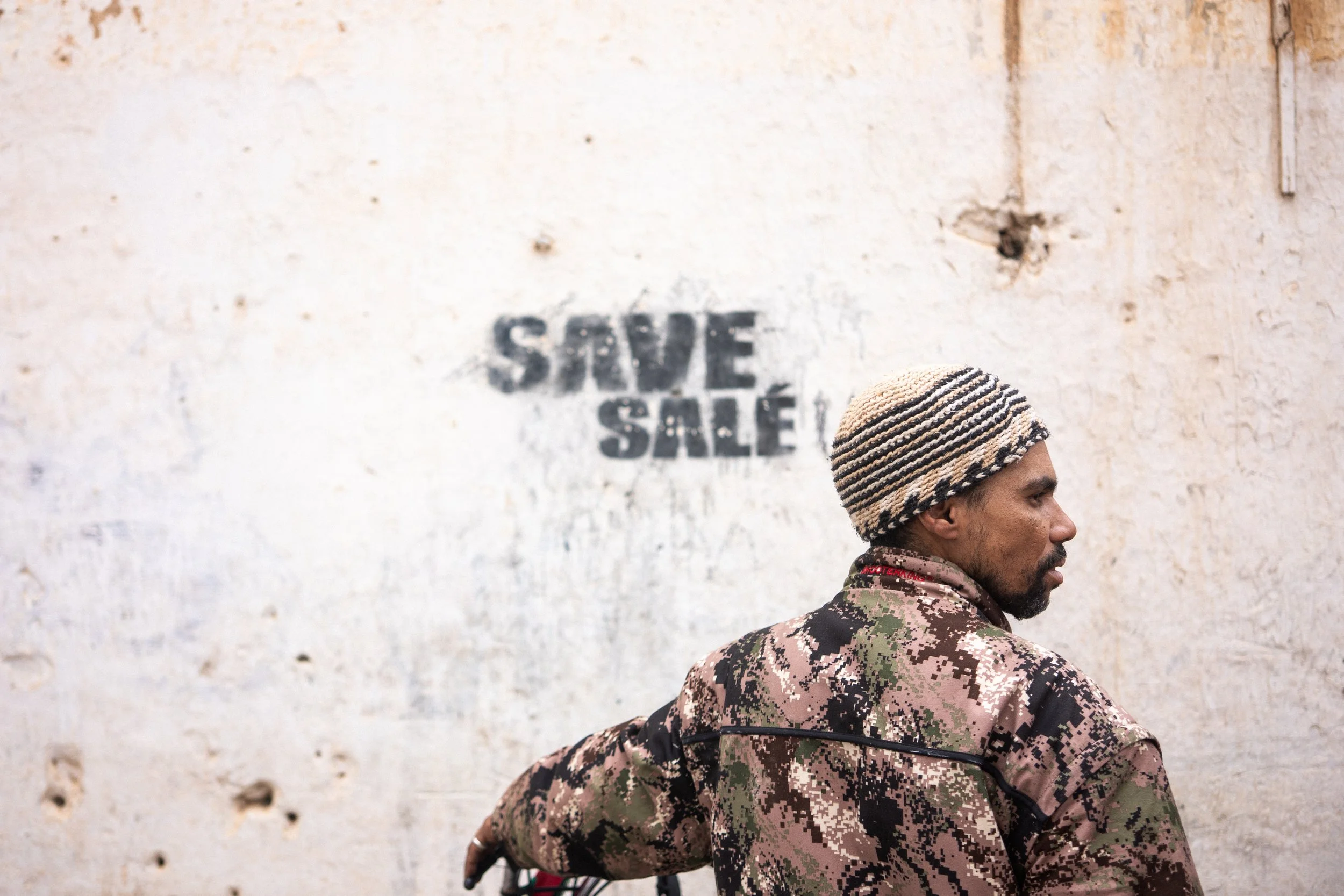
A stencil on a weathered wall underscores the crisis of structural decay in Salé. Inside the nearby Funduq Hajji, generations of history are giving way to water damage and municipal neglect.
Under the cracked ceiling
Within two aging funduqs (ﻓﻨﺪق) in Salé, known as Hajji and Korchi, time does not repair what neglect has eroded. Ceilings crack open, walls absorb rain, and wind moves freely through spaces meant to shelter. When night falls, sleep becomes an act of trust: families lie beneath structures they are no longer sure will hold until morning. Water traces the same paths year after year, marking rooms with dampness, fear, and resignation. Promises of reconstruction have circulated for years, repeated and deferred, while life continues in a state of suspension. Children leave school, not by choice, but because instability reshapes what the future can contain. What was once meant to be temporary has hardened into permanence. These funduqs are not simply buildings in decay; they are places where dignity is postponed, and survival quietly takes its place.
Salé, Funduq Hajji. For years, the families living here have been given promises of reconstruction that never materialize. Instead, life stays completely on hold inside rooms where the walls absorb the winter rain and the future feels entirely suspended.
Inside the courtyard of Funduq Hajji, daily life carries on directly alongside the physical collapse of the building. Bright blankets and damp clothes dry on lines tied to crumbling support pillars, even as residents point out sections of the ceiling and floors that have completely rotted through. Relocation promises from local authorities have stalled for years, leaving dozens of families stuck in a holding pattern.
Salé, Morocco. A hand is raised against a damp purple wall, marking the steady progress of a crack splitting the ceiling plaster. In the historic funduqs of Hajji and Korchi, personal fixtures like framed religious art sit alongside severe structural hazards, the result of decades of systemic neglect that has turned temporary shelter into a permanent crisis.
A stencil on a weathered wall underscores the crisis of structural decay in Salé. Inside the nearby Funduq Hajji, generations of history are giving way to water damage and municipal neglect.