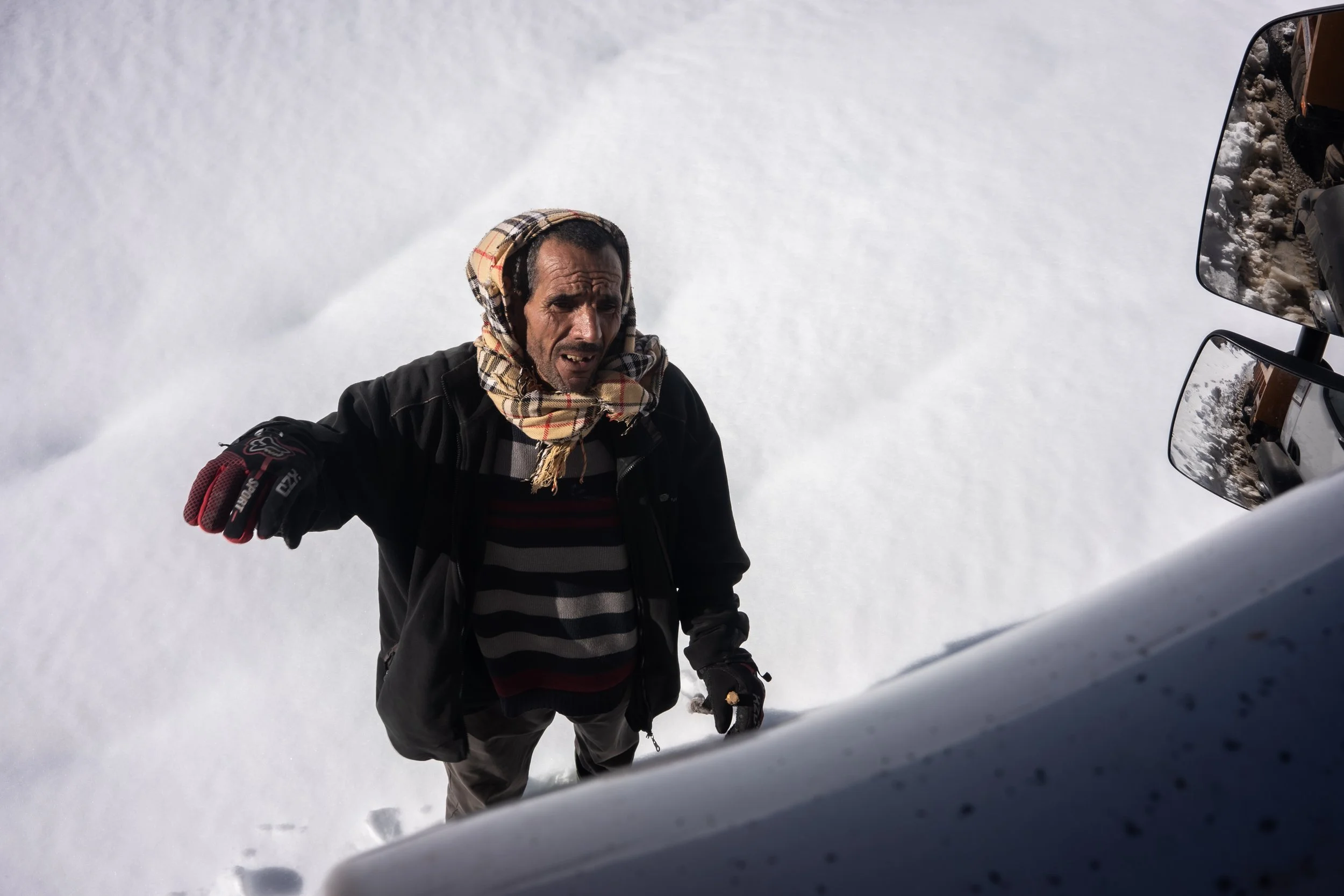
Douar Aqanouanine, Imilchil. A father waits for his children to return home at the end of a long week. Although the main village and its school aren't actually that far away, the heavy mountain snow makes daily travel completely impossible. To get an education, the children have to live away from their families during the week, turning a short distance into a painful separation
High Atlas Mountains. When the winter storms hit, the isolation is absolute. Daily life, school commutes, and supply runs are put entirely on hold until heavy machinery can carve a way through, slowly reconnecting the high-altitude villages to the rest of the province.
Stranded between the high peaks and home. High in the High Atlas near Imilchil, locals take shelter on an exposed rocky ridge, waiting patiently for snow-blocked mountain roads to be cleared so they can return to their douar.
Utility lines cut through the snowbound high country, charting the remote path connecting isolated mountain communities through the winter.
Near Imilchil, Morocco. Kamal travels in the back of a transport truck along a snow-lined mountain road, passing near Lake Isli.
A moment of mountain hospitality set on the snow beneath the snowplow, marking the village’s reconnection to the outer road before the return trip to Imilchil.
A narrow path carved through the white expanse stands as a fragile lifeline, slowly reconnecting isolated villages to the world outside.
A heavy blanket of winter snow nearly swallows the low stone walls of a remote mountain settlement near Imilchil. When severe winter storms strike this high-altitude region, rudimentary roads and paths are instantly buried under deep drifts, severing the physical connection between these outer douars and the rest of the province, leaving inhabitants completely isolated against the cold.
At the base of massive rock walls, the cleared track abruptly stops. For this village, the vehicle’s arrival restores a fragile connection to Imilchil, but for the communities beyond, the heavy snow remains unbroken.
Looking out over the side of a road-clearing vehicle, Saida watches the snow-covered pass slowly open up. Hours spent in the freezing air on whatever transport is available highlight the extraordinary lengths she goes to secure her education.
A narrow corridor carved through deep snowbanks reopens travel along the high mountain pass. Walking along the newly plowed ridge, a solitary traveler makes their way along the asphalt path connecting isolated settlements.
After waiting out the snow on the exposed ridge, stranded travelers hitch a ride on the back of the snowplow. Bundled tight against the biting wind, neighbors and strangers share the open bed of the truck, finally moving toward the village of Imilchil.
Two distinct lifelines across the landscape: the freshly cleared asphalt carved by machinery and a lone trail of footprints leading up the frozen slope. In the high terrain, every cleared meter and hand-traced path marks a return to connection.
Daily life carries on through the snowbound valley, where traditional earthen architecture and cold mountain trails frame the quiet rhythms of the village.
Off-grid solar infrastructure standing against the high-altitude winter landscape, sustaining remote mountain villages through months of heavy snow.
Side by side against the High Atlas winter, Saida and Kamal embody a quiet, shared resolve. For these siblings, every frozen mile traveled to reach school is a deliberate step toward lifting their family out of hardship.
Winter: A season of suffering as much as
a season of beauty
Based on the title above, which divides into two axes, suffering and beauty, we can begin with the latter. The Imilchil region, located high in the Midelt province's High Atlas, abounds with breathtaking nature, adorned by snow and highlands. It is a region that attracts many tourists and visitors seeking beautiful landscapes and memorable photographs. However, this winter in Morocco has been exceptional. Heavy snowfalls and torrential rains have overwhelmed dams and valleys, causing floods and leaving several Moroccan cities and regions disaster-stricken. While visitors enjoy the stunning scenery, the locals and their families bear the brunt of these conditions alone. During winter, suffering and anxiety increase. These areas and the neighboring douars [villages] endure total isolation: roads are cut off, and cold, snow, and rain cast a heavy shadow over the inhabitants. Worrying issues arise: a shortage of livestock fodder, dwindling daily savings, a lack of heating, and scarce food supplies. This is without overlooking students being cut off from their education due to distant, closed schools, leading to a growing dropout rate among girls. In this context, the siblings "Kamal and Saida" from Douar Aqanouanene, on the outskirts of Imilchil, stand as a model of challenge and dedication to the right to study regardless of the conditions. They insist on continuing their education without interruption to achieve a dream: overcoming their suffering, their limited resources, their father's weak income, and the burden of many siblings. They are fighting for a job that will rescue their family from loss and for the sake of a dignified, happy life. It is the cry of a student-sister bearing the responsibility of saving the family waiting for her. She continues her studies even under harsh conditions, struggling with shelter, school supplies, food, and clothing. Every weekend or school holiday, she is forced to commute from the school back to the douar, relying on government trucks, beasts of burden, or any available means of transport. The story of these two siblings is a testament to challenge, persistence, and faith in achieving the dream of a decent, stable life. Is there any gesture of help or embrace to assist them in defying these difficulties? The winter season is a season of suffering, just as much as it is a season of magnificent beauty.
Douar Aqanouanine, Imilchil. A father waits for his children to return home at the end of a long week. Although the main village and its school aren't actually that far away, the heavy mountain snow makes daily travel completely impossible. To get an education, the children have to live away from their families during the week, turning a short distance into a painful separation
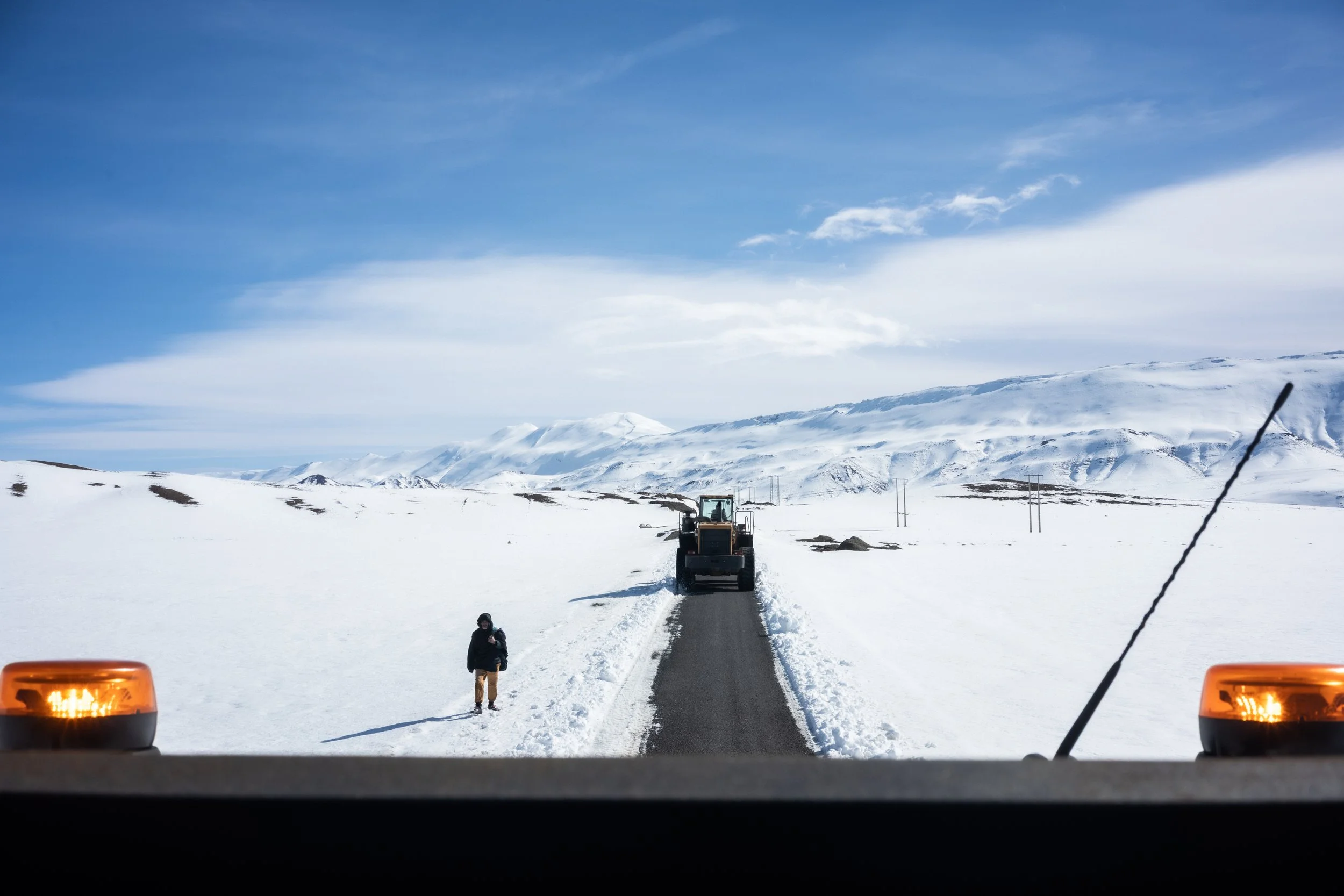
High Atlas Mountains. When the winter storms hit, the isolation is absolute. Daily life, school commutes, and supply runs are put entirely on hold until heavy machinery can carve a way through, slowly reconnecting the high-altitude villages to the rest of the province.
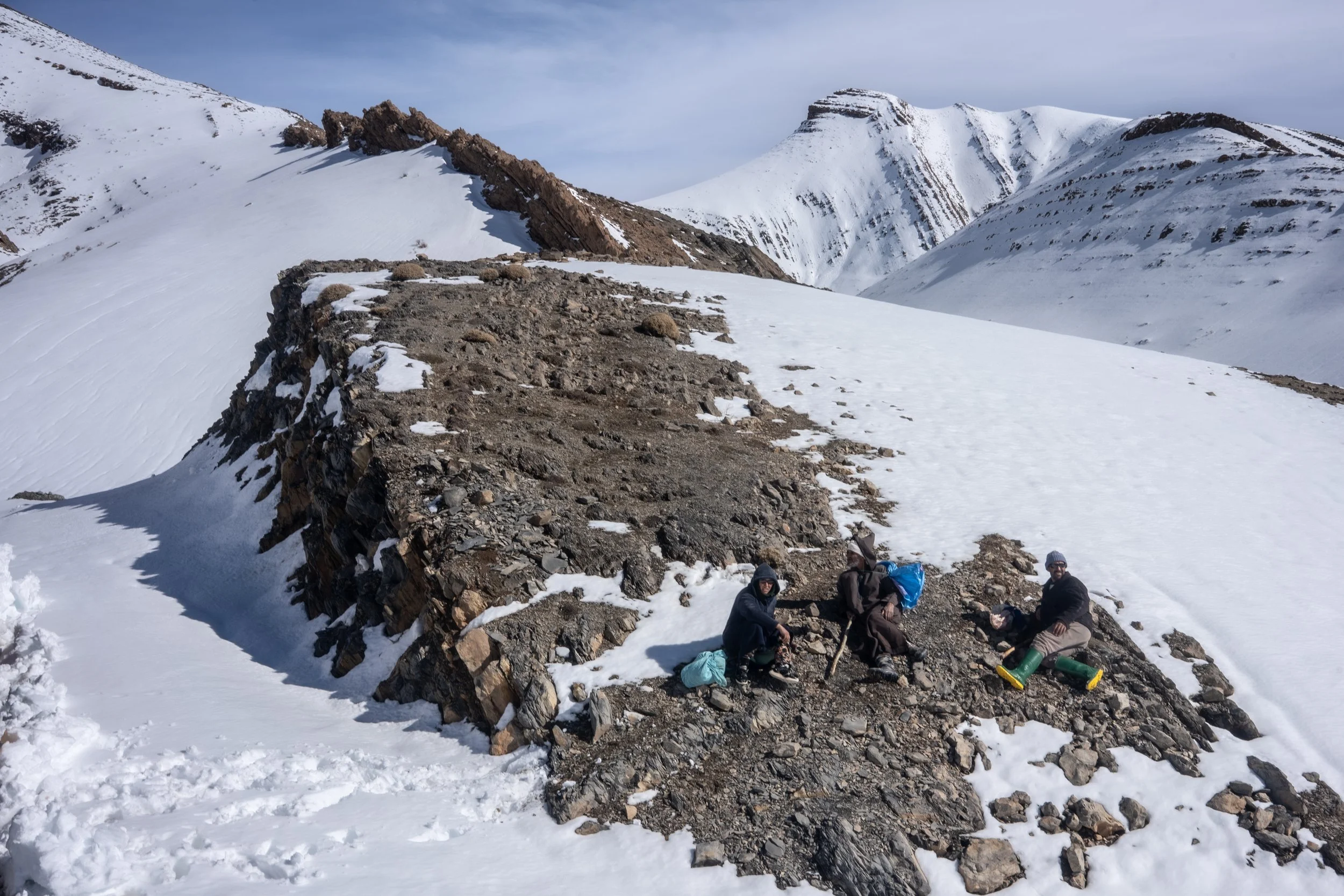
Stranded between the high peaks and home. High in the High Atlas near Imilchil, locals take shelter on an exposed rocky ridge, waiting patiently for snow-blocked mountain roads to be cleared so they can return to their douar.
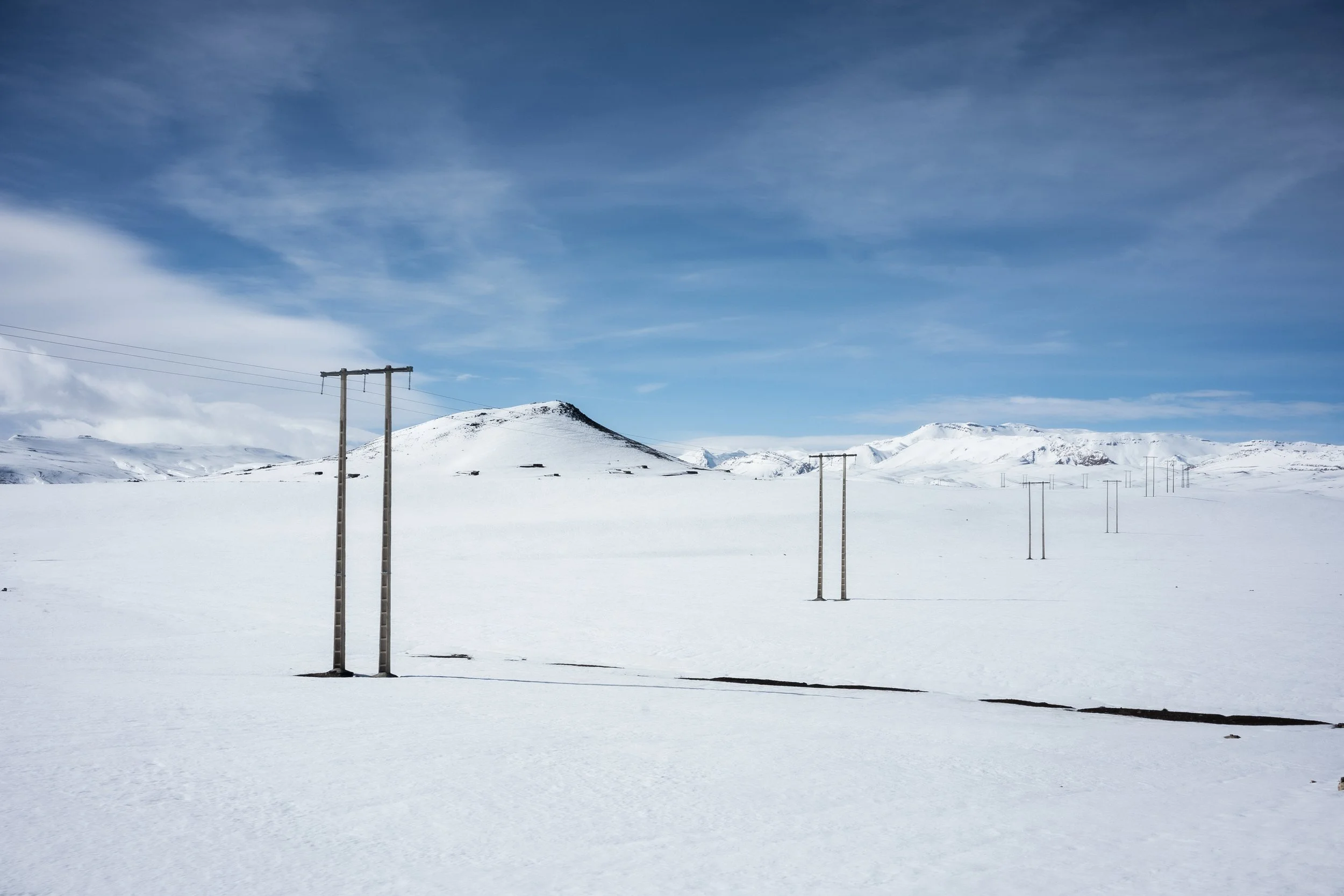
Utility lines cut through the snowbound high country, charting the remote path connecting isolated mountain communities through the winter.
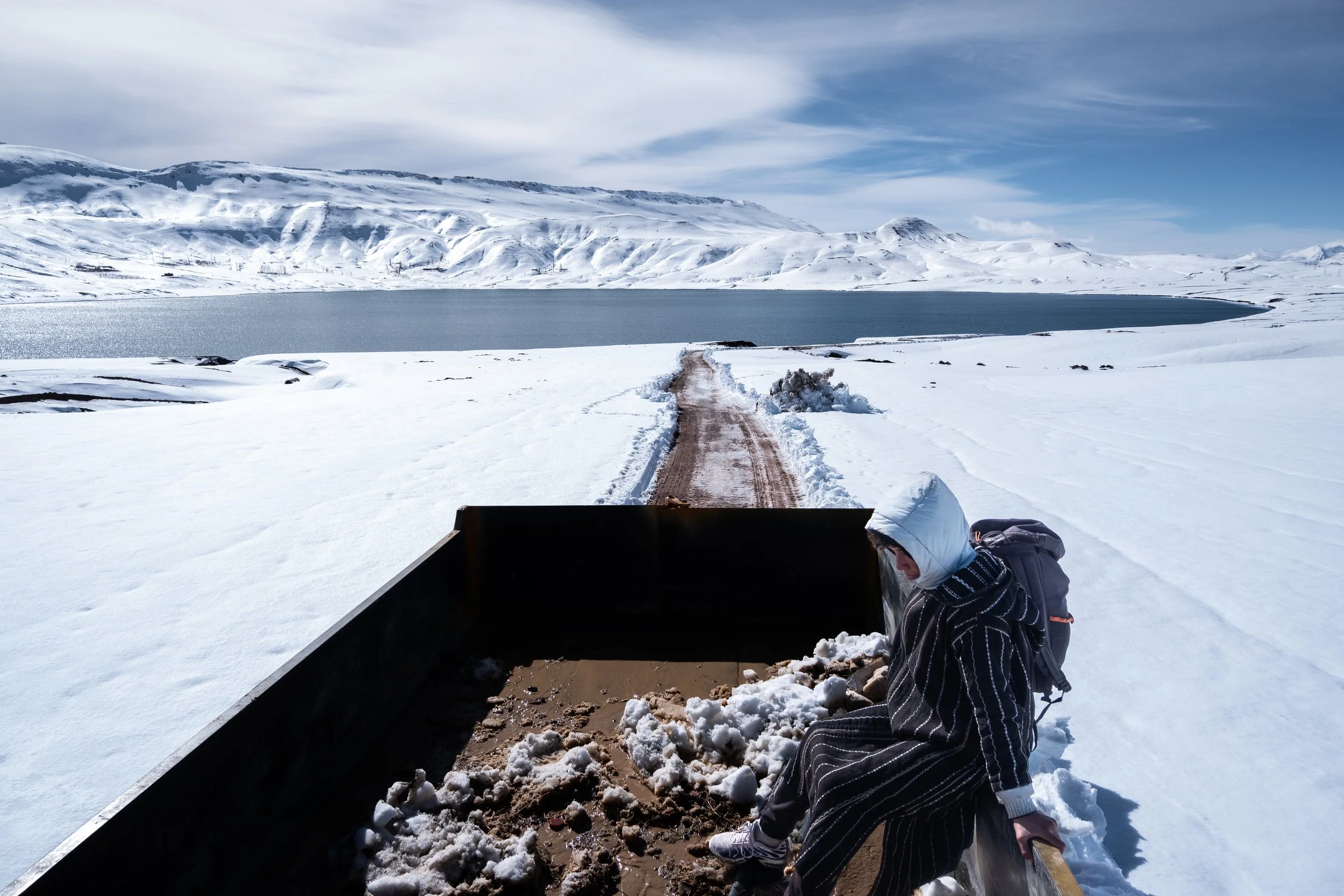
Near Imilchil, Morocco. Kamal travels in the back of a transport truck along a snow-lined mountain road, passing near Lake Isli.
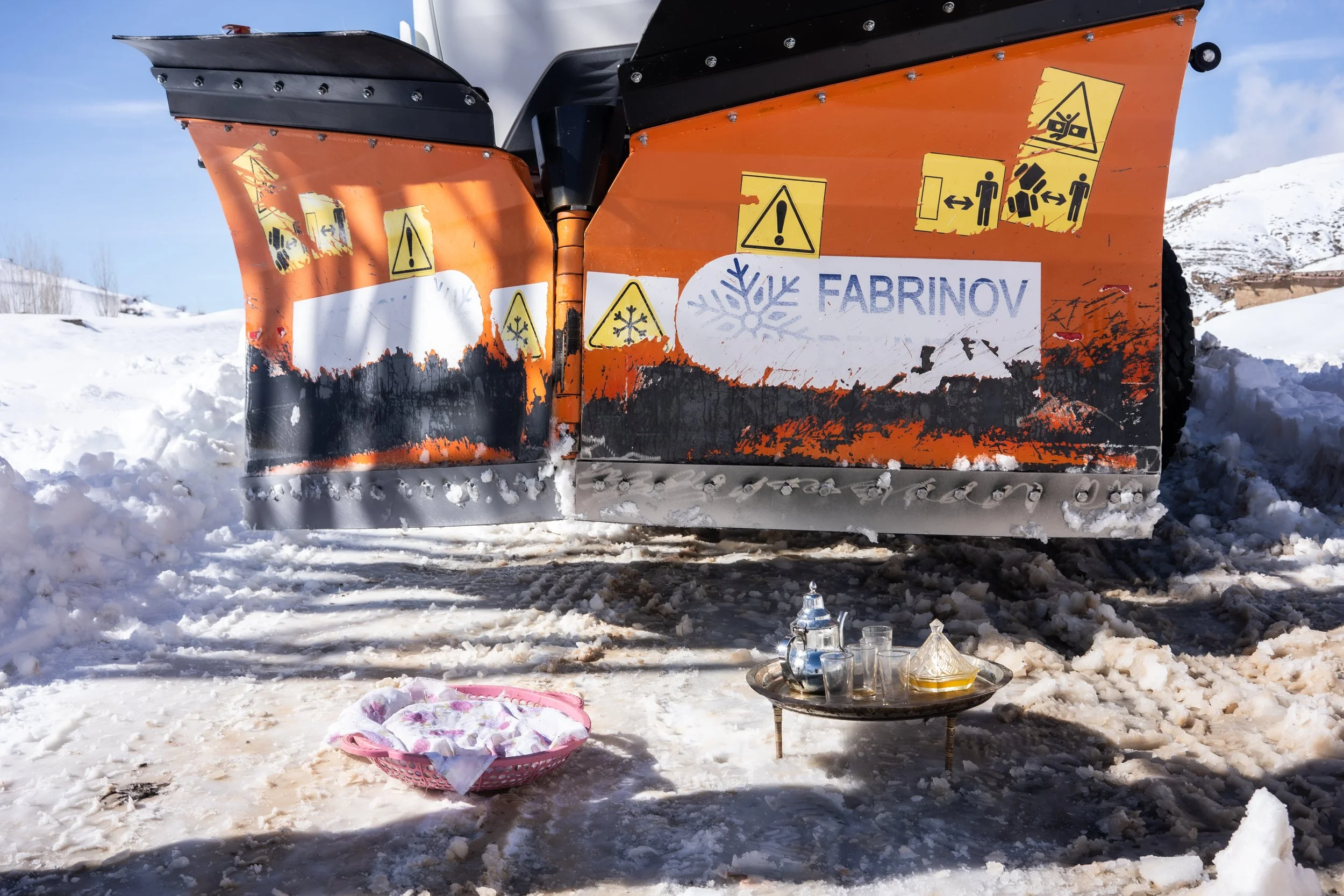
A moment of mountain hospitality set on the snow beneath the snowplow, marking the village’s reconnection to the outer road before the return trip to Imilchil.
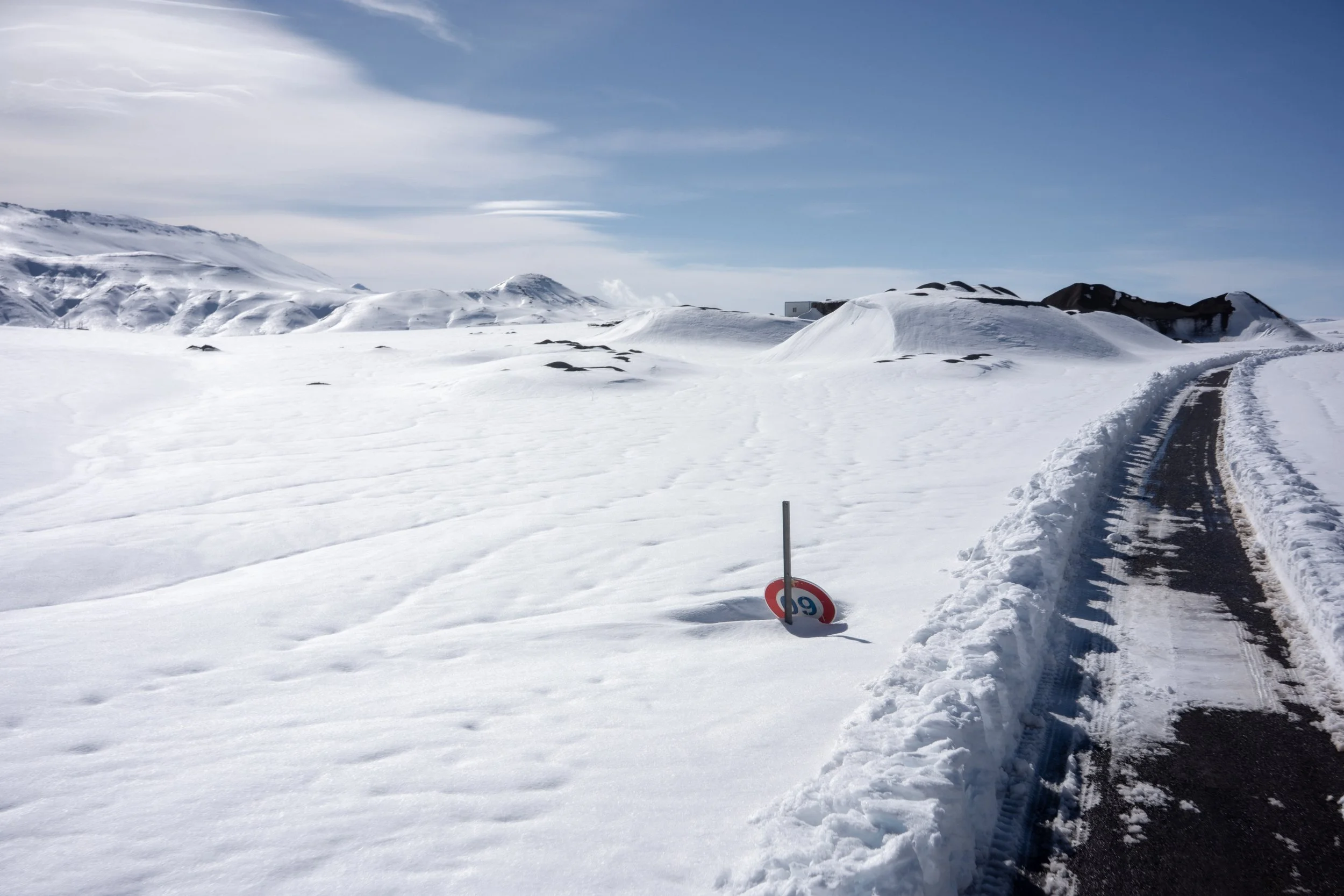
A narrow path carved through the white expanse stands as a fragile lifeline, slowly reconnecting isolated villages to the world outside.
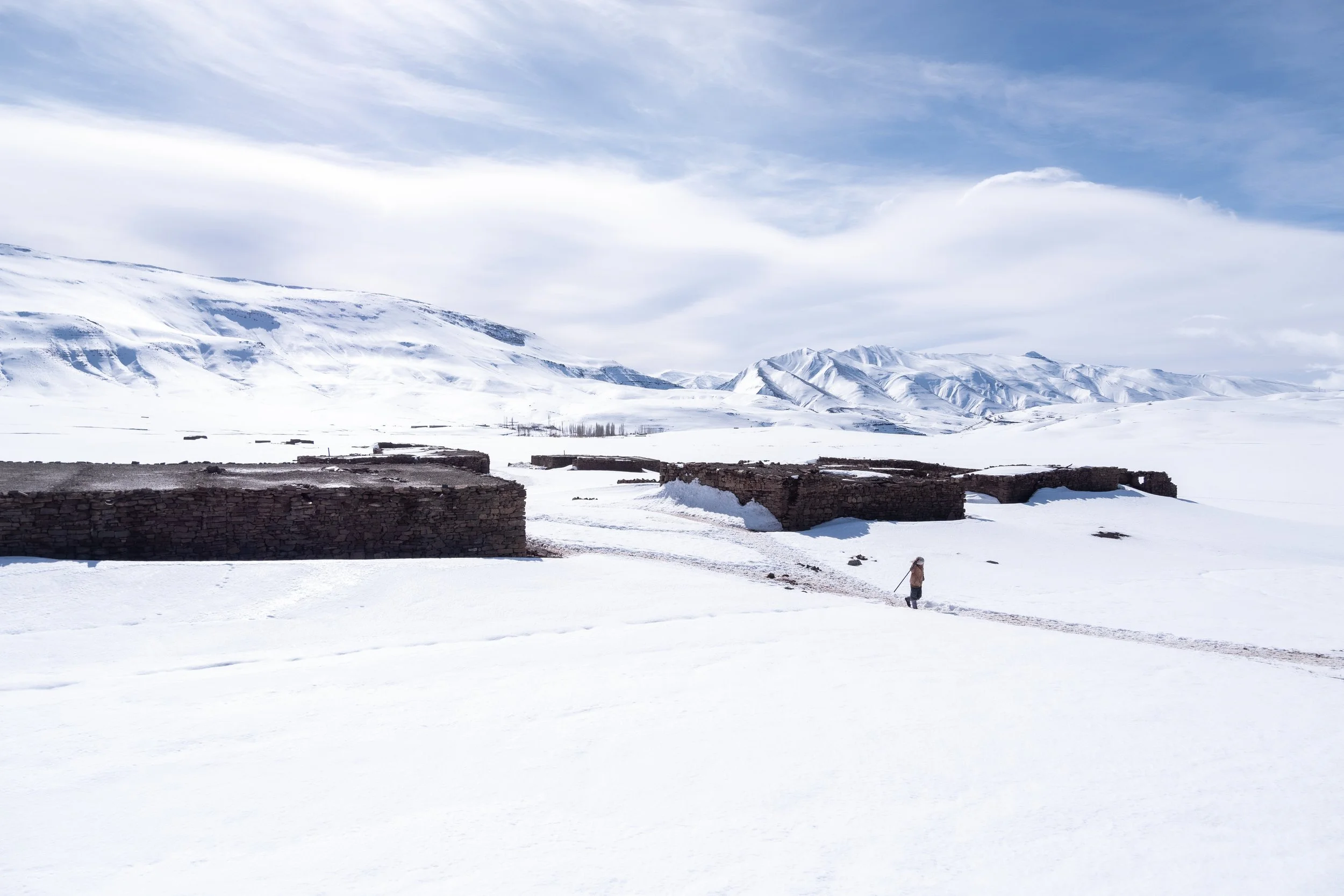
A heavy blanket of winter snow nearly swallows the low stone walls of a remote mountain settlement near Imilchil. When severe winter storms strike this high-altitude region, rudimentary roads and paths are instantly buried under deep drifts, severing the physical connection between these outer douars and the rest of the province, leaving inhabitants completely isolated against the cold.
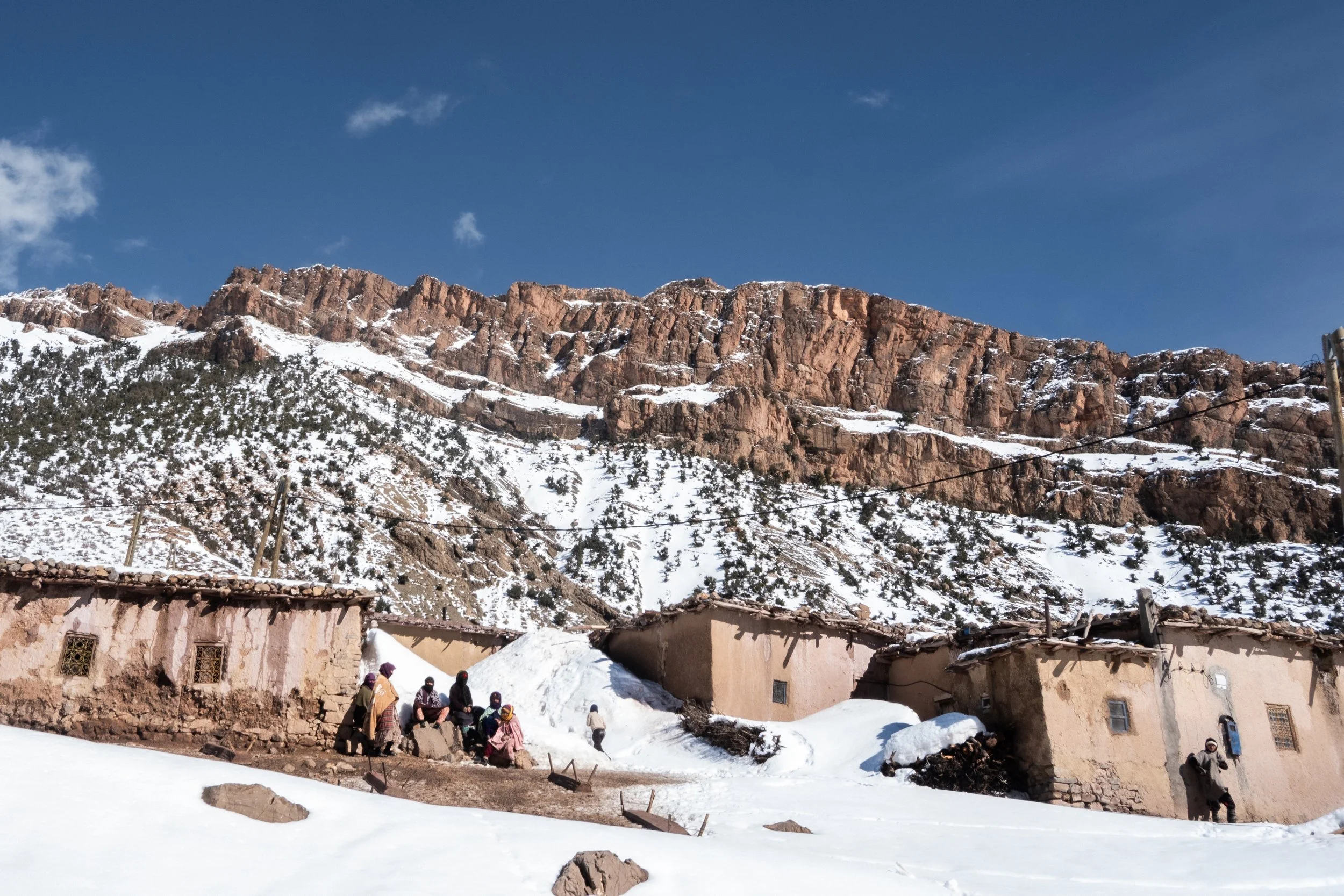
At the base of massive rock walls, the cleared track abruptly stops. For this village, the vehicle’s arrival restores a fragile connection to Imilchil, but for the communities beyond, the heavy snow remains unbroken.
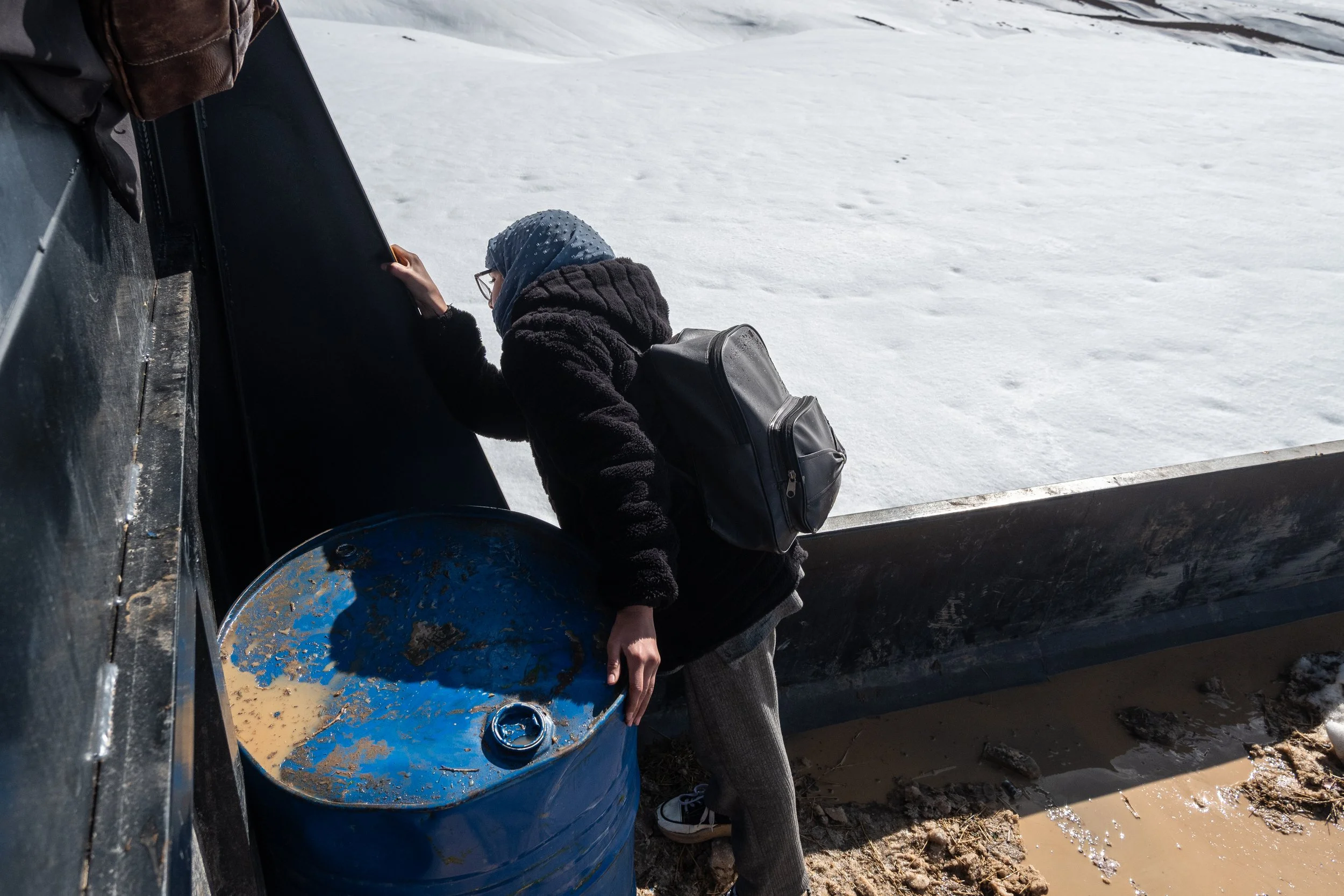
Looking out over the side of a road-clearing vehicle, Saida watches the snow-covered pass slowly open up. Hours spent in the freezing air on whatever transport is available highlight the extraordinary lengths she goes to secure her education.
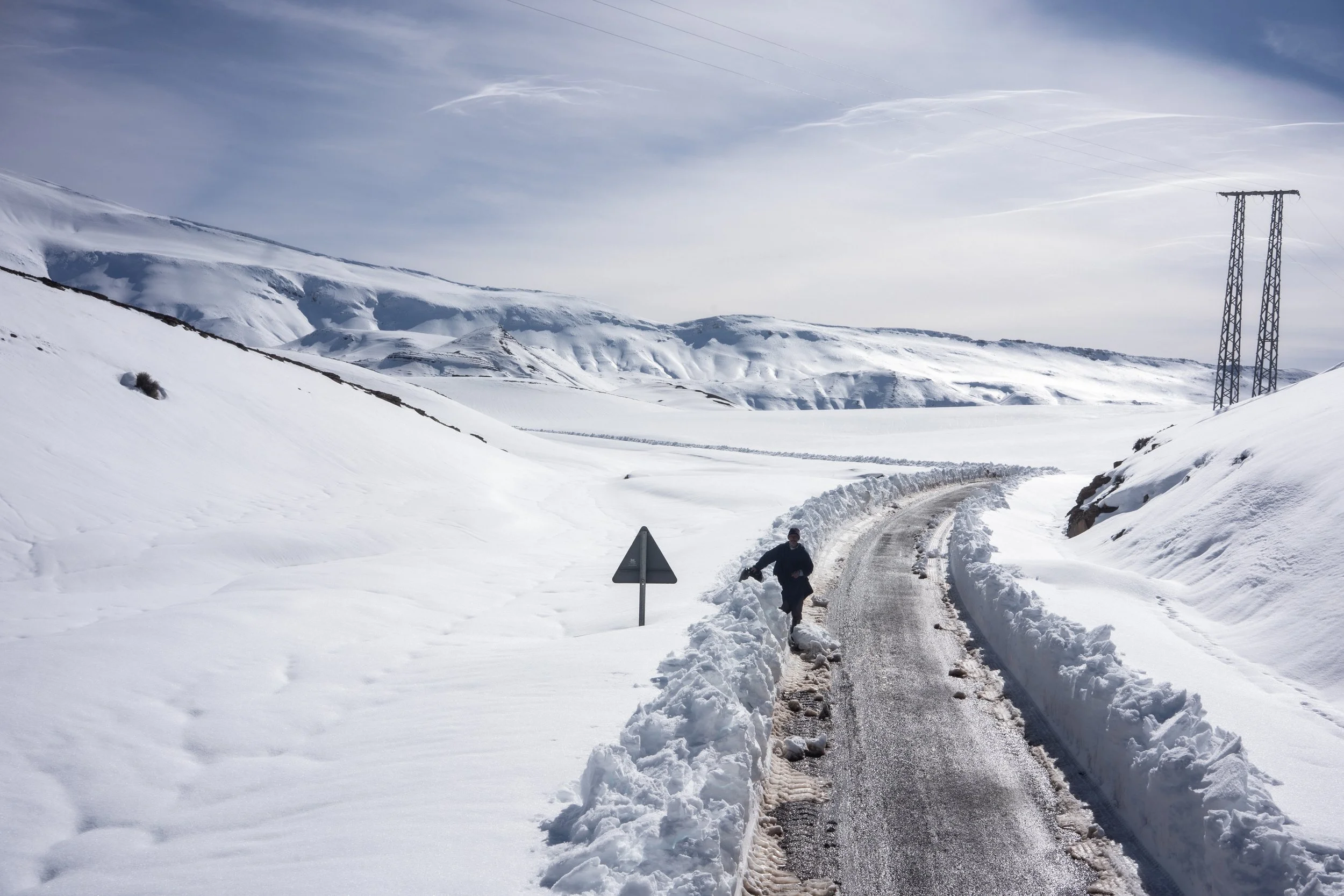
A narrow corridor carved through deep snowbanks reopens travel along the high mountain pass. Walking along the newly plowed ridge, a solitary traveler makes their way along the asphalt path connecting isolated settlements.
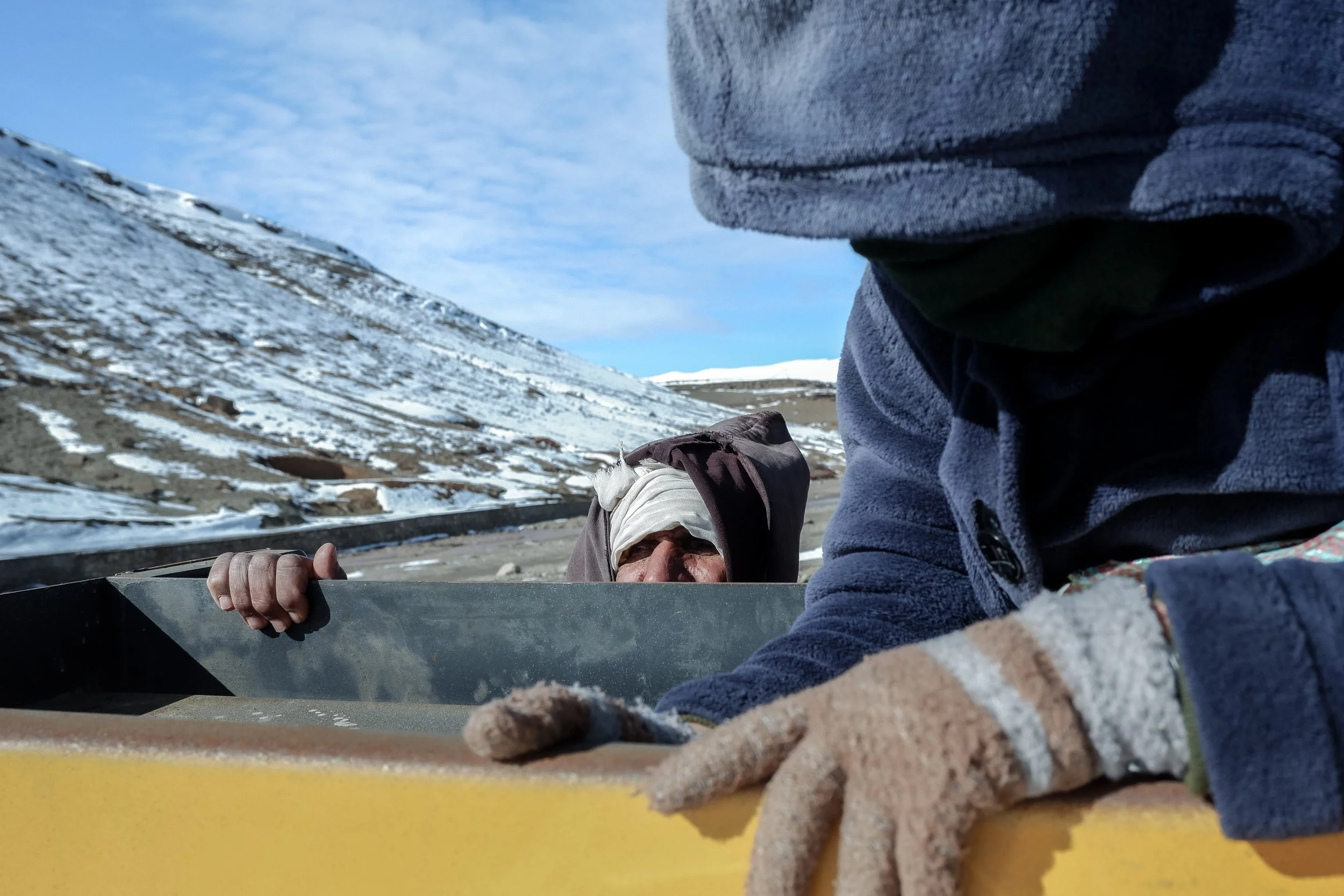
After waiting out the snow on the exposed ridge, stranded travelers hitch a ride on the back of the snowplow. Bundled tight against the biting wind, neighbors and strangers share the open bed of the truck, finally moving toward the village of Imilchil.
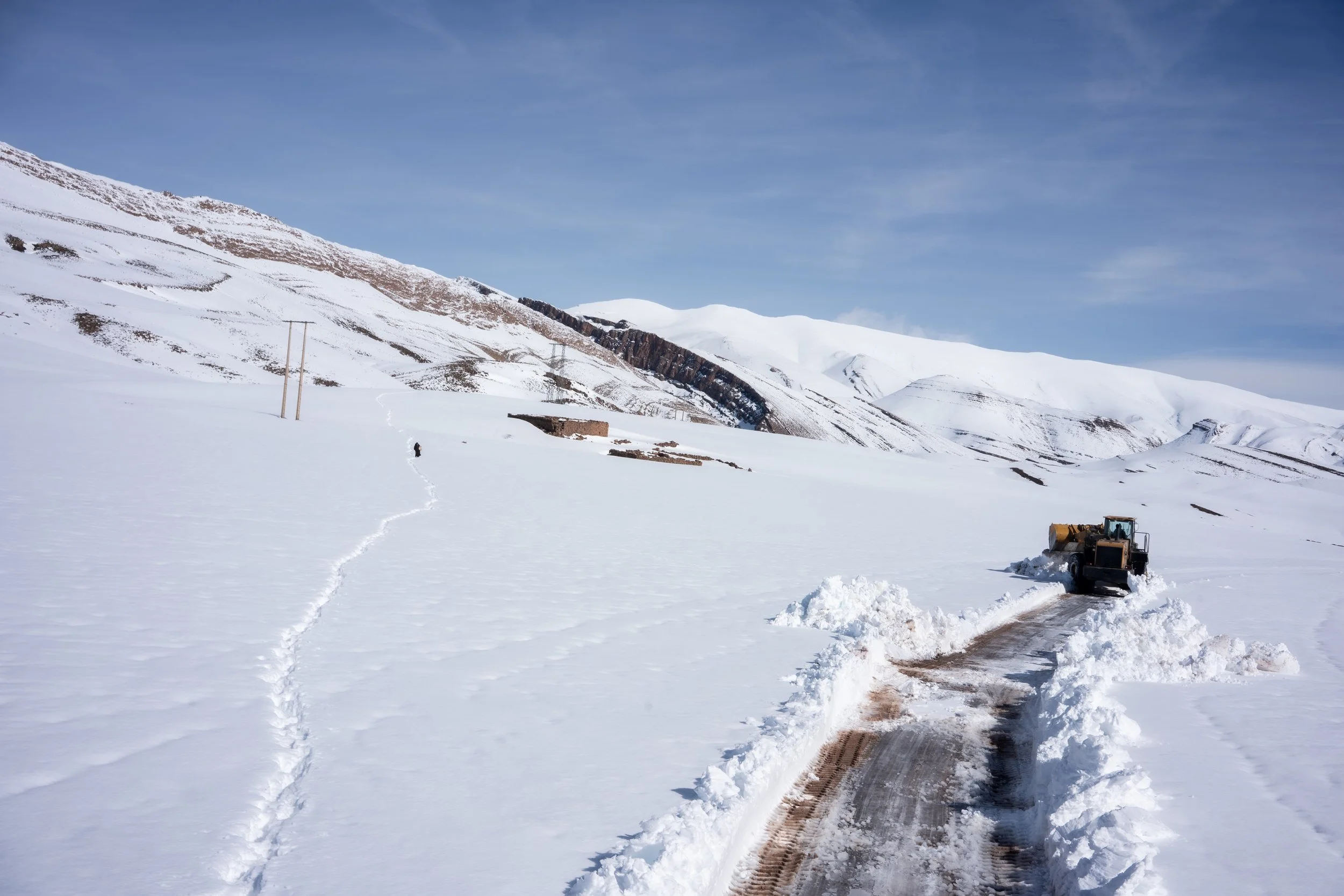
Two distinct lifelines across the landscape: the freshly cleared asphalt carved by machinery and a lone trail of footprints leading up the frozen slope. In the high terrain, every cleared meter and hand-traced path marks a return to connection.
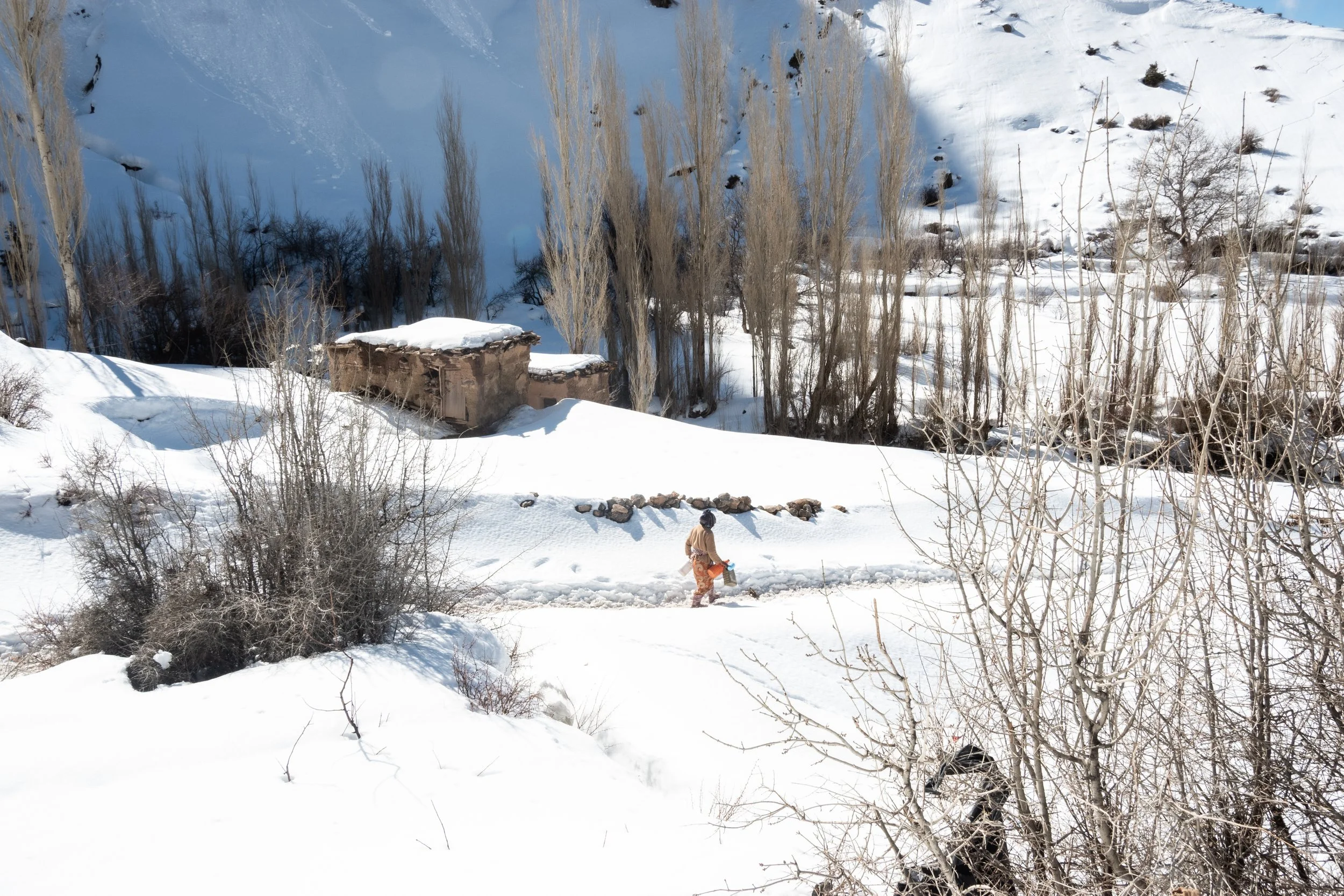
Daily life carries on through the snowbound valley, where traditional earthen architecture and cold mountain trails frame the quiet rhythms of the village.
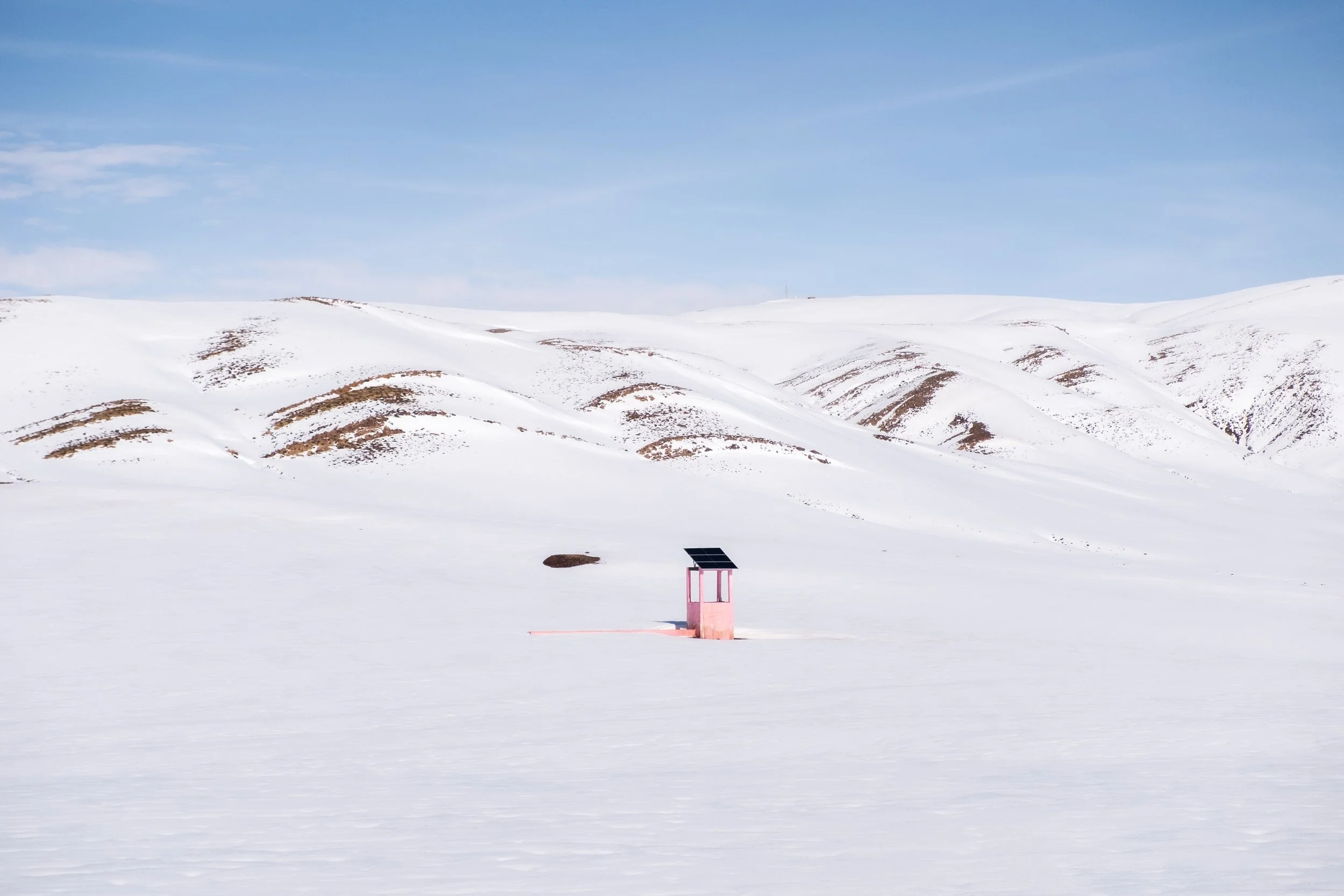
Off-grid solar infrastructure standing against the high-altitude winter landscape, sustaining remote mountain villages through months of heavy snow.
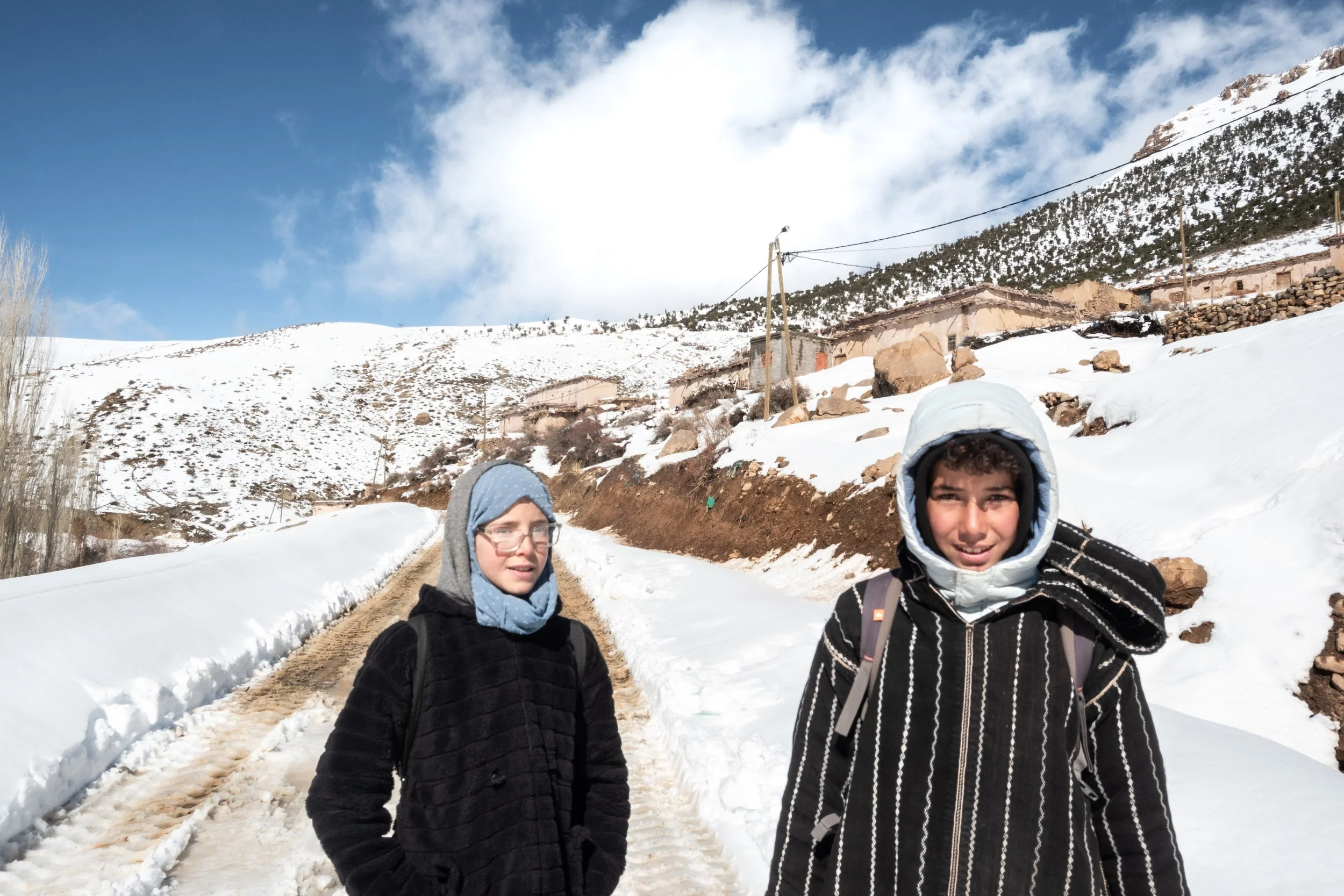
Side by side against the High Atlas winter, Saida and Kamal embody a quiet, shared resolve. For these siblings, every frozen mile traveled to reach school is a deliberate step toward lifting their family out of hardship.